There's something profound that happens when you sit in a space that just *feels* right – you know what I mean? That inexplicable sense of ease, like your nervous system finally exhales. I've been chasing that feeling professionally for over a decade now, and honestly, I'm still amazed by how often we get it wrong in conventional design.
Yesterday I was having coffee with a former colleague who's now heading sustainability initiatives for a major hospital chain. She mentioned they'd just completed a $200 million renovation of their flagship facility, complete with "healing gardens" and "natural materials throughout." When I asked her how patients and staff were responding, she paused. "Well, the gardens look beautiful in the marketing photos," she said. That pause told me everything.
<blockquote>This happens constantly in our field – we think biophilic design means slapping some plants in a lobby and calling it nature-integrated architecture. But the real philosophy behind nature-inspired spaces goes so much deeper than aesthetics.
It's about understanding how humans evolved to thrive in natural environments, then translating those principles into built spaces that actually support our biological and psychological well-being.</blockquote>
I learned this the hard way during my early career. Fresh out of grad school, I was convinced I understood biophilic design because I could cite E.O. Wilson's biophilia hypothesis and rattle off statistics about stress reduction in green spaces. Then I spent two years working on a corporate campus that checked every biophilic design box on paper – living walls, water features, natural materials, views of landscaping. The building won awards. It also had terrible employee satisfaction scores and higher-than-average sick leave usage.
The problem wasn't what we included; it was what we fundamentally misunderstood about human nature relationships. We treated nature as decoration rather than recognising it as a complex system that humans are neurologically wired to engage with. Those living walls? Beautiful, but completely inaccessible – you couldn't touch them, smell them, or interact with them in any meaningful way. The water feature was essentially a sculptural fountain that bore no resemblance to natural water systems. The "natural materials" were so heavily processed and sealed they felt synthetic.
<img class="size-full" src="https://biophilicflair.com/wp-content/uploads/2025/08/IM_Biophilic_Trends_The_Future_of_Nature-Inspired_Spaces_This_i_2d51203f-dde8-4159-a441-234548a1ad42.webp" alt="IM_Biophilic_Trends_The_Future_of_Nature-Inspired_Spaces_This_i_2d51203f-dde8-4159-a441-234548a1ad42" />
Real biophilic design philosophy starts with acknowledging that humans aren't separate from nature – we ARE nature. Our brains developed over millions of years in environments with specific patterns, sounds, textures, and rhythms. When we design spaces that honour these evolutionary relationships, people thrive. When we ignore them… well, you get corporate environments where people feel drained and restless despite working in "green" buildings.
The research backing this up is pretty remarkable. Studies show that exposure to fractal patterns found in nature – like the branching of trees or the flowing of water – actually reduces stress hormones within minutes. Natural light patterns that shift throughout the day help regulate circadian rhythms, improving sleep quality and cognitive function. Even something as simple as being able to see sky from your workspace correlates with measurably better mental health outcomes.
But here's where it gets interesting – and where most designers miss the mark. It's not enough to just include natural elements. The way humans connect with nature involves multiple senses and complex interactions. We need to be able to touch different textures, hear natural sounds, smell organic scents, and witness seasonal changes. Static representations of nature only engage us on a surface level.
I discovered this personally when I was recovering from a particularly brutal period of overwork and mild depression about three years ago. My apartment at the time was objectively well-designed – lots of light, quality furnishings, even some plants. But something felt off. On a whim, I started experimenting with what I called "sensory layering."
You Might Also Like
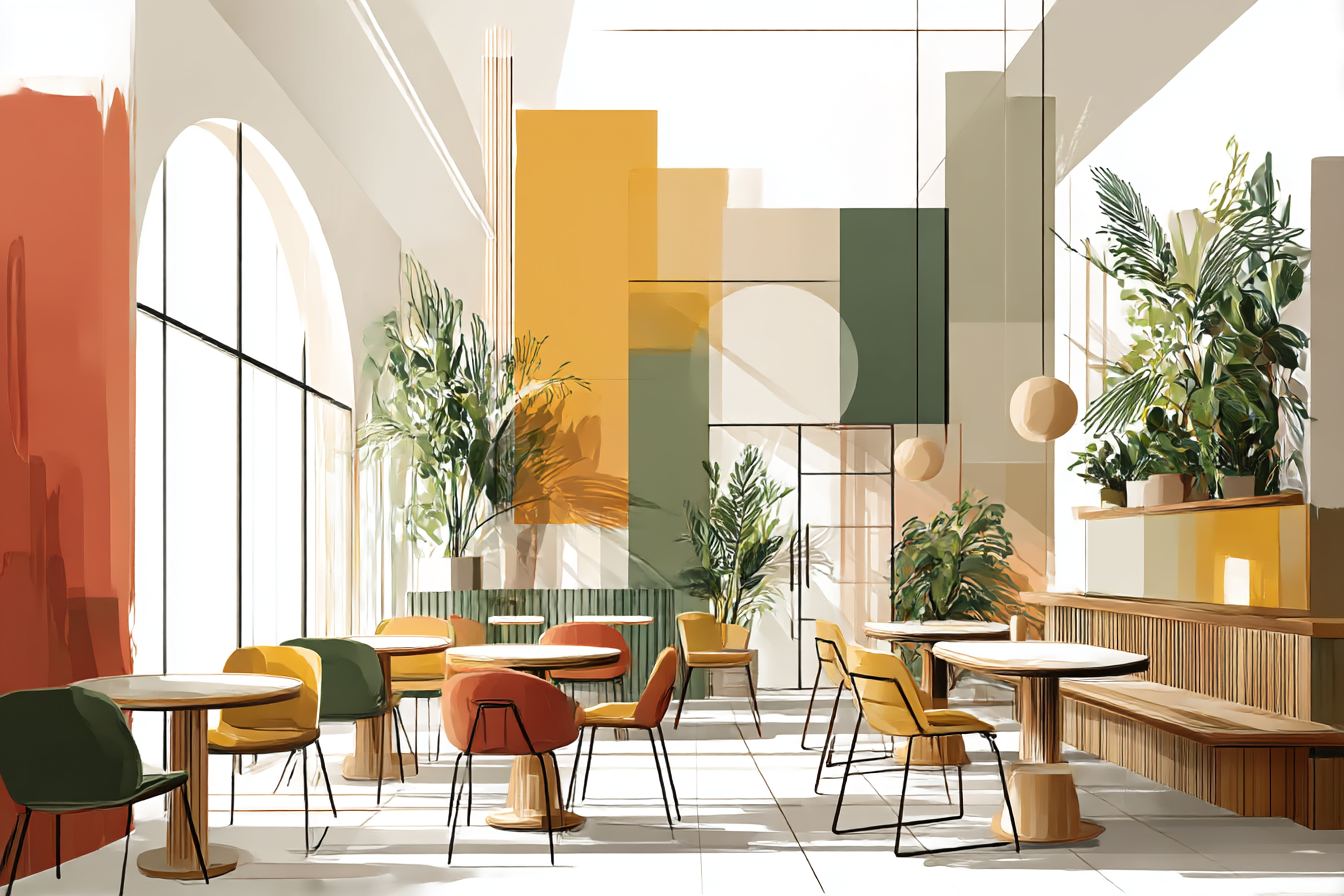
I introduced a small tabletop fountain that created gentle water sounds. Added rough-textured basalt stones I'd collected from a beach trip. Hung eucalyptus branches in my shower so steam would release their scent. Started opening windows regularly to let in natural air movement and outdoor sounds. The changes were subtle, but the effect on my daily experience was dramatic. I slept better, felt more grounded, and found myself actually looking forward to being home.
That experience shifted how I approach every project now. Instead of asking "How can we make this look natural?" I ask "How can we help occupants feel connected to natural systems?" It's a completely different design process.
For instance, I'm currently working with an elementary school that wants to create more supportive learning environments. Rather than just adding plants to classrooms, we're designing spaces that mirror natural learning environments – areas with varied light levels, different textures underfoot, spaces that encourage both social interaction and quiet retreat, and direct connections to outdoor areas where kids can observe seasonal changes and weather patterns.
The theoretical foundation here draws from evolutionary psychology, environmental psychology, and neuroscience research. Our brains are pattern-recognition machines that developed to navigate natural environments. We're wired to find comfort in natural light cycles, to feel calm around gentle water sounds, to experience reduced anxiety when we can see natural vistas or escape routes.
Most fascinating to me is the research on what's called "soft fascination" – the type of effortless attention we experience in nature settings. Unlike the directed attention required for focused work, soft fascination allows our minds to restore and recharge. Think about how you feel watching clouds drift across the sky or observing leaves move in the wind. That state of relaxed awareness is incredibly restorative, and we can design built environments that facilitate it.
The challenge is that creating genuinely restorative spaces requires understanding systems, not just selecting materials. Natural environments are dynamic – they change throughout the day, across seasons, in response to weather. They engage multiple senses simultaneously. They include elements of unpredictability and discovery. They allow for different types of interaction depending on individual needs and preferences.
<img class="size-full" src="https://biophilicflair.com/wp-content/uploads/2025/08/IM_Biophilic_Trends_The_Future_of_Nature-Inspired_Spaces_This_i_0868f11d-9fcf-4eba-a60c-16b94b8f4a9f.webp" alt="IM_Biophilic_Trends_The_Future_of_Nature-Inspired_Spaces_This_i_0868f11d-9fcf-4eba-a60c-16b94b8f4a9f" />
I've started incorporating what I call "temporal design" into my projects – spaces that change throughout the day and seasons. Lighting that shifts colour temperature to match natural patterns. Materials that age and weather naturally.
Views that frame different aspects depending on the time of year. Plants that flower at different times, creating ongoing cycles of change and renewal.
<blockquote>This isn't about creating perfect replicas of outdoor environments indoors. It's about identifying the specific qualities of natural settings that support human well-being, then finding creative ways to incorporate those qualities into built spaces. Sometimes that means literal natural elements – plants, water, natural materials. Other times it means mimicking natural patterns through technology, spatial arrangement, or sensory design.</blockquote>
The most successful biophilic spaces I've experienced feel effortless. You don't necessarily notice all the design decisions, but your body and mind respond positively to the environment. You breathe deeper, your shoulders relax, your thoughts flow more easily. That's the real goal – creating spaces that support our biological and psychological functioning by honoring our deep connections to natural systems.
What excites me most about this field right now is watching the philosophy mature beyond superficial applications toward genuine understanding of human-nature relationships in built environments.