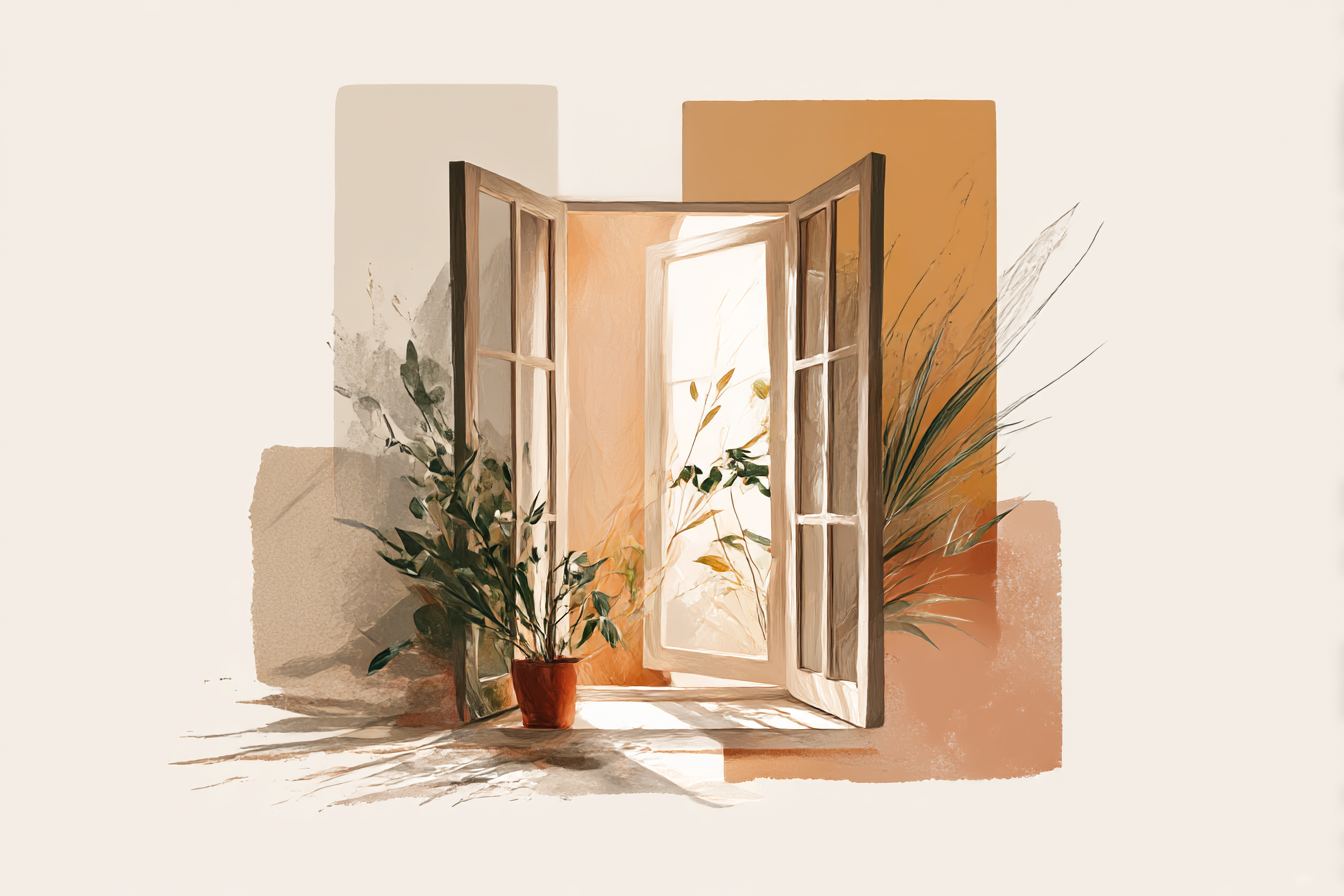
The morning light streaming through my bedroom window hits differently these days. Not just because I've positioned my bed to catch the first rays – though that's part of it – but because I've learned to see windows as something far more complex than mere openings in walls. They're portals, really. Connective tissue between our interior lives and the natural world that we've somehow convinced ourselves we don't need.
I was fumbling around my kitchen yesterday, making what passes for breakfast when you're running late, when I noticed something. My neighbour across the courtyard was doing the exact same thing – except she was moving slower, more deliberately. Her kitchen window faces east, just like mine, but hers frames this gorgeous old oak tree that's been there probably longer than either of our buildings.

She kept glancing up at it while stirring her coffee. Just quick little looks, but they were… I don't know, grounding somehow. Meanwhile, I'm staring at the brick wall of the building next door, which explains why I always feel slightly frantic in the mornings.
That's the thing about biophilic window design – it's not just about having windows, it's about what those windows do for you on a cellular level. And I mean that literally, not in some woo-woo way. Your stress hormones actually change when you have consistent visual access to natural elements. I've measured this stuff in my own apartment using those home cortisol test kits (probably spending too much on Amazon health gadgets, but hey, it's for science).
After my renovation disaster three years ago – and yes, I'm still paying for the water damage from that poorly installed green wall – I became obsessed with strategic window placement. Not moving them, obviously, since I rent and my landlord barely tolerates my plant experiments as it is. But working with what I've got in smarter ways.
The breakthrough came when I stopped thinking about windows as just sources of light and started seeing them as curated views. That sounds pretentious, but bear with me. I repositioned my desk so that when I look up from my laptop, I'm not seeing the apartment building across the street (depressing) but the corner of the community garden that's tucked between two brownstones. It's maybe twelve feet of green space, but it changes throughout the seasons. Right now there are these scraggly tomato plants that someone's still optimistically tending in November, and honestly? It makes me smile every single time.
The materials around windows matter more than most people realise. I learned this the hard way during a consulting project for a wellness centre in Portland. They'd installed these massive floor-to-ceiling windows with gorgeous views of Mount Hood, but they'd framed them with this cold, industrial aluminium that somehow made the whole space feel disconnected from the landscape beyond. We ended up adding wood surrounds – reclaimed Douglas fir that we sourced from a local mill – and the difference was immediate. Suddenly the boundary between inside and outside felt less like a barrier and more like a transition.
Wood frames don't just look warmer; they actually conduct heat differently than metal, which affects how your body perceives the space near the window. Your hands register this stuff even when your conscious mind doesn't. I've tested this with friends – had them sit near windows with different frame materials while blindfolded, and they consistently report feeling more relaxed near wood-framed openings. It's subtle, but real.
You Might Also Like

The light quality conversation gets complicated quickly, but here's what I've figured out through trial and error: southern exposure isn't always best, despite what every design magazine tells you. Sure, you get consistent light throughout the day, but it can be harsh and create glare problems that actually disconnect you from the outdoor view. I prefer eastern windows for workspaces – that gentle morning light feels encouraging rather than demanding – and western windows for relaxation areas where you want that golden-hour magic in the evenings.
My current obsession is with what I call "temporal windows" – openings that change character throughout the day and seasons. This sounds fancy, but it's really about choosing window locations and sizes that capture different natural phenomena at different times. The west-facing window in my living room is pretty unremarkable most of the day, but around 4 PM in winter, when the sun is low enough to filter through the bare branches of that Japanese maple outside, it creates these incredible shadow patterns on my wall. I literally schedule client calls around this daily light show because it puts me in a better headspace.
I've been experimenting with window treatments that enhance rather than block natural connections. Standard blinds and curtains create this binary relationship – window open or closed, nature visible or hidden. But I've found that materials like bamboo screens or sheer fabrics made from natural fibres maintain the connection while controlling light levels. The goal is to feel the rhythms of the day even when you need to moderate the intensity.
The scale thing trips people up constantly. Bigger isn't always better with biophilic windows. Sometimes a smaller opening that perfectly frames a single tree or captures a specific view creates a stronger nature connection than a massive window that shows everything and focuses on nothing. I worked on a project for a meditation centre where we replaced one large window with three smaller ones, each positioned to highlight different aspects of their garden. Users reported feeling more grounded and focused in the space afterward.
Maintenance reality cheque – and this is where my practical cabinetmaker upbringing comes in handy – natural materials around windows require more attention than synthetic alternatives. Wood frames need periodic treatment, especially in humid climates. Natural stone sills can develop stains and require sealing. But here's the thing: that maintenance becomes part of your relationship with the space.
Caring for these elements keeps you connected to the materials themselves, which feeds back into the biophilic benefits.
I've started incorporating plants directly into window design, not just placing them nearby. Training vines to grow along window frames, installing herb gardens in wide sills, creating little ecosystems that blur the indoor-outdoor boundary. My kitchen window now has this mini greenhouse effect going with a collection of succulents that seem to thrive in that specific microclimate. It's become this living frame that changes subtly throughout the year.
The acoustic element gets overlooked, but windows affect how we hear the natural world. Double-pane glass blocks more sound than single-pane, which can disconnect you from bird songs, rustling leaves, even rainfall. I've learned to crack windows slightly when weather permits, not just for fresh air but for natural soundscapes that reinforce the visual nature connection.
What amazes me is how quickly people adapt to these changes. I've had clients report improved sleep within a week of repositioning their bed relative to a window, or feeling more energetic after we adjusted their workspace to capture morning light and green views. The human system is remarkably responsive to environmental cues – we just need to give it the right information.



