You know what drives me absolutely insane? I was in Phoenix last summer for a sustainable design conference – yeah, the irony wasn’t lost on me – and I watched hundreds of supposedly environmentally conscious architects and planners dash between buildings like they were avoiding enemy fire. Meanwhile, I’m standing there thinking about how people lived in this exact spot for centuries without needing to burn fossil fuels just to survive a Tuesday afternoon.
This whole contradiction has been eating at me for years now. When I’m designing individual buildings, working with climate instead of against it makes perfect sense. But scale that up to entire neighborhoods and cities?
The problems multiply faster than rabbits. I got dragged into a planning meeting for some new development outside Tucson a few weeks ago, and watching these folks discuss “green design” while completely ignoring basic desert reality was like watching someone try to grow tomatoes in Antarctica.
The presentation started with these gorgeous renderings – tree-lined streets, lush courtyards, the whole suburbia-meets-oasis fantasy. Pretty stuff, sure. But I’m sitting there doing mental math on water requirements because that’s apparently what passes for fun in my brain these days. Those mature shade trees they were so excited about? Each one needs maybe 150 gallons a week during summer. Scale that across thousands of trees and you’re basically creating Disneyland in the Sonoran Desert. That’s not sustainable design, that’s just regular consumption with better marketing.
So I raised my hand. “Has anyone calculated what this actually costs to maintain?” The landscape architect got all huffy, explaining how trees provide cooling and improve quality of life. She wasn’t wrong, exactly, but she was missing the forest for the… well, the artificially irrigated trees.
This is where city-scale sustainability gets really messy. You can’t just copy-paste “green city” strategies from Copenhagen and expect them to work in Tucson. I learned this lesson the expensive way early in my career when I enthusiastically recommended approaches I’d read about in planning magazines, then watched them fail spectacularly when reality hit. Turns out Stockholm’s stormwater management strategies don’t translate well to places that get three inches of rain per year.
Everything changed when I stopped thinking about sustainability as a checklist item and started seeing it as basic survival engineering. Cities are just really complex life support systems, right? In desert climates, those systems have to function within brutal resource constraints while keeping people alive and reasonably comfortable year-round. The old-timers figured this out instinctively, which is why traditional southwestern settlements look so different from what we build now.
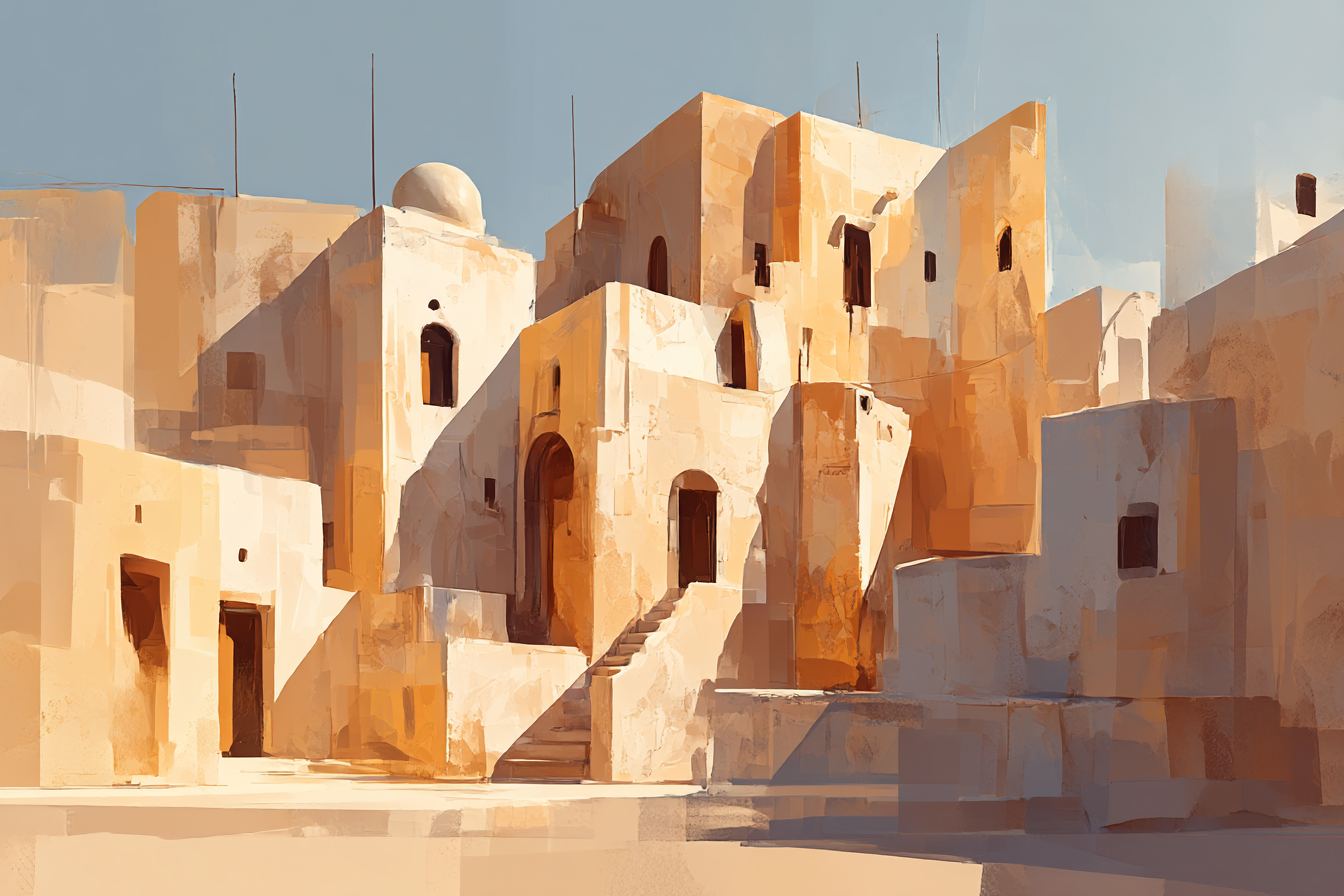
Take Santa Fe’s old plaza area. Those buildings aren’t randomly scattered around – every placement was intentional. Compact layout minimizes infrastructure needs while maximizing shade coverage. Thick adobe walls store and release heat to moderate temperature swings. Covered walkways let people move around comfortably even when the sun’s trying to kill them. Small windows keep heat out while interior courtyards create usable outdoor space that doesn’t feel like a pizza oven. The whole thing functions as an integrated climate control system that runs on physics instead of electricity.
Modern suburban development throws all this accumulated wisdom straight into the garbage. We spread buildings apart, maximizing both infrastructure costs and heat absorption. We use materials that perform terribly in desert conditions. We eliminate shade and block natural airflow. Then we act surprised when people need industrial-strength air conditioning just to survive in the environments we’ve created.
Here’s the thing that really gets me worked up: we absolutely know how to do better. I’ve seen contemporary developments that actually function well in desert conditions. There’s this neighborhood in Ahwatukee where houses cluster around shared courtyards, oriented to catch winter sun while avoiding summer heat gain. Shared walls reduce cooling loads, courtyards provide natural ventilation, and the whole setup uses about 40% less energy than typical sprawl while creating more pleasant outdoor spaces. It works beautifully, but developers avoid similar projects because they don’t fit standard financing models.
The breakthrough insight is that desert urbanism requires thinking about water, energy, transportation, and social systems as interconnected parts of a single machine. Optimize one component without considering the others and you’ll create new problems elsewhere. Water-wise landscaping might reduce irrigation needs but eliminate evapotranspiration cooling, increasing building energy loads. Compact development improves energy efficiency but can overwhelm water infrastructure. Transit-oriented development reduces transportation energy but creates heat islands if designed poorly.
You Might Also Like

I’ve started pushing planners toward what I call “climate-first design.” Instead of deciding what you want the place to look like and then trying to make it sustainable afterward, start with climate constraints and design urban forms that work within those limits while still providing decent quality of life. In desert cities, that means prioritizing shade, thermal mass, natural ventilation, and water conservation from day one, then figuring out how to create attractive, functional spaces within those parameters.
Transportation infrastructure matters enormously here. Standard grid systems with wide streets maximize pavement area and heat absorption while making walking feel like a death march. But narrow streets with building-integrated shade can maintain vehicle access while dramatically improving walkability and reducing heat island effects. I’ve measured temperature differences of 20 degrees between wide suburban arterials and narrow, shaded traditional streets on identical summer afternoons. Twenty degrees. That’s the difference between tolerable and dangerous.
Water systems need complete rethinking too. Most cities still design stormwater systems around rapid removal, which wastes precious resources and creates flooding problems downstream. Desert cities should capture and infiltrate every drop, using natural drainage to recharge groundwater while irrigating landscapes. I’ve worked on projects that eliminated municipal water for landscaping by designing buildings and streets to capture and direct rainfall to planted areas.
Energy integration offers huge opportunities as well. District systems dramatically outperform individual building HVAC, particularly when combined with thermal mass and passive cooling. Solar thermal works incredibly well here and can handle both domestic hot water and space heating. Proper building orientation and window placement can eliminate mechanical cooling for half the year.
The social component gets overlooked but it’s equally critical. Sustainable cities aren’t just environmentally responsible – they’re places people actually want to spend time outdoors. That requires comfortable public spaces designed around climate realities rather than fantasy aesthetics. Traditional Middle Eastern cities developed amazing strategies: narrow streets that stay shaded, wind towers creating natural ventilation, fountains providing evaporative cooling, covered markets enabling commerce during hot weather.
I’ve been testing some of these ideas on smaller projects. A recent plaza redesign in Tempe used strategic shade structures, water features for cooling, and seating positioned to catch natural breezes. The space went from completely abandoned during summer to actually usable year-round. People started holding evening events there, kids played in the water features, and nearby businesses saw increased foot traffic even during hot weather.
The biggest obstacle isn’t technical – it’s institutional inertia. Planning departments, zoning codes, building regulations, and financing systems are all optimized for conventional suburban development. Proposing alternatives means navigating bureaucratic systems that weren’t designed to evaluate integrated sustainability approaches. I’ve spent ridiculous amounts of time in permit offices explaining why narrow streets with building-integrated shade are actually safer and more functional than wide conventional streets, only to be told that doesn’t match standard engineering templates.
But change is happening, slowly. Younger planners and developers increasingly recognise that conventional approaches aren’t working economically or environmentally. Water scarcity makes desert sprawl obviously unsustainable. Energy costs drive interest in passive cooling.
Climate change makes outdoor comfort a survival issue rather than luxury concern.
The cities that crack sustainable desert urbanism first will have massive competitive advantages. They’ll attract residents and businesses seeking places that actually function well long-term. They’ll have lower infrastructure costs and better quality of life. They’ll be more resilient during resource shortages and extreme weather events.
That’s what keeps me working on this despite constant frustrations. We can absolutely build cities that work beautifully with desert conditions while providing excellent living environments. We just need to stop treating deserts like broken places that need fixing, and start designing communities that celebrate and work with the incredible climate we’ve already got.



