
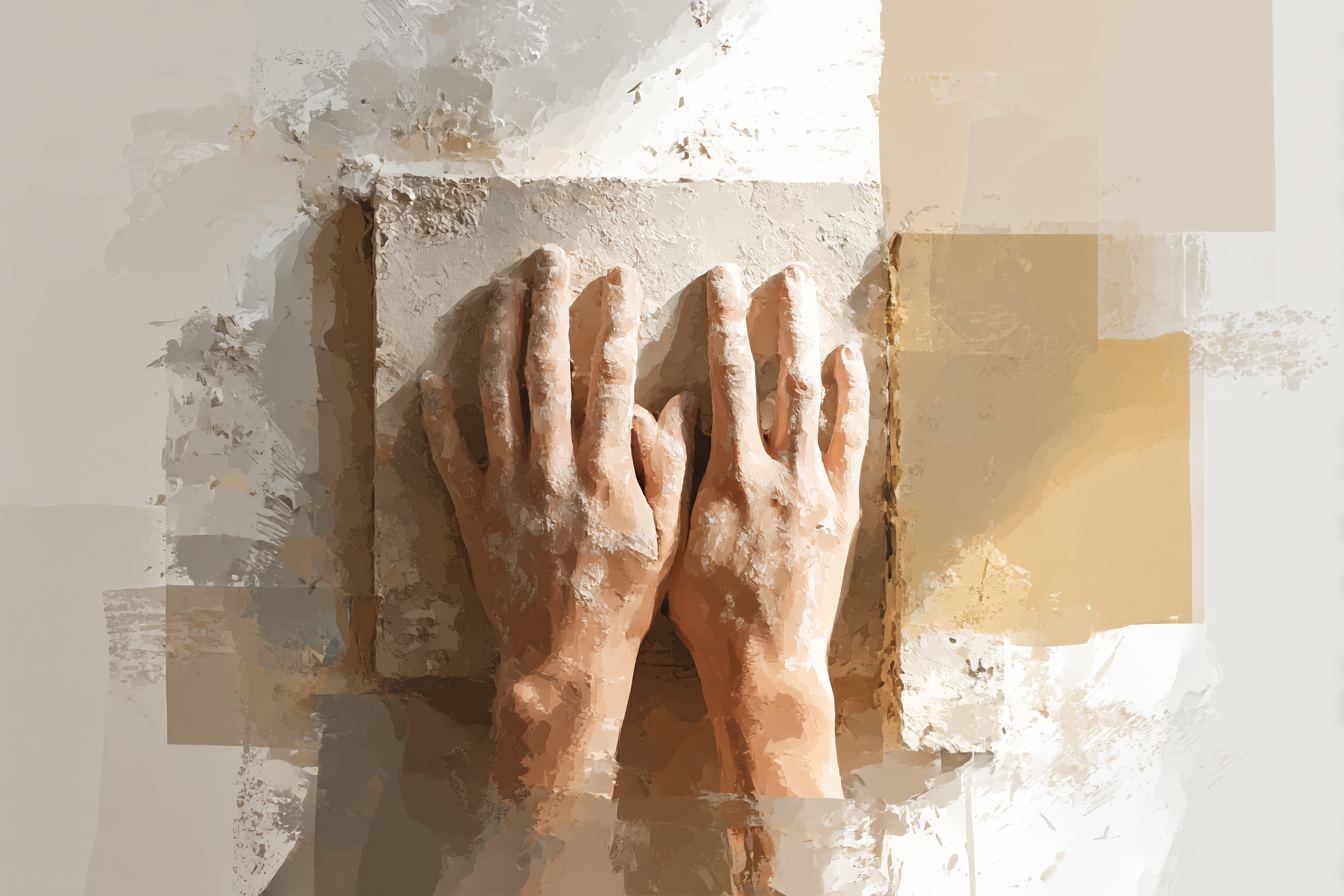
That smell hits you immediately when you’re working with adobe – earthy, almost sweet, like wet clay after monsoon rains. I was crouched in Maria’s backyard in Tubac last spring, watching her son Miguel pack mud between wooden forms with the kind of easy rhythm that comes from muscle memory. His hands moved like he’d been doing this forever, which knowing Miguel’s family, he probably had.
“You gonna help or just stand there looking professional?” Maria laughed, hefting another bucket of the earth mixture they’d been preparing since sunrise. She had that tone – amused but with just enough edge to get me moving.
I’d driven three hours south from the Bay Area specifically to see their earth building project unfold.
Maria had found me through a mutual connection after reading something I’d written about passive cooling strategies. She needed to add workshop space to their property but conventional construction was way outside their budget. Lucky for her, their neighbour Roberto had grown up building with adobe and offered to teach the family traditional techniques.
What drew me wasn’t some romantic notion about “natural building” – honestly, that whole movement can get pretty precious – but the building science behind it. Here in southern Arizona where summer temps routinely hit 110°F, those thick earth walls would absorb heat during the day and release it slowly at night. The thermal lag meant interiors stayed cooler when it was brutally hot outside and retained warmth when temperatures dropped. No HVAC required.
So I grabbed a bucket and jumped in.
The mixture felt substantial. Dense. Not like those lightweight synthetic materials that dominate modern construction. Roberto explained the ratios as we worked – roughly 10% clay, 30% sand, 60% larger aggregate, plus chopped straw for tensile strength. He could assess clay content just by rolling a handful between his palms, checking how it held together. Too much clay and the mixture would crack as it dried. Too little and it wouldn’t bind properly.
“My grandfather built houses with this exact recipe,” Roberto said, his weathered hands constantly moving, testing batches and adjusting the mix. “Those houses are still standing sixty years later. Never needed air conditioning.”
I mean, I’d heard similar claims before, usually followed by mystical nonsense about connecting with ancient wisdom and earth energy. But spending eight hours actually building with these materials, feeling how they behaved, watching the thermal performance in real time… it was genuinely impressive from a technical perspective.
The walls rose faster than I’d expected. Miguel and his younger brother could pack about two feet of height in a morning, working in lifts to prevent slumping. The wooden forms contained everything until the material firmed up enough to support itself. By afternoon, we’d remove the forms and start the next lift.
What struck me was how forgiving the whole process was. Screw up conventional framing and you might need to tear out and rebuild entire sections. Make a mistake with earth mixture and you just dig it out, adjust your ratios, and try again. The raw materials cost almost nothing – clay from a local supplier, sand and gravel from the riverbed, straw from a nearby farm.
But here’s what those romantic earth building advocates don’t mention: it’s brutally hard work. My back ached for three days afterward. The learning curve is steep. And building codes? Well, that’s where things get complicated fast.
Most jurisdictions have zero provisions for earth construction. You need engineered designs, special permits, sometimes expensive testing to prove structural adequacy. Maria spent four months working with the county to get approval. They eventually classified her building as a “test structure” with restricted use permits. The bureaucratic hassles nearly killed the project before ground breaking.
You Might Also Like
Still, monitoring the thermal performance over the following months, I understood why interest in earth building was growing among serious builders. During a July heat wave, the interior temperature in Maria’s workshop peaked around 82°F while outside temperatures hit 115°F. No mechanical cooling whatsoever – just thermal mass and strategic ventilation. My own office back home, despite excellent insulation and a high-efficiency AC system, struggled to maintain 78°F during the same period.
The durability factor impressed me too. Earth construction has this reputation for being fragile, requiring constant maintenance. But properly built earth walls, protected from direct water exposure, last decades with minimal intervention. Roberto’s grandfather’s houses remained solid after sixty years because they were built correctly – good foundations, adequate roof overhangs, appropriate material selection for local climate.
Modern earth building techniques address many traditional limitations anyway. Stabilized earth blocks use minimal cement content to improve water resistance while maintaining thermal properties. Rammed earth construction employs forms and pneumatic tampers to achieve consistent density and strength. These approaches satisfy building codes more easily while preserving the thermal benefits of earth materials.
I started researching earth building options for my own home. My 1980s house fights the climate through brute force air conditioning, just like every other house in my neighborhood. Thick earth walls could reduce cooling loads dramatically. But retrofitting existing construction is challenging. Adding thermal mass to lightweight frame construction requires structural analysis and often isn’t cost-effective.
New construction offers better opportunities. I’ve consulted on several projects designing earth-built homes in rural areas where code restrictions are less stringent. The key is understanding building physics principles rather than just copying traditional techniques. Earth walls work best when combined with passive solar design, natural ventilation strategies, and appropriate roof systems.
Moisture management becomes absolutely critical. Earth materials handle humidity differently than conventional wall systems. You need vapor-permeable finishes, appropriate foundation details, careful detailing around windows and doors. I’ve seen earth buildings fail spectacularly when builders ignored moisture dynamics, leading to structural problems and indoor air quality disasters.
Cost comparisons get messy quickly. Raw materials are cheap but labor requirements are high unless you’re doing the work yourself. Permit costs and engineering fees add up fast. Specialized contractors charge premium rates because frankly, there aren’t many of them. For owner-builders willing to invest serious sweat equity, earth construction can deliver significant savings. For conventional residential development, the economics rarely work.
But the performance benefits are absolutely real. I’ve monitored several earth-built homes in Arizona and New Mexico now. During summer peak demand periods when the electrical grid is stressed and rates spike, these houses maintain comfortable temperatures with minimal energy input. During winter cold snaps, stored solar energy keeps interiors warm without auxiliary heating systems.
The resilience aspect matters more than people realise. When power outages occur during extreme weather – increasingly common as infrastructure ages and climate becomes more volatile – earth buildings remain habitable. Conventional houses become uninhabitable within hours when HVAC systems fail during temperature extremes. I’ve experienced this personally during wildfire evacuations and extended power outages.
I’m not advocating earth construction for everyone. It’s labor-intensive, requires specific skills, faces regulatory hurdles in most areas. But dismissing it entirely means ignoring building physics principles that actually work.
Thermal mass, appropriate material selection, climate-responsive design create better building performance whether you’re using earth, concrete, stone, or other high-mass materials.
What earth building teaches us is that fighting climate makes buildings expensive and uncomfortable. Working with climate, using materials and techniques appropriate to local conditions, creates better results every time. Whether that’s earth construction in rural Arizona or improved concrete construction in urban environments, the underlying principles remain consistent.
Standing in Maria’s completed workshop last month, feeling genuinely comfortable in 105°F heat with no mechanical cooling running, I was reminded why I shifted my practice toward sustainable design. Buildings should work well with their environment. We have the knowledge and materials to make them work well. The only question is whether we’re willing to challenge conventional practices that persist through habit rather than actual performance.