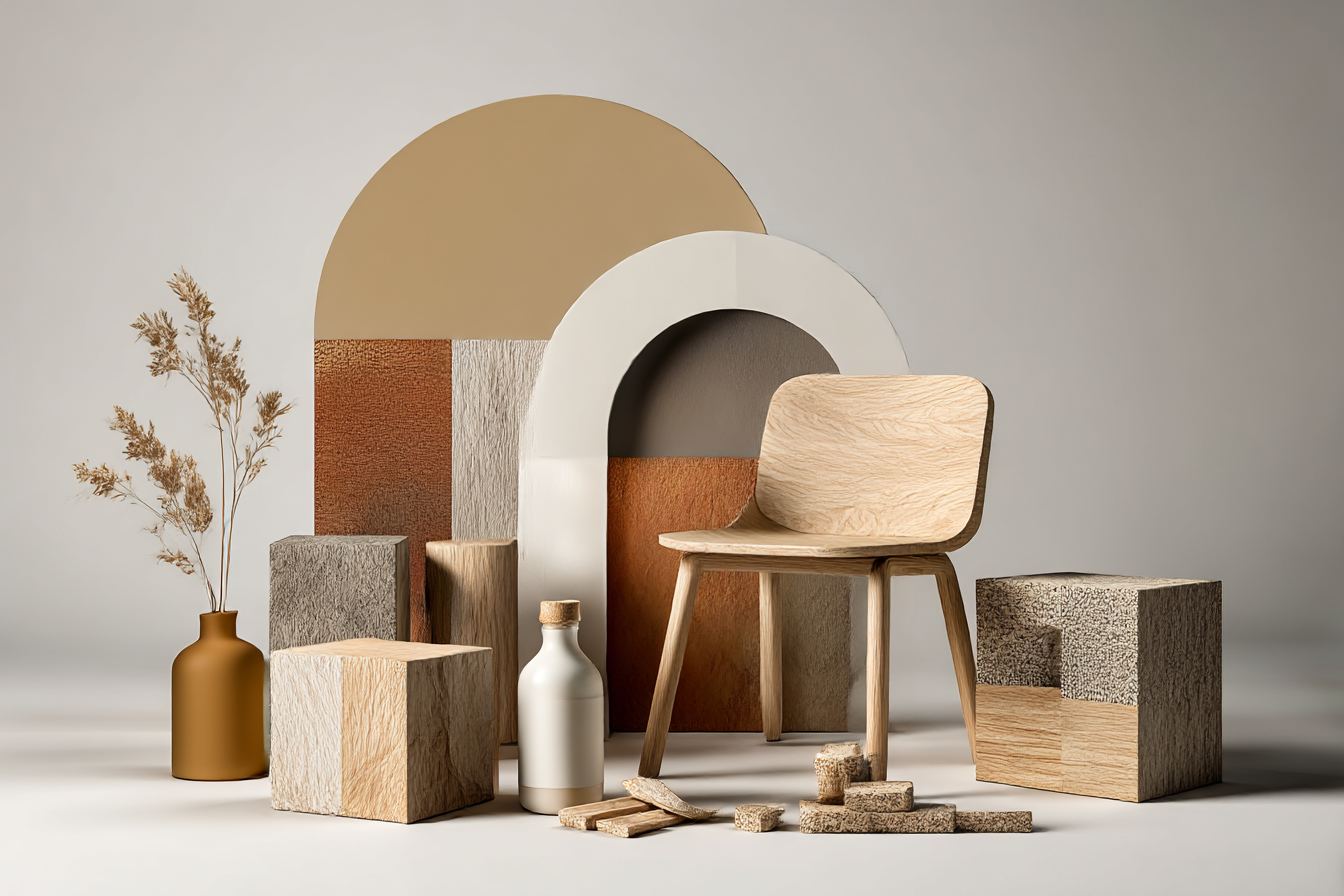
Walking through a friend's newly furnished apartment last month, I couldn't help but notice something that's been bothering me about the furniture industry for years. Every piece looked identical to what you'd find in a dozen other homes – mass-produced particle board nightstands, synthetic fabric sofas that would probably fall apart in three years, coffee tables made from materials I couldn't even identify. When I asked where she'd gotten everything, she rattled off the usual suspects: big box stores and online retailers promising "affordable style" with next-day delivery.
That conversation got me thinking about a company I'd discovered recently that's doing things completely differently. Stem isn't a household name yet, but their approach to furniture manufacturing represents exactly what I wish more companies would embrace – genuine environmental responsibility without the greenwashing nonsense that saturates this industry.
I first encountered Stem through a client who was furnishing a passive solar home we'd designed together. She'd been struggling to find furniture that matched the environmental values we'd built into the structure itself. You know how it is – you spend months optimizing building materials for durability and low environmental impact, then fill the space with furniture made from questionable materials that'll need replacing in a few years.

The disconnect was driving her crazy, and honestly, it was bothering me too.
What immediately caught my attention about Stem was their material transparency. Most furniture companies hide behind vague terms like "sustainable wood" or "eco-friendly finishes" without providing any actual details. Stem publishes detailed information about every material they use – where their wood comes from (FSC-certified forests), what adhesives they use in their engineered lumber (formaldehyde-free), even the specific water-based finishes applied to each piece. As someone who's spent years fighting for material honesty in construction, this level of openness was refreshing.
Their manufacturing process impressed me even more. Stem operates on what they call a "closed-loop" system, though I hate that buzzword because it's usually meaningless corporate speak. In their case, it actually means something tangible. Wood waste from one production line becomes raw material for another. Sawdust gets compressed into panels for cabinet backs. Even their packaging comes from recycled content and can be composted or recycled again. I've toured furniture factories where waste streams are enormous – entire truckloads of perfectly good wood heading to landfills because it's cheaper than finding uses for smaller pieces. Stem's approach eliminates most of that waste.
The quality difference is obvious when you handle their pieces. I'm not talking about superficial aesthetics – though their designs are clean and well-proportioned – but actual construction quality. Joints are properly reinforced, hardware is substantial, and finishes feel durable rather than decorative. My client's dining table is three years old now and shows virtually no wear despite heavy daily use by a family with two teenagers. Compare that to the particle board disaster my neighbour replaced last year after eighteen months because the veneer started peeling and the legs wobbled beyond repair.
Stem's regional manufacturing approach particularly appeals to me because it mirrors what I try to promote in construction – matching solutions to local conditions and resources. They operate several smaller facilities rather than one massive factory, sourcing materials regionally and serving customers within reasonable shipping distances. Their Southwest facility uses reclaimed wood from demolished buildings and urban tree removal projects – materials that would otherwise become waste. A bookshelf I examined was made partially from wood reclaimed from a 1950s office building in Phoenix, complete with the story of its previous life printed on a small card tucked behind one shelf.
You Might Also Like
The company's approach to chemicals and finishes aligns with indoor air quality principles I constantly discuss with clients. Most furniture arrives saturated with volatile organic compounds that off-gas for months, contributing to poor indoor air quality. Stem uses only low-VOC or zero-VOC finishes, and their solid wood pieces receive simple oil treatments rather than synthetic coatings. A cabinet maker I know tested their finishes and confirmed they contain none of the formaldehyde or other nasty chemicals common in mass-produced furniture.
Pricing remains Stem's biggest challenge for mainstream adoption. Their pieces cost 40-60% more than comparable items from major retailers, which puts them out of reach for many buyers. I understand the economics – responsible material sourcing, regional manufacturing, and skilled craftsmanship cost more than overseas mass production using cheap materials. But sticker shock is real, and most consumers don't calculate long-term value when making furniture purchases.
I've started encouraging clients to think about furniture costs differently, the same way I talk about building materials. A $300 particle board dresser that lasts three years costs $100 annually. A $600 Stem dresser that lasts twenty years costs $30 annually. The math is straightforward, but requires thinking beyond initial purchase price. Some clients embrace this logic immediately; others remain focused on upfront costs despite understanding the economics.
Stem's customization options address another frustration I have with mass-produced furniture – everything comes in predetermined sizes that rarely fit spaces properly. Their modular shelving systems can be configured for specific wall dimensions. Tables come in custom lengths. Storage pieces can be modified for particular needs. This flexibility reduces waste because pieces actually work in their intended spaces rather than becoming expensive mistakes heading back to landfills.
The company's transparency extends to their supply chain, which is unfortunately rare in furniture manufacturing. They maintain detailed records of material origins and can trace individual pieces back to specific forests or reclamation projects.

This level of documentation matters for clients pursuing green building certifications, but it also demonstrates genuine commitment to responsible sourcing rather than superficial marketing claims.
What impresses me most about Stem is their honest communication about challenges and limitations. They acknowledge that some materials they'd prefer to use aren't yet available at reasonable cost or quality. They admit that certain finishes they'd like to eliminate are still necessary for durability in some applications. This honesty builds credibility in ways that perfect sustainability claims never could.
Their customer education efforts remind me of what I try to do with building science – making complex information accessible without oversimplifying important details. Stem's website includes detailed explanations of why they choose specific materials, how different wood species perform in various applications, and guidance for caring for pieces to maximize longevity. They're teaching customers to make informed decisions rather than just pushing products.
For anyone furnishing homes designed with environmental performance in mind, Stem represents exactly what the furniture industry needs more of – genuine environmental responsibility, quality construction, and honest communication. The higher initial cost stings, but the long-term value proposition makes sense for buyers who understand that quality furniture is an investment rather than an expense. As more companies adopt similar approaches, prices should become more competitive while maintaining the environmental and quality benefits that make Stem worth considering.



