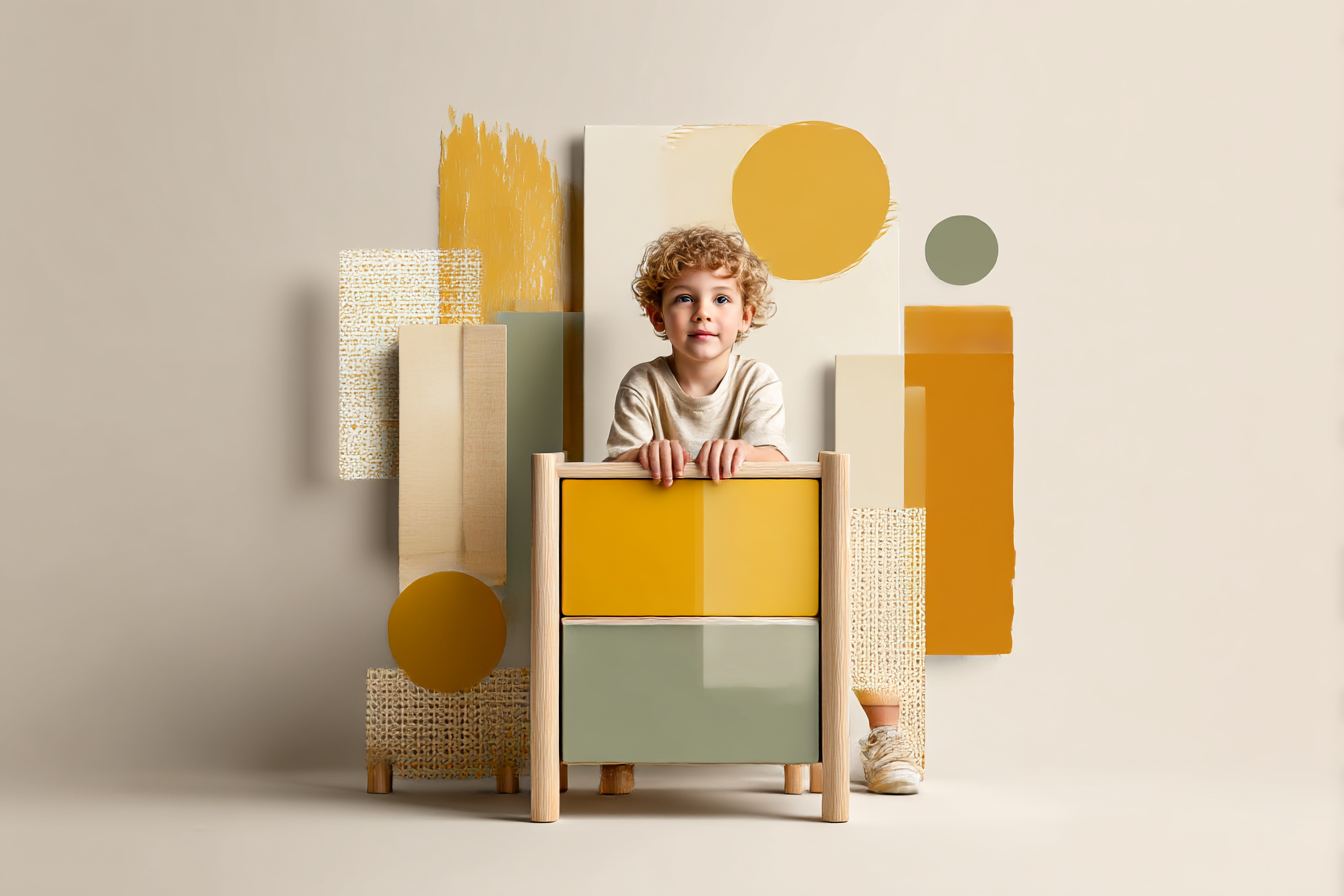
My nephew's third birthday party last month turned into an unexpected education about children's furniture safety. I'm watching this little guy bounce around his playroom, climbing on chairs, chewing on table edges (why do they do that?), and generally treating every piece of furniture like jungle gym equipment. His mom, my sister Sarah, mentions she's been researching safer options after finding out their current bookshelf was held together with formaldehyde-based adhesives. That got my building performance brain spinning.
You know, I spend most of my time thinking about how construction materials affect adults living in homes, but kids? They're basically tiny humans with completely different exposure patterns. They're closer to the ground where heavier chemicals settle.
They put everything in their mouths. They spend way more time on floors and touching surfaces. And their developing bodies process toxins differently than we do.
Sarah started showing me what she'd learned about children's furniture, and honestly, it was pretty alarming. Apparently a lot of the colorful, affordable stuff you find at big box stores contains some nasty chemicals. Formaldehyde from pressed wood products, flame retardants that can disrupt hormones, volatile organic compounds from paints and finishes that off-gas for months or even years. I mean, we're talking about furniture that goes in spaces where kids sleep, play, and spend most of their time.
The more we talked, the more I realised this connects directly to my building performance work. Just like I analyze whole-house systems for energy efficiency and indoor air quality, children's furniture needs the same kind of systematic thinking. What materials are used? How are they manufactured? What do they emit over time? How do they hold up to the unique stresses kids put on furniture?
I started digging into this stuff, and let me tell you, it's complicated. The furniture industry isn't regulated the same way building materials are. There's no equivalent to Energy Star ratings or building codes for kids' furniture safety and sustainability. You're basically on your own trying to figure out what's actually safe and what's just marketing nonsense.
But here's what I've learned works, both from research and from helping Sarah outfit her kids' spaces over the past year.
First, solid wood furniture beats engineered wood products almost every time. Yeah, it costs more upfront, but think about it like I think about building materials, the lifecycle cost matters more than initial price. A solid maple dresser might cost three times what a particleboard one does, but it'll last through multiple kids, won't off-gas formaldehyde, and actually gets more beautiful with age and wear. Plus, when kids inevitably bang it up (and they will), you can sand and refinish solid wood. Try that with laminated particleboard.
I helped Sarah find a local craftsman who builds children's furniture from locally sourced hardwoods. The guy uses traditional joinery techniques, no chemical adhesives needed. Water-based finishes only, and he actually lets pieces cure for weeks before delivery to minimize any off-gassing. More expensive? Absolutely. But when you calculate cost per year of use, and factor in not exposing your kids to questionable chemicals, the math works out.
For families where solid wood custom furniture isn't realistic (and I get it, not everyone can drop two grand on a crib), there are still good options. Look for furniture certified by organizations like Greenguard or Forest Stewardship Council. These certifications actually mean something, unlike a lot of the "eco-friendly" marketing you see everywhere.
Greenguard specifically tests for low chemical emissions. Their Gold standard is even stricter and designed for sensitive environments like schools and healthcare facilities. I think of it like the building performance standards I use, there are minimum requirements and then there are best practices. For kids' furniture, I'd aim for Greenguard Gold when possible.
You Might Also Like

The FSC certification focuses on sustainable forestry practices, which matters for environmental impact but also often correlates with better manufacturing overall. Companies that care enough to source wood responsibly usually pay attention to other aspects of their production too.
Paint and finishes are another big consideration. Even if the underlying furniture is solid wood, toxic finishes can ruin everything. I've tested some furniture finishes with my VOC detector (yeah, I'm that guy who brings air quality equipment everywhere), and some of the bright, glossy finishes on children's furniture off-gas chemicals for months after purchase.
Water-based finishes generally perform much better than oil-based or lacquer finishes. They cure faster, emit fewer chemicals, and are easier to touch up later. Natural oil finishes like tung oil or beeswax can work well too, though they require more maintenance. The key is letting any finish fully cure before putting furniture in kids' spaces. I usually recommend at least two weeks in a well-ventilated area.
Here's something most people don't think about: used furniture can actually be safer in some ways. Older pieces have had years or decades to off-gas whatever chemicals they contain. That vintage solid wood dresser from the 1960s has probably finished emitting formaldehyde years ago. Obviously you need to cheque for lead paint if it's old enough, but well-made vintage furniture often beats new stuff for both safety and durability.
Sarah found some great pieces at estate sales and refinished them herself with safe products. It became a fun project, and the kids love having furniture with stories. Plus, refinishing taught her exactly what materials and finishes were going on pieces her children would use daily.
Storage is another area where material choices really matter. Those colorful plastic bins and organizers? Many contain phthalates and other plasticizers that can disrupt hormones. BPA-free doesn't mean chemical-free, it just means they replaced BPA with something else that might be equally problematic.
For toy storage, we've had good luck with natural fibre baskets, solid wood toy chests, and even repurposed wooden crates. They're not as bright and cheerful as plastic options, but kids adapt quickly, and you don't have to worry about chemicals leaching from storage containers into toys that go in little mouths.
Upholstered furniture presents its own challenges. Conventional foam cushions are usually treated with flame retardants that have been linked to developmental problems. The fabric treatments, stain resistance, and adhesives add more potential chemical exposures. For kids' furniture, I recommend looking for pieces made with natural latex or organic cotton batting instead of conventional foam, and upholstered with organic or at least untreated fabrics.
One thing that surprised me was how much difference proper ventilation makes.

Even with safer furniture, kids' rooms benefit from good air circulation. I helped Sarah improve ventilation in her children's bedrooms using some of the same strategies I use for whole-house indoor air quality. Better window placement, ceiling fans to keep air moving, and air-purifying plants that can handle the abuse kids dish out.
The bottom line is that choosing safer children's furniture requires the same kind of systems thinking I apply to building performance. Consider materials, manufacturing processes, finishes, and how everything works together in the space where kids actually live and play. It's more complex than just buying whatever looks cute at the furniture store, but the peace of mind is worth the extra effort.
And honestly? The well-made, safer options usually look better too. There's something about solid wood furniture that just feels more substantial and beautiful than the disposable stuff. Sarah's kids' rooms have developed this timeless, calm feeling that I think actually helps the kids sleep and play better.



