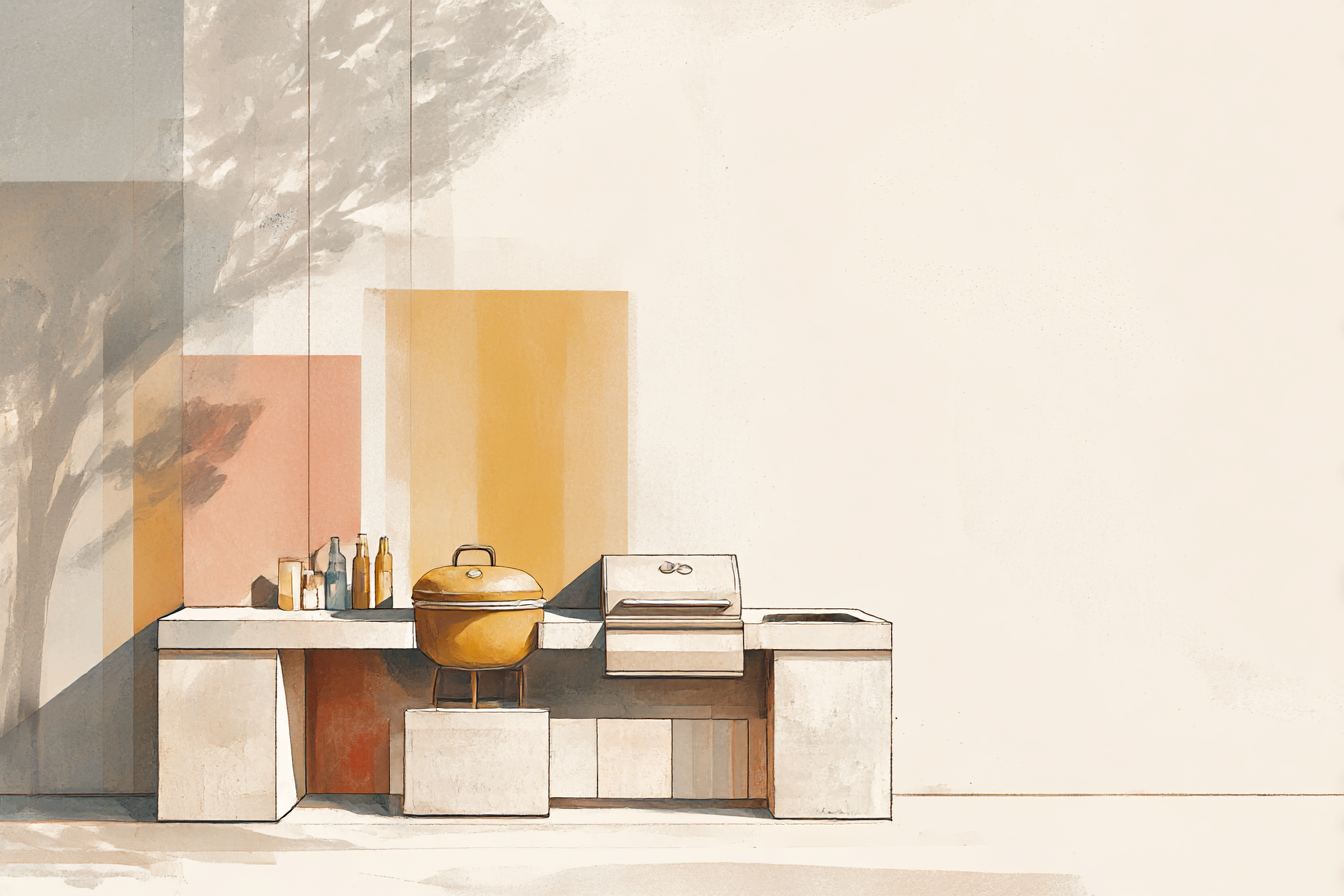
My clients have been asking about outdoor kitchens constantly this past year. I get it—after being cooped up inside during the pandemic, everyone wants to cook and entertain outdoors. But when they show me their Pinterest boards full of massive stone islands with built-in grills that could power a small restaurant, I usually have to be the voice of reason.
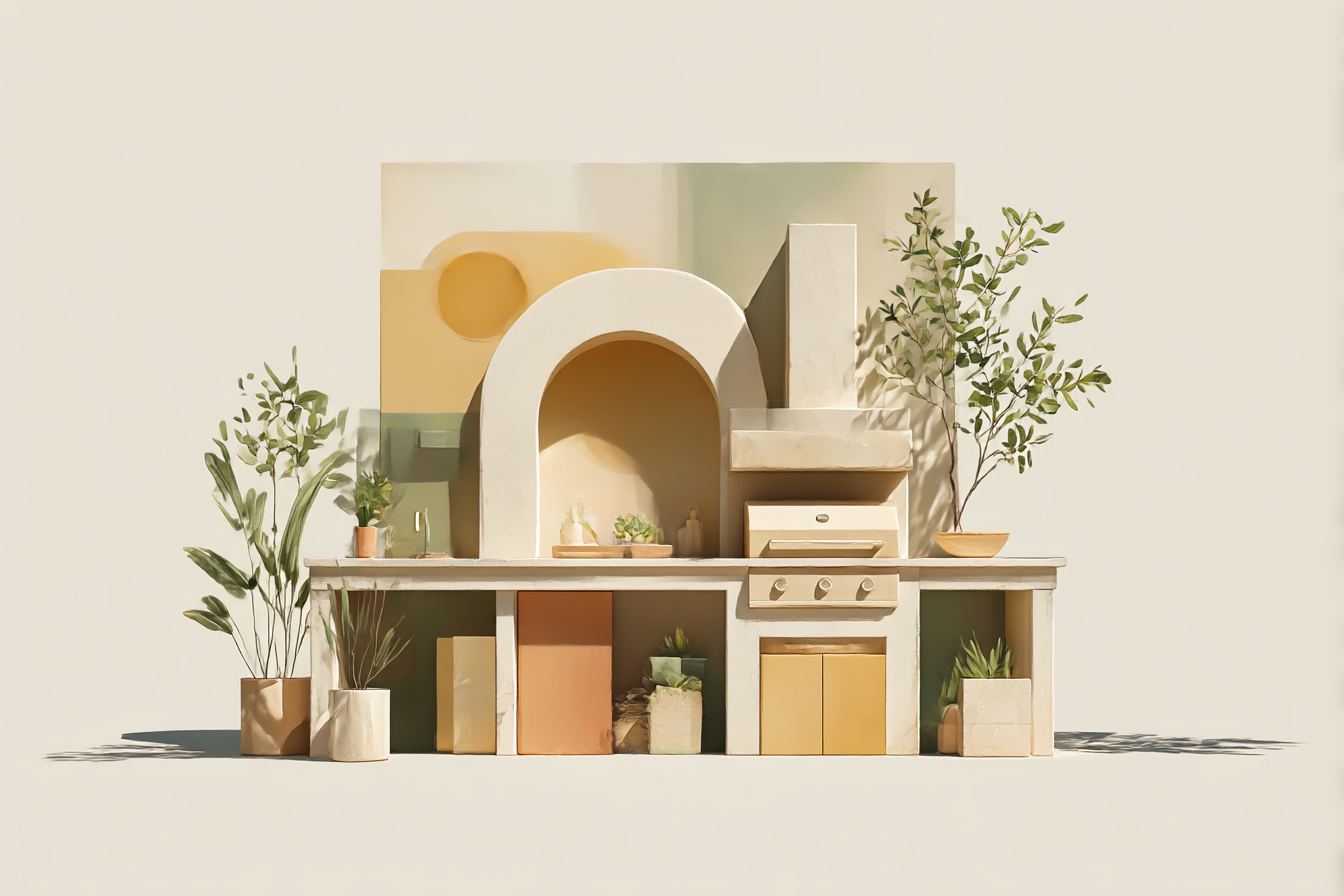
Last month I visited a newly completed outdoor kitchen in Paradise Valley that perfectly exemplified what not to do. The homeowners had spent close to $80,000 on this elaborate setup that included a gas grill the size of my car, a pizza oven that could feed a small army, granite countertops stretching for what seemed like miles, and enough stainless steel appliances to blind a pilot. Beautiful? Sure.
Sustainable? Not even close.
The granite had been quarried in Brazil and shipped halfway around the world. The massive gas consumption from that oversized grill was already showing up in their utility bills. The stainless steel was starting to show water spots and corrosion from our mineral-heavy water, requiring special cleaning products and frequent maintenance. And here's the kicker—they told me they actually cook outside maybe twice a month.
I've been designing outdoor cooking spaces for fifteen years now, and I've learned that the most successful ones aren't necessarily the most impressive looking. They're the ones that actually get used regularly without breaking the bank or destroying the environment in the process.
The foundation of any sustainable outdoor kitchen starts with honest assessment of how you actually live. I ask clients to track their outdoor cooking for a month before we start designing. Most people discover they're not actually grilling elaborate meals three times a week like they imagined. They're usually doing simple weeknight dinners or weekend entertaining that doesn't require a restaurant-grade setup.
Size matters enormously in outdoor spaces, but not in the way most people think. Bigger isn't better when it comes to sustainability. A compact, well-designed cooking area uses less materials, requires less energy to operate, and encourages more frequent use. I've designed 6×8 foot outdoor kitchens that get used almost daily because everything's within arm's reach and setup doesn't feel like a major production.
Material selection makes or breaks the environmental impact of these projects. Instead of that Brazilian granite, I steer clients toward locally sourced materials whenever possible. Here in Arizona, we have incredible flagstone quarries within a few hours' drive. The transport impact drops dramatically, the material performs beautifully in our climate, and the cost savings can be substantial.
For countertops, I'm increasingly recommending concrete mixed with local aggregates. You know what? It actually looks amazing when done properly, and it can incorporate recycled glass or other local waste materials. One client wanted something unique, so we embedded polished copper pieces salvaged from old electrical work into the concrete surface. It's gorgeous, completely one-of-a-kind, and kept those materials out of the landfill.
The obsession with stainless steel drives me crazy because it performs terribly in our desert environment. The constant dust and mineral deposits from our water create maintenance nightmares. I've had better luck with powder-coated steel in appropriate colours, cast iron for cooking surfaces that will actually develop seasoning over time, and even some of the newer composite materials that look like stone but resist staining and weathering.
Water usage is another huge issue that most outdoor kitchen designs completely ignore. Traditional designs assume you'll just run a water line and install a sink like you would indoors. But outdoor sinks often sit unused for weeks at a time, wasting water through evaporation and encouraging mosquito breeding during monsoon season.
You Might Also Like

I've been experimenting with greywater systems for outdoor kitchens. The water from washing vegetables or cleaning dishes can be directed to nearby plantings through simple filtration systems. One project in Tempe uses the outdoor kitchen greywater to irrigate a small herb garden that provides ingredients for cooking. It's a closed loop that actually reduces the property's overall water consumption.
Energy efficiency in outdoor kitchens requires rethinking the whole approach. Most designs assume you need electric outlets everywhere for every possible appliance. But do you really need an electric ice maker, a mini fridge, a food processor, and a coffee maker all running simultaneously outdoors?
I encourage clients to focus on cooking methods that don't require electricity at all. Wood-fired cooking isn't just trendy—it's genuinely more sustainable than gas or electric when done correctly. A well-designed wood-fired oven can handle everything from pizza to roasted vegetables to bread baking, using locally sourced wood and creating amazing flavor.
Solar integration works beautifully in outdoor kitchens, especially here in Arizona where we have abundant sun. Small solar panels can power LED lighting, fans for ventilation, and even charging stations for phones and speakers. Battery backup systems ensure everything keeps working during monsoon storms when the grid goes down.
The construction process itself offers opportunities for sustainability that most contractors completely overlook. I've started requiring material waste reduction plans for outdoor kitchen projects. Every piece of stone, every length of pipe, every electrical component should be accounted for and used efficiently.
Demolition waste can often be repurposed creatively. Broken concrete makes excellent drainage material under outdoor kitchen foundations. Old brick can be crushed and used as decorative aggregate in new concrete. Even scrap metal can be incorporated into design elements or sold to recyclers to offset project costs.
Seasonal considerations are crucial in sustainable outdoor kitchen design. In the Southwest, we have distinct cooking seasons based on temperature and weather patterns.
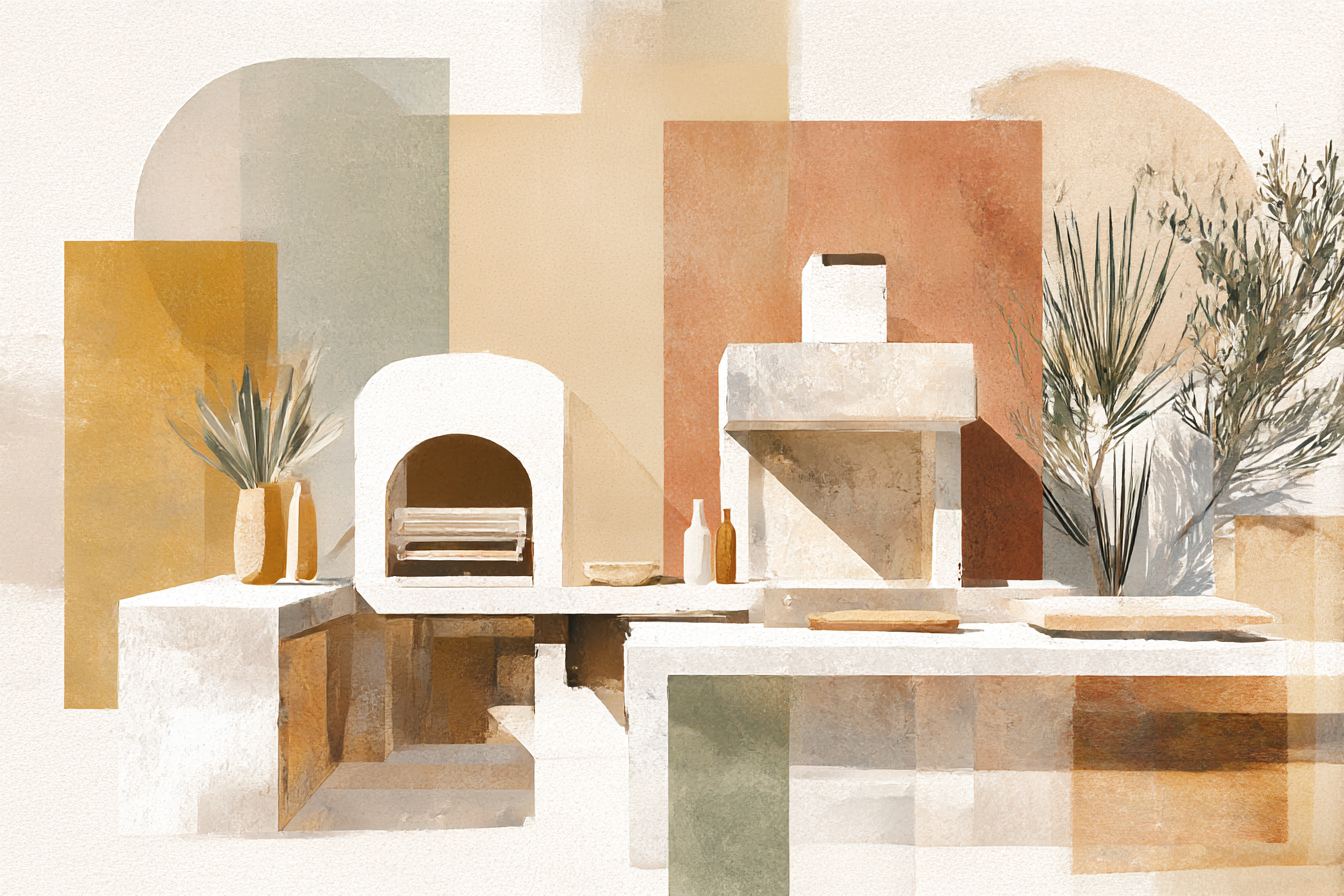
Spring and fall are prime outdoor cooking times when temperatures are comfortable and rainfall is minimal. Summer requires different strategies—early morning or evening cooking, extensive shade structures, and cooling systems that don't consume massive energy.
I've found that outdoor kitchens work best when they're designed as extensions of indoor spaces rather than separate entities. Simple pass-through windows or folding glass doors can connect indoor and outdoor cooking areas, reducing the need to duplicate every appliance and storage solution outside.
Maintenance and longevity deserve more attention in outdoor kitchen planning. The most sustainable outdoor kitchen is one that lasts decades without major renovations. This means choosing materials that age gracefully, designing drainage systems that prevent water damage, and creating storage solutions that protect equipment from weather and dust.
My most successful sustainable outdoor kitchen project cost about 40% less than the Paradise Valley monster I mentioned earlier, gets used at least four times per week year-round, and has required virtually no maintenance in three years of operation. The secret wasn't expensive materials or elaborate features. It was careful planning, appropriate scale, and honest assessment of how the family actually wanted to live outdoors.
The real sustainability win happens when outdoor cooking becomes a regular part of your routine rather than a special occasion production. When firing up the outdoor kitchen feels as natural as making coffee in the morning, you're using less indoor energy, eating fresher food, and spending more time outside in Arizona's beautiful weather.



