
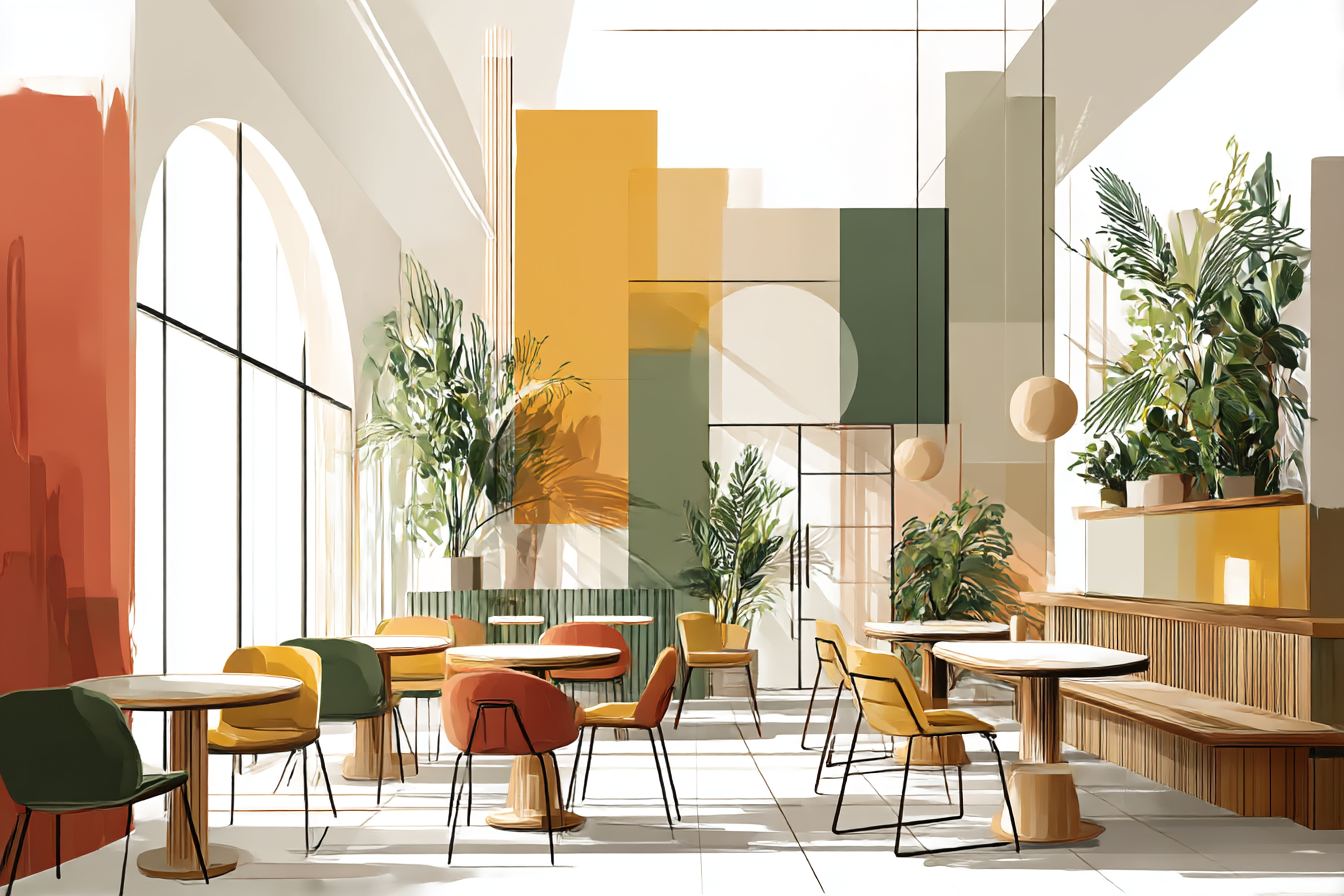
I was crammed into the back corner of a downtown Portland coffee shop yesterday, laptop balanced precariously on my knees, when the afternoon sun suddenly broke through those towering cloud banks we're famous for. The entire café transformed. Seriously – it was like someone had flipped a switch on human behavior.
The barista stopped mid-conversation and actually smiled (rare for Portland). A businessman folded his newspaper and just… stared out the window for maybe three minutes straight. Two students who'd been hunched over textbooks suddenly sat up straighter, started chatting about weekend plans. All because natural light had finally decided to make an appearance.
I've been obsessing over moments like this for years now, and they never get old.

There's something almost magical about watching people respond to natural light – not consciously, but in these deep, instinctive ways that speak to something hardwired in our biology.
That coffee shop reminded me of a project I consulted on last spring in Minneapolis. The client owned a chain of urgent care clinics and was hemorrhaging money on staff turnover. Exit interviews kept mentioning the "depressing atmosphere," which honestly wasn't surprising. These were typical medical boxes – fluorescent lighting, beige walls, zero connection to the outside world.
We ended up redesigning just one location as a pilot. Nothing revolutionary – we maximized existing window openings, installed skylights in the waiting area, added light wells that brought natural illumination into previously windowless exam rooms. The transformation wasn't just aesthetic.
Staff turnover dropped by 40% in six months. Patient satisfaction scores jumped significantly. Even more interesting? The clinic started seeing measurable improvements in diagnostic accuracy during peak daylight hours compared to their other locations.
The thing about natural light is that it's not just about brightness levels – though that matters too. Our circadian rhythms, those internal clocks that regulate everything from hormone production to cognitive function, are calibrated to the specific qualities of sunlight. The colour temperature shifts throughout the day, from warm reds at sunrise to cool blues at midday, then back to warmer tones at sunset.
Most artificial lighting completely ignores this cycle. Those harsh fluorescents in office buildings? They're essentially telling your brain it's permanently noon on an overcast day. No wonder people feel chronically exhausted in windowless workspaces.
I learned this the hard way during my Singapore stint. The firm I was working with had just moved into a gleaming new high-rise with floor-to-ceiling windows on three sides. Sounds perfect, right? Except those windows were treated with film that blocked 90% of UV light and significantly altered the colour spectrum of incoming daylight.
Within weeks, everyone was complaining about feeling sluggish despite getting what appeared to be abundant natural light. It took months to convince management that the problem wasn't psychological – we were essentially working under very expensive artificial lighting that happened to come from the sun.
The solution involved replacing sections of that treated glass with clear panels and installing automated blinds that could modulate light intensity without completely blocking the full spectrum. The change was immediate and dramatic. Productivity metrics improved, sick days decreased, and people just seemed… happier.
Window placement isn't just about quantity – it's about quality and timing. South-facing windows provide consistent light throughout the day but can create uncomfortable glare and heat gain. North-facing windows offer gentle, even illumination that's perfect for detail work but might not provide enough brightness for larger spaces.
East and west orientations are where things get interesting. Morning light from eastern exposure has been shown to help regulate sleep cycles and improve mood – probably because it mimics the natural sunrise that our ancestors evolved with. Western light creates those golden hour moments that make any space feel warm and inviting, but it can also cause serious overheating if not managed properly.
I've started paying attention to how people unconsciously arrange themselves relative to windows. In restaurants, tables near windows fill first – always. In offices, employees will literally fight over desk assignments based on window proximity. There's this deep, almost magnetic pull toward natural light that transcends cultural or personal preferences.
My neighbour's teenage daughter provided an unexpected case study last year. She'd been struggling with what her parents thought was teenage moodiness but turned out to be seasonal affective disorder. Their solution was installing a lightbox in her bedroom and having her use it every morning.
You Might Also Like
Instead, I suggested relocating her study space from the basement family room to a second-floor bedroom with large south-facing windows. We also replaced her heavy curtains with cellular shades that could diffuse bright sunlight while maintaining the full spectrum.
The improvement was remarkable – not just in mood but in academic performance. Her parents were convinced we'd performed some kind of miracle, but really, we'd just given her developing brain access to the light cues it needed to function properly.
Commercial spaces present unique challenges. Building codes often limit window-to-wall ratios for energy efficiency reasons, and deep floor plates make it impossible to get natural light to interior spaces through conventional means.
That's where things like light wells, clerestory windows, and reflective surfaces become crucial. I worked on a corporate headquarters in Denver where we used a combination of mirrors and prismatic panels to bounce daylight from perimeter windows deep into the building core. Employees in previously windowless cubicles suddenly had access to indirect natural light throughout the day.
The key is understanding that even reflected or diffused natural light maintains spectral qualities that artificial lighting can't replicate. Your brain knows the difference, even when you're not consciously aware of it.
I've become something of a natural light detective, analyzing how different window treatments affect both light quality and human behavior. Those popular cellular shades everyone's installing? They're great for energy efficiency but they filter out important blue wavelengths that help regulate circadian rhythms.
Venetian blinds can actually be adjusted to redirect light toward ceilings, creating more even distribution throughout a room while reducing direct glare. It's a technique borrowed from traditional Middle Eastern architecture that's surprisingly effective in modern applications.
Privacy concerns often limit window size in residential settings, but there are workarounds. Frosted glass maintains light transmission while blocking visibility. Strategic landscaping can create natural screens that filter light beautifully while maintaining privacy.
I recently helped a client transform their dark, closed-off kitchen by replacing solid cabinet doors with frosted glass panels and adding under-cabinet lighting that mimicked daylight colour temperatures. The space felt twice as large and infinitely more welcoming – all because we'd created the illusion of additional natural light sources.
The psychological effects run deeper than most people realise. Spaces with abundant natural light don't just feel more pleasant – they actually alter brain chemistry in measurable ways.

Serotonin production increases, cortisol levels decrease, and cognitive function improves across multiple metrics.
This isn't just feel-good pseudoscience. Healthcare facilities using evidence-based lighting design are documenting faster recovery times and reduced medication needs. Schools with optimized natural lighting report improved test scores and reduced behavioral issues.
But here's what really excites me: we're just beginning to understand how to integrate natural light cycles into intelligent building systems. Imagine windows that automatically adjust their tint throughout the day to maintain optimal circadian lighting while preventing glare. Or interior lighting that seamlessly supplements natural light with the exact spectral qualities needed at different times.
That future isn't as far off as you might think. The technology exists – it's just a matter of architects and designers understanding why it matters enough to specify it.
Every time I watch people gravitate toward natural light – in that Portland coffee shop, in office lobbies, in their own homes – I'm reminded that this isn't about trends or aesthetics. It's about honoring something fundamental about human biology that our built environment too often ignores.
Natural light through windows isn't just a design element. It's a biological necessity we've somehow learned to treat as a luxury.