Last month, I found myself staring at the bland beige walls of a client's new home office, watching her unconsciously rub her temples while explaining how the space made her feel "drained and disconnected." She'd moved from a corner office with floor-to-ceiling windows overlooking a city park to this windowless converted bedroom. The irony? She could afford any renovation she wanted, but didn't know where to start.
That's when I pulled out my phone and showed her photos from my own workspace transformation – specifically, the wallpaper installation that had completely changed how I experienced my daily routine. Not just any wallpaper, mind you, but what I've come to call "living walls on paper" – biophilic patterns that trick your brain into experiencing natural environments even when you're surrounded by drywall and fluorescent lighting.
I discovered biophilic wallpaper by accident, honestly. Three years ago, I was renovating my home studio on a tight budget after a consulting contract fell through unexpectedly. I couldn't afford the living wall system I'd been planning (those things run $200+ per square foot when properly installed), but I needed something to counteract the cave-like feeling of my north-facing workspace.
Walking through a design showroom in Philadelphia, I stumbled across this wallpaper sample that made me stop dead in my tracks.
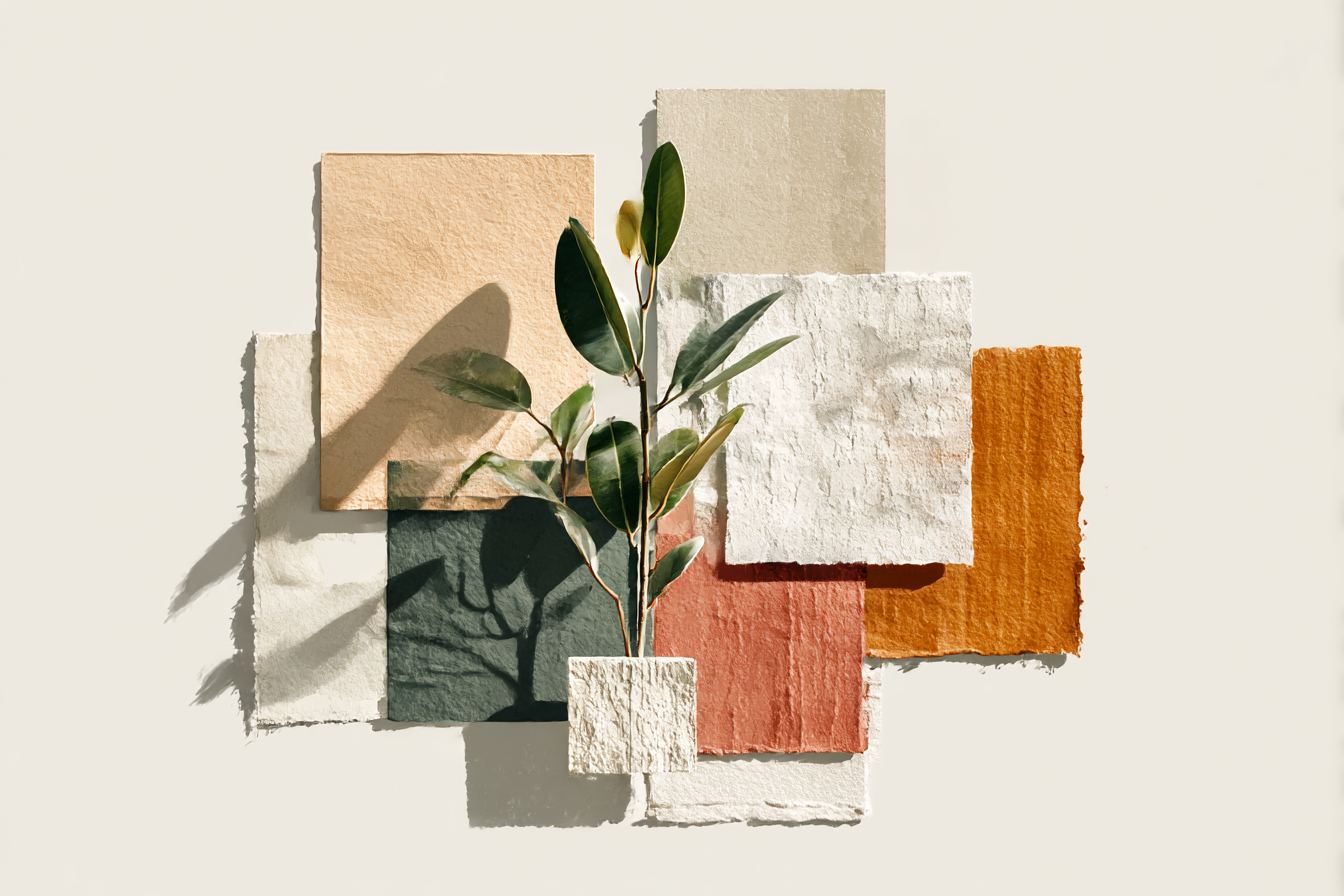
It wasn't the typical leaf-print stuff you see everywhere – this pattern mimicked the fractal branching you find in river deltas, lightning strikes, and blood vessels. The designer explained it was based on mathematical patterns found throughout nature, printed with subtle texture variations that created depth without being obviously three-dimensional.
Here's what happened that completely sold me on the concept. I installed a single accent wall with this fractal pattern behind my desk. Within two weeks, I noticed I was unconsciously looking up from my computer screen more often, letting my eyes trace the branching patterns. My sister visited and commented that the room felt "bigger somehow," even though nothing else had changed. But the real kicker came during a particularly stressful deadline crunch – I found myself actually calming down just by focusing on the wall pattern for thirty seconds at a time.
The research backs this up, by the way. Studies show that fractal patterns with a specific mathematical ratio (called D-value, if you want to get technical) can reduce stress hormones by up to 60%. It's not just aesthetic preference – there's actual neurological wiring that responds positively to these natural mathematical relationships.
But here's where most people go wrong with biophilic wallpaper. They think slapping up some palm leaf prints or forest photography will do the trick. I've seen so many failed attempts where clients chose patterns that looked "natural" but felt flat and lifeless. The magic isn't in literal representation – it's in capturing the underlying structures and rhythms that make natural environments psychologically restorative.
Take colour temperature, for instance. Most nature-inspired wallpapers use static colours that photograph well but don't change throughout the day like real natural environments do. I've started recommending papers with subtle iridescent properties or colour-shifting inks that respond differently to various lighting conditions. There's this incredible wallpaper from a small manufacturer in Oregon that actually appears to shift from cool morning blues to warm afternoon golds as natural light moves across it throughout the day.
Texture matters enormously too, though it's often overlooked. Real bark has irregularities, leaves have veining, water creates ripples. The best biophilic wallpapers incorporate these tactile elements through embossing, flocking, or layered printing techniques. I have clients run their hands across samples before making decisions – if it doesn't invite touch, it's probably not going to create the sensory engagement that makes biophilic design effective.
You Might Also Like
One of my most successful installations was in a pediatric dentist's office where we used wallpaper that mimicked underwater light patterns – those rippling, dappled effects you see when sunlight hits a swimming pool or shallow stream. The pattern was subtle enough not to be distracting during procedures, but complex enough to give anxious kids something soothing to focus on. The dentist reported a 40% reduction in pre-procedure anxiety behaviors after the installation.
The scale question trips up a lot of people. Natural patterns exist at multiple scales simultaneously – think about how a fern frond has the same branching pattern whether you're looking at the whole plant or just a tiny leaflet. The most effective biophilic wallpapers layer patterns at different scales, creating visual interest that holds up whether you're viewing from across the room or examining details up close.
I always warn clients about the "theme park effect" – when biophilic elements become so literal that they feel artificial and forced. A colleague once showed me a pediatric clinic where they'd covered every surface with cartoon jungle animals and primary-colored leaf shapes. The kids were more agitated there than in the plain white waiting room they'd replaced. Sometimes less really is more.
Installation technique can make or break the effect too. I learned this the hard way during a residential project where the installer treated the wallpaper like any other covering – perfect alignment, machine-precise seams, no variation. The result looked sterile and manufactured. Now I work with paperhangers who understand that slight irregularities in pattern matching can actually enhance the organic feeling, mimicking how patterns occur in nature.
Maintenance is something most people don't consider upfront. Natural environments are dynamic – they accumulate patina, weather, and change over time. Biophilic wallpapers that age gracefully create deeper connections than those that look identical to installation day indefinitely. I've had papers custom-printed with specialized inks that actually develop subtle colour variations when exposed to UV light over months and years.
The cost range varies wildly.
You can find decent biophilic patterns for $3-4 per square foot from major manufacturers, but the really transformative stuff – papers with multiple printing layers, texture variations, and dynamic colour properties – runs $15-30 per square foot. It sounds expensive until you consider that a single accent wall can completely change how a space feels, often more dramatically than major architectural modifications.
My current obsession is with papers that incorporate actual natural materials. There's a fascinating company in Japan creating wallpapers embedded with pressed botanical specimens, mineral particles, and even microscopic seeds that can theoretically sprout if conditions are right (though I don't recommend watering your walls). These papers create subtle variations in texture and light reflection that change throughout the day and seasons.
For anyone considering biophilic wallpaper, start small. Choose one focal wall and live with it for a few weeks before committing to larger installations. Pay attention to how the space makes you feel at different times of day, how your behavior changes, whether you find yourself spending more or less time in the area. Trust your instincts – if a pattern doesn't create some sense of visual rest or engagement, it's not serving its purpose.
The goal isn't to recreate nature indoors, but to tap into our innate psychological and physiological responses to natural patterns and structures. When done thoughtfully, biophilic wallpaper becomes an invisible wellness intervention – supporting stress reduction, focus, and overall well-being without requiring any conscious effort or maintenance on your part.