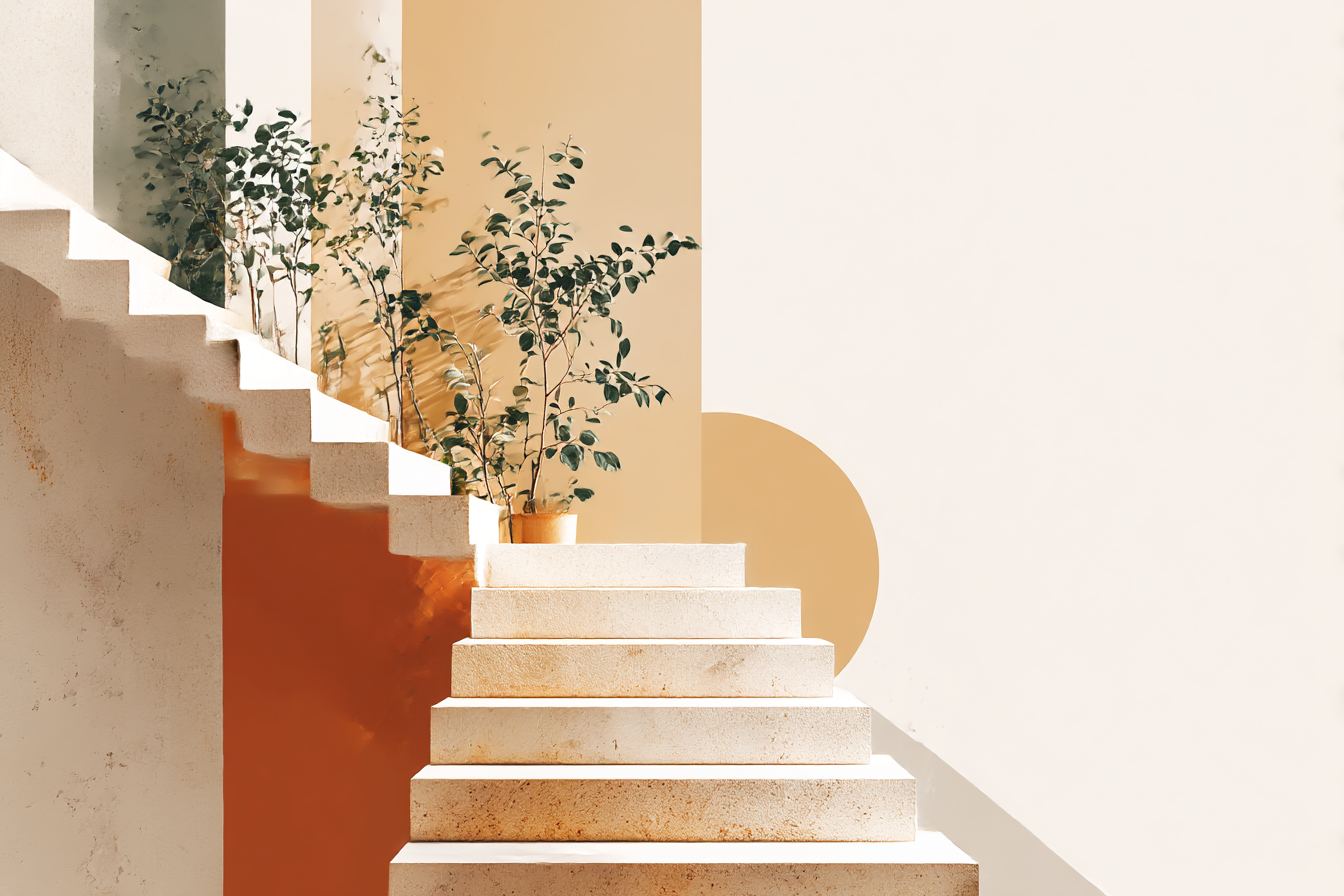
I'm standing in my friend Marcus's four-story brownstone in Brooklyn right now, and honestly? I can't stop staring at his staircase. Not because it's particularly beautiful – though it is – but because it's doing something I've never seen done quite this way before. He's essentially turned his vertical circulation into a living, breathing ecosystem that connects all four floors of his home.
See, Marcus bought this place three years ago when it was basically a gut job. The original 1890s staircase was long gone, replaced sometime in the 1960s with this sterile metal-and-carpet situation that felt more like a fire escape than part of someone's home. When he called me last spring asking about "making the stairs feel more alive," I thought he meant maybe some plants on the landings.
Boy, was I wrong.
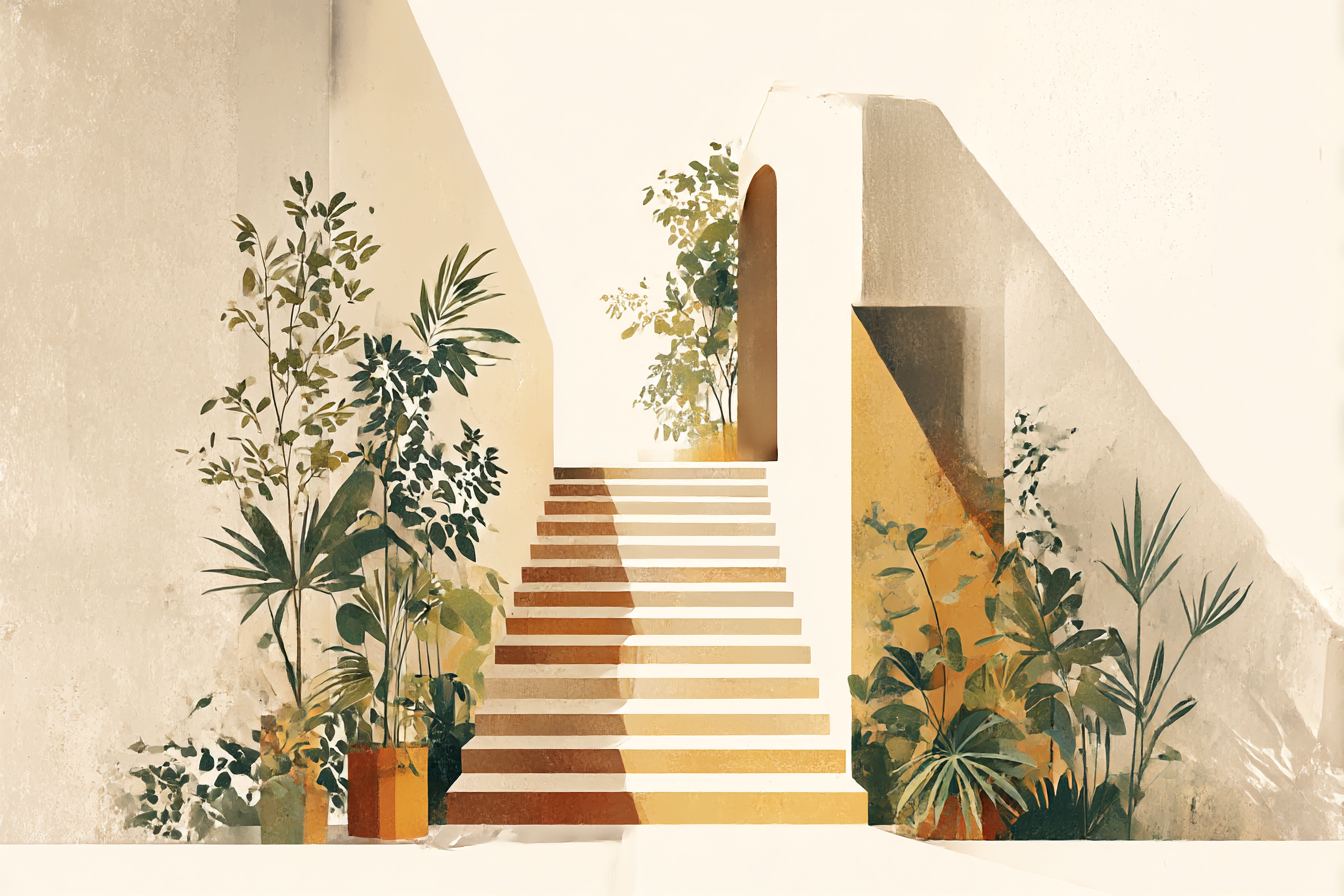
What he's created is this vertical garden that follows you up through the house, but it's so much more sophisticated than just lining the steps with potted plants. The whole thing works as an integrated system – water, light, air circulation, even sound. It's like walking up through a terraced hillside, except you're indoors.
The magic starts at the ground level. Marcus installed this shallow water channel that runs along the base of the stair wall – maybe six inches wide and two inches deep. It's fed by a hidden reservoir system he built into the basement, and the water bubbles up through these tiny jets that create this gentle, almost imperceptible sound. Not like a fountain, more like… well, like a small stream over rocks. The kids next door come over just to sit on his bottom step and listen to it.
But here's where it gets really clever. That water channel feeds into a series of planted terraces built right into the wall alongside the staircase. He used reclaimed cedar planks (I helped him source those from a demolished barn upstate) to create these stepped planting beds that follow the angle of the stairs. The plants get watered automatically from the channel system, and the overflow drains back down to recirculate.
The plant selection is what really makes it work, though. Marcus spent months researching which species would thrive at different heights and light levels. At the bottom, where it's shadier, he's got these gorgeous broad-leafed hostas and some unusual ferns I'd never seen before – maidenhair spleenwort, he told me, which apparently loves indirect light and high humidity. As you go up, the plants transition to sun-lovers: different types of sedums, some trailing nasturtiums that cascade down between the steps, even small Japanese maples in larger planters at the landings.
The lighting design took forever to get right. We went through probably fifteen different configurations before settling on this system of adjustable LED strips hidden behind the handrail. During the day, they're barely noticeable, just filling in shadows. But at night? The whole staircase becomes this soft, warm pathway that highlights the plant textures and creates these incredible shadow patterns on the opposite wall.
I've been measuring air quality in Marcus's house for the past eight months – partly for research, partly because I'm genuinely curious about the impact. The difference between the air at the bottom of the stairs and the top is remarkable. By the time you reach the fourth floor, the humidity is about 15% higher, and the particulate matter readings are consistently lower. It's like the staircase is functioning as a giant air purification system.
You Might Also Like
The really unexpected benefit has been acoustic. Those plants and the water feature absorb so much sound that conversations on one floor don't carry to the others anymore. His teenage daughter can practice violin upstairs without driving everyone crazy, and when his partner takes work calls in the basement office, you can't hear them from the kitchen.
But honestly, the most dramatic change has been psychological. I've watched people's behavior on those stairs, and it's fascinating. Instead of rushing up and down, everyone slows down. His eight-year-old son now sits on the steps to do homework sometimes, just because he likes the environment. Dinner guests linger on the landings, touching the plants, asking questions. It's transformed what used to be purely functional space into this destination within the house.
The maintenance reality is… well, it's not nothing. Marcus spends maybe thirty minutes every Sunday checking the water system, trimming plants, adding nutrients to the reservoir. The LED lights need replacing about once every two years. Sometimes plants die – the nasturtiums are annuals anyway, and last winter he lost a small maple to some kind of fungal issue. But he says it's no more work than maintaining a regular garden, just distributed vertically.
Cost-wise, the whole project ran about $8,000 including materials and the irrigation system installation. That might sound like a lot, but when you consider that a high-end stair runner alone can cost $2,000-3,000, and this delivers so much more than just aesthetics, it starts to make sense.
Plus, his heating bills have actually gone down slightly – all that plant mass provides additional insulation.
I've been documenting the project for a case study, and the results are convincing enough that I'm planning something similar in my own place. My staircase is much smaller – just two floors – but I'm thinking about a more minimalist approach. Maybe a single species planted in a continuous planter that follows the wall, with integrated grow lights and a simple drip irrigation system.
The building code stuff was trickier than expected. The water feature had to be designed so it couldn't create slip hazards, and the electrical components needed GFCI protection since they're near water sources. But Marcus worked with a contractor who'd done similar projects in restaurants, so they knew how to handle the technical requirements.
What I love most about his approach is that it doesn't feel gimmicky or forced. The plants, water, and materials all work together to create this environment that feels completely natural, like the house grew this way rather than being retrofitted. When you're walking up those stairs, you're not thinking "oh, this is biophilic design" – you're just enjoying the experience of moving through a space that feels alive and connected to natural systems.
That's the goal, really. The best biophilic interventions are the ones you don't notice as interventions at all.