
Standing in a muddy construction site last Tuesday, watching a crew install plastic playground equipment that looked like it came from a candy factory, I felt that familiar knot in my stomach. You know that feeling when you see something so fundamentally wrong but everyone around you acts like it's perfectly normal? That was me, clipboard in hand, watching thousands of dollars worth of bright purple slides and neon green climbing structures get bolted into perfectly good earth.
The irony wasn't lost on me. Here we were, destroying a patch of wild space where kids had been playing for decades – building forts from fallen branches, digging in the dirt, chasing insects – to install equipment designed to simulate the very experiences we were eliminating. It's like burning down a library to build a bookstore that only sells picture books about reading.
I've been consulting on playground design for about eight years now, and honestly? Most of what passes for "play spaces" today makes me want to weep.
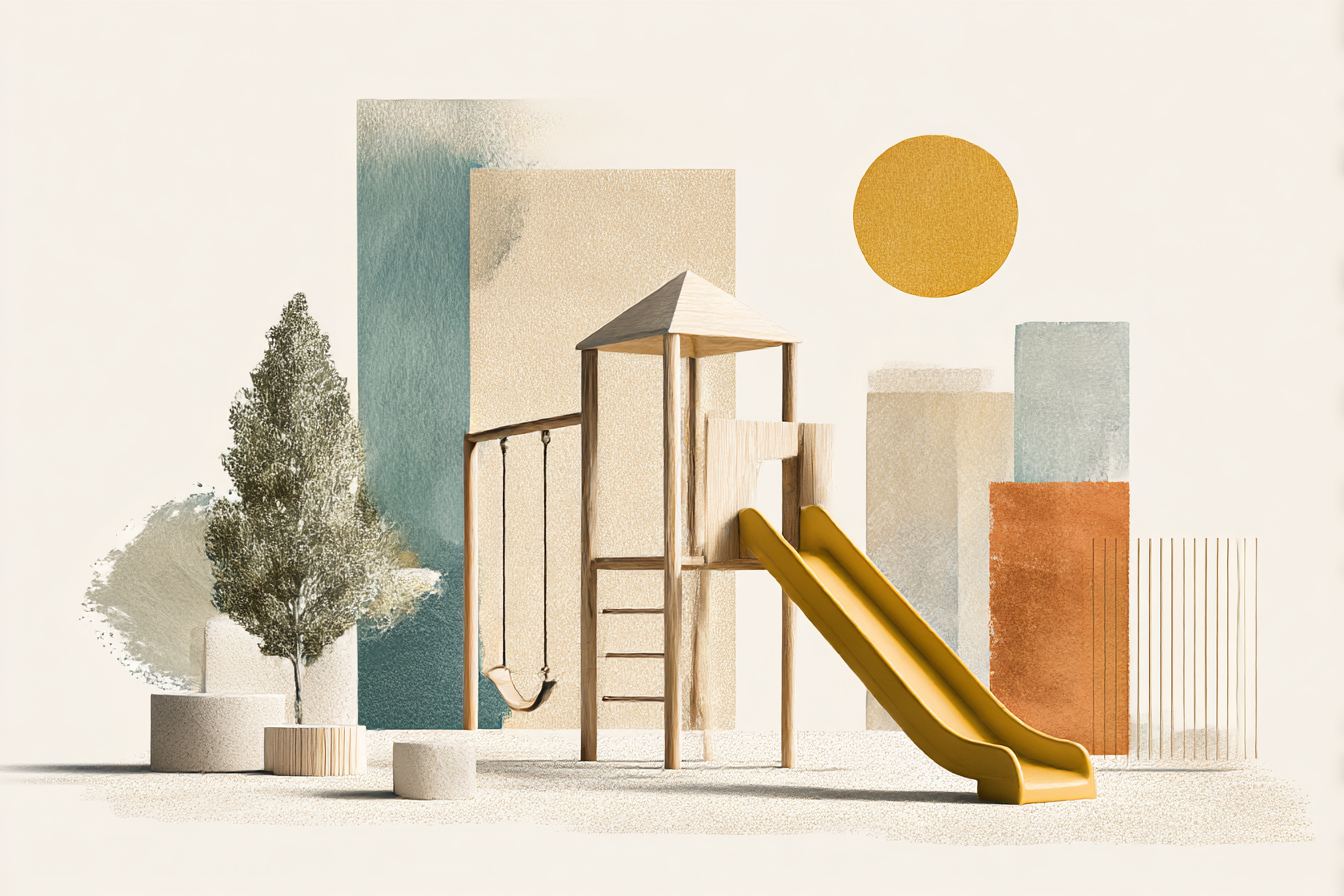
We've sanitized childhood to death. Everything's rounded, cushioned, colour-coded by age group, and about as inspiring as a doctor's waiting room. Kids need challenge, mystery, and yes – a little bit of controlled risk. They need spaces that change with the seasons, materials that feel real under their hands, and opportunities to create rather than just consume.
<blockquote>My obsession with natural play spaces started, like most good obsessions, by accident. I was redesigning a corporate campus in Portland (the client wanted "something that would make employees happy to be at work" – good luck with that, right?), and part of the project included a small childcare facility. The director, this fierce woman named Carmen who'd been working with kids for thirty years, pulled me aside during our initial walkthrough.</blockquote>
"Listen," she said, pointing to the existing playground – your typical primary-colored plastic wasteland. "Kids spend maybe ten minutes out there before they're bored and fighting. You want to see real play? Come back at 3 PM and watch where they actually go."
<img class="size-full" src="http://wonkydogltd.co.uk/medium/wp-content/uploads/2026/01/IM_Biophilic_Trends_The_Future_of_Nature-Inspired_Spaces_This_i_2d51203f-dde8-4159-a441-234548a1ad42.webp" alt="IM_Biophilic_Trends_The_Future_of_Nature-Inspired_Spaces_This_i_2d51203f-dde8-4159-a441-234548a1ad42" />
So I did. And Carmen was right. The kids completely ignored the expensive equipment. Instead, they headed straight for an overgrown corner where construction debris had been dumped months earlier. They were building elaborate worlds with broken concrete chunks, old pipes, and whatever vegetation had sprouted up. Their games were complex, collaborative, and lasted for hours. The expensive playground? Abandoned.
That observation changed everything for me. I started researching natural play environments, which led me down this rabbit hole of child development research that I'm still climbing out of. Turns out, there's actual science behind what Carmen had observed. Kids who play in nature-rich environments show better motor skills, improved focus, reduced anxiety, and enhanced creativity compared to those stuck with conventional playground equipment.
But here's the thing – and this drives me absolutely nuts – most adults don't trust natural play spaces. They see a log and think "lawsuit waiting to happen" instead of "balance beam with character." They see a hill and worry about kids falling down instead of celebrating the gross motor development that comes from navigating uneven terrain. We've become so risk-averse that we're actually putting kids at greater risk by denying them opportunities to develop judgment and physical competence.
I remember this one project in Minneapolis where I proposed incorporating existing oak trees into the play space design instead of removing them. The safety inspector nearly had a heart attack. "What if a branch falls? What if kids climb too high? What about insurance liability?" I ended up creating this whole presentation about acceptable risk in child development, citing studies from Scandinavian countries where kids regularly play in forests without the sky falling.
You Might Also Like
We kept the trees. Three years later, that playground has the highest usage rates in the entire district, and you know what? Zero serious injuries. Kids instinctively know their limits when they're dealing with real materials and real consequences. It's the artificial environments that catch them off guard.
The materials make all the difference. I've watched kids completely transform when they encounter real wood, stone, water, and living plants instead of plastic and rubber. There's something about authentic textures that engages different parts of their brains. I've seen hyperactive kids become completely absorbed in running their hands along bark patterns, or anxious children find peace sitting beside a small water feature.
Last spring, I worked on a preschool renovation where we replaced artificial turf with native meadow grasses and wildflowers. The teachers were initially nervous – "It'll be harder to maintain! What about allergies? The parents will complain!" But within weeks, they were converts. The space became this living laboratory where kids observed seasonal changes, discovered insects, and created games that changed daily based on what was growing or blooming.
The maintenance concerns were legitimate, I'll admit that. Natural play spaces require different kinds of care than conventional playgrounds. You're not just hosing down equipment and checking for loose bolts – you're managing living systems. But here's what I've learned: when you involve kids in that maintenance, it becomes part of the educational experience. They learn responsibility, develop connections to place, and understand that good things require care.
Water features are my secret weapon in playground design, though they make administrators nervous. I'm not talking about elaborate fountains – simple elements like a hand pump over a sand area, or a small stream that appears and disappears seasonally. Kids are magnetically drawn to water, and the play possibilities are endless. Plus, the sound of moving water has this amazing calming effect that reduces playground conflicts.
One of my favorite projects involved transforming a concrete courtyard at an urban elementary school into what we called a "learning landscape." We created raised beds at different heights, installed a small greenhouse, added seating carved into artificial hills, and included loose parts – stumps, boards, fabric scraps – that kids could rearrange. The transformation wasn't just physical. Teachers started holding classes outside, test scores in science improved, and behavioral referrals dropped by forty percent.
<img class="size-full" src="http://wonkydogltd.co.uk/medium/wp-content/uploads/2026/01/IM_Biophilic_Trends_The_Future_of_Nature-Inspired_Spaces_This_i_0868f11d-9fcf-4eba-a60c-16b94b8f4a9f.webp" alt="IM_Biophilic_Trends_The_Future_of_Nature-Inspired_Spaces_This_i_0868f11d-9fcf-4eba-a60c-16b94b8f4a9f" />
The loose parts concept is huge. Instead of fixed equipment that can only be used one way, you provide materials that can be combined, stacked, arranged, and reimagined. Old tyres become stepping stones or fort walls or planters depending on what kids need that day. Fallen branches become bridges, swords, or art supplies. It's playground equipment that grows with children's imagination.
<blockquote>I'm not anti-technology or completely opposed to manufactured play elements. But I think we've lost our way when artificial components dominate spaces meant to nurture developing humans.
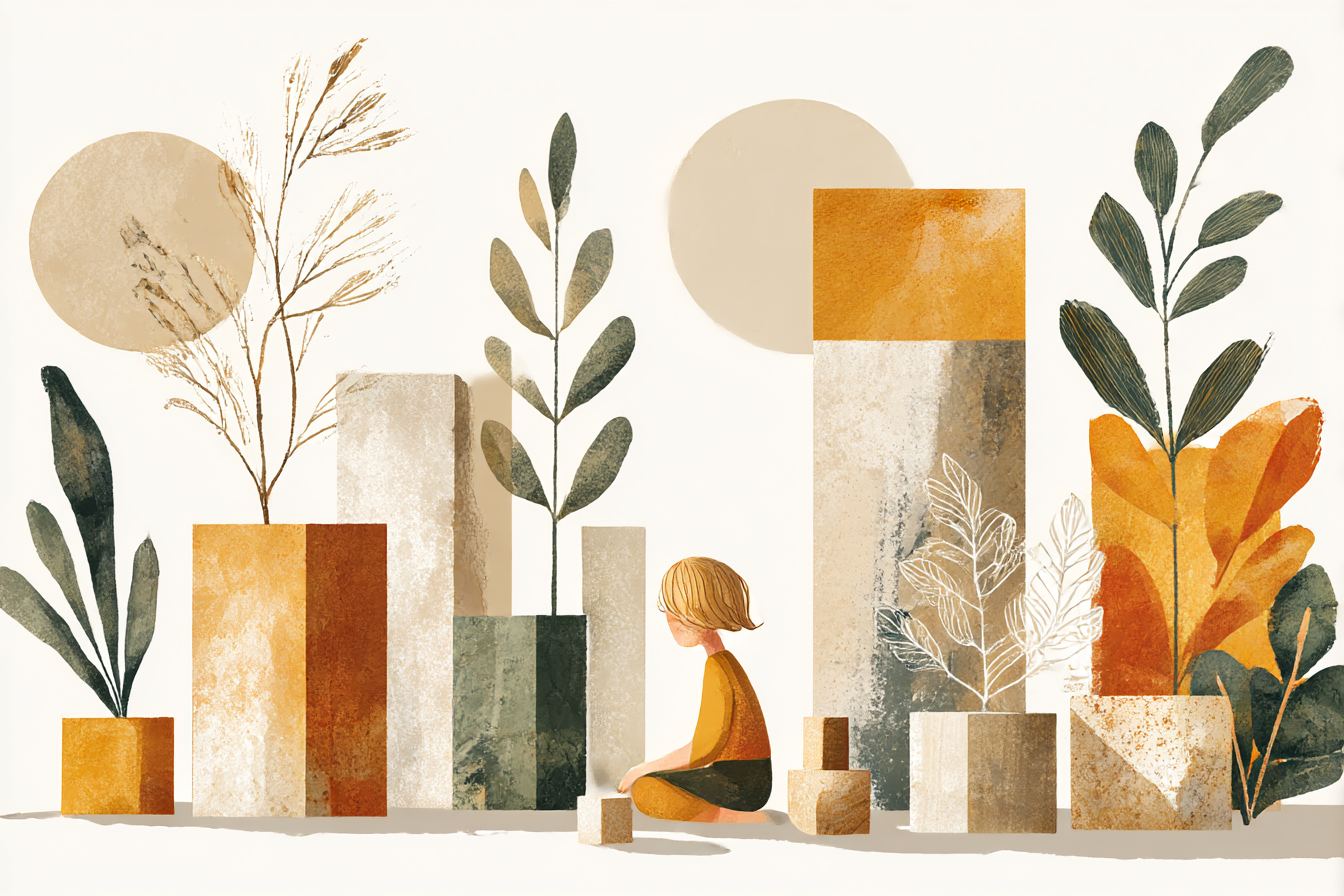
Kids need real sensory experiences – the scratch of bark, the give of soil, the unpredictability of living systems. They need spaces that invite exploration rather than dictating specific behaviors.</blockquote>
The resistance usually comes from adults, not kids. Children adapt to natural play environments immediately and intuitively. It's parents and administrators who need convincing, who've been conditioned to equate bright colours and obvious safety features with quality. But I've found that once they see kids truly engaged – building, discovering, creating – in nature-rich spaces, they become advocates.
That muddy construction site I mentioned? We're not done there yet. I'm pushing for indigenous plants, natural climbing elements, and spaces that will evolve over time. It's an uphill battle, but every converted administrator, every impressed parent, every kid who chooses dirt over plastic… they're all building momentum for the next project.



