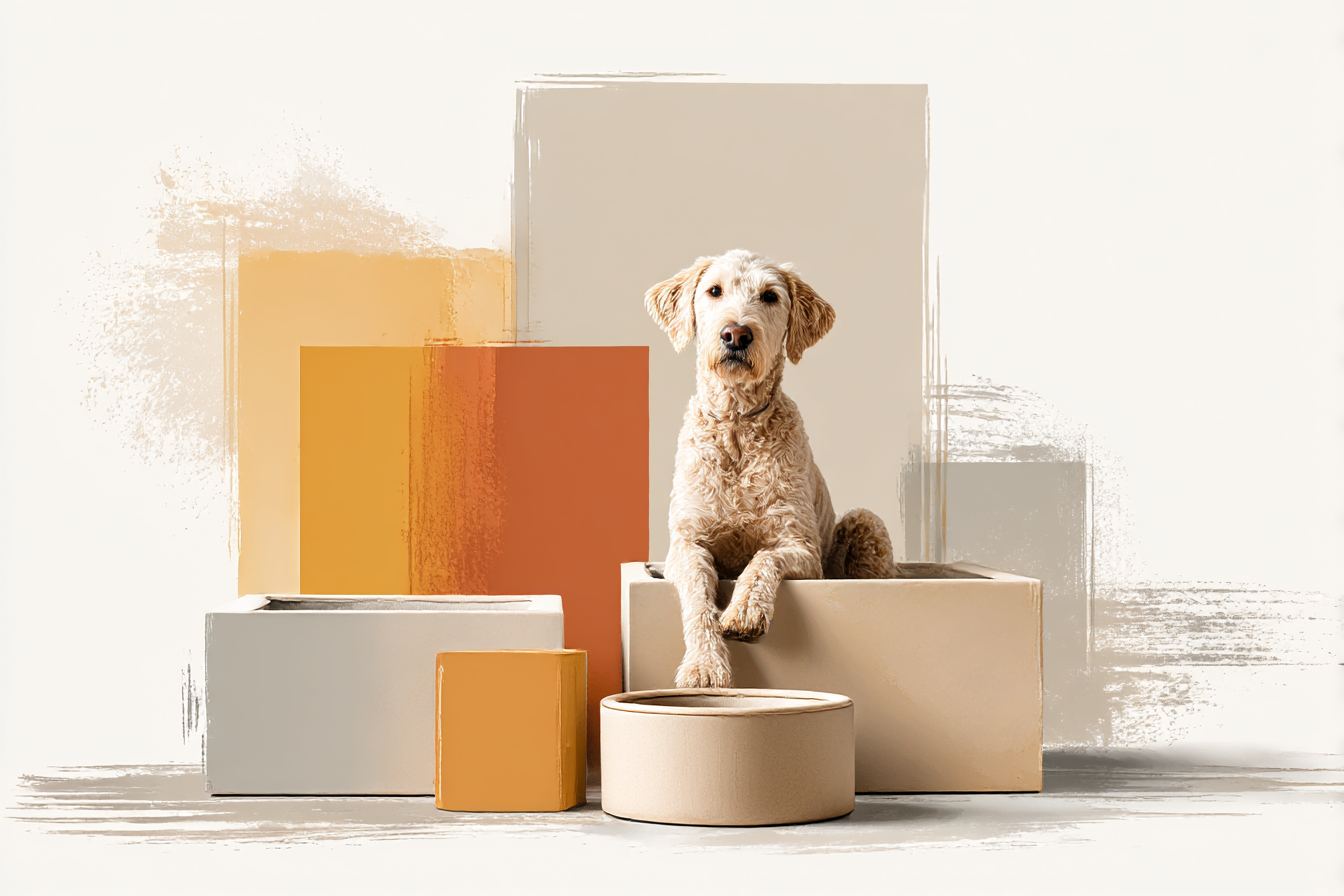
My neighbour's golden retriever, Max, spent most of his life sleeping on a synthetic foam bed that made my skin crawl just looking at it. The thing was covered in some polyester fabric that felt like sandpaper, stuffed with what I can only assume was the cheapest petroleum-based foam available, and held together with industrial adhesives that probably off-gassed more chemicals than a paint factory. When Max developed skin allergies last year, I couldn't help but wonder if his bedding was part of the problem.
That conversation with Sarah, Max's owner, got me thinking about how we approach our pets' living spaces. Here I am, obsessing over every material that goes into human homes, testing insulation for chemical emissions, researching low-VOC finishes, and carefully selecting natural fibre carpets… but somehow we've all just accepted that our dogs and cats should sleep on plastic beds filled with synthetic foam and covered in fabric treated with God knows what chemicals.
It's ridiculous when you think about it. Dogs spend 12-14 hours a day sleeping, often more than humans do. They're literally breathing whatever's coming off their bedding for the majority of their lives.

Their noses are inches from these materials, and anyone who's owned a dog knows they have a habit of chewing on their beds when they're bored or anxious. We'd never accept a mattress for ourselves that was made with the same questionable materials we routinely buy for our pets.
The pet furniture industry has somehow convinced us that cheap and washable equals practical, but that's lazy thinking. My own experience renovating homes has taught me that the cheapest option almost always costs more in the long run, whether it's through premature replacement, health issues, or just the frustration of dealing with poor performance. The same principles apply to pet furniture.
I started researching natural alternatives after that conversation with Sarah, partly to help Max but honestly mostly because I was curious. What I found was both encouraging and frustrating. There are companies making genuinely sustainable pet beds using organic cotton covers, natural latex cores, and hemp filling. The construction quality is often superior to conventional pet beds, they're designed to last for years instead of months, and they don't smell like a chemical factory when you unwrap them.
But here's the thing that bugs me about how these products are marketed. Most companies focus on buzzwords like "eco-friendly" and "sustainable" without explaining what that actually means for the pet or the owner. They'll tell you their bed is made from "natural materials" but won't specify whether those materials are actually better for your dog's health or just better for the environment. Both matter, but they're different concerns.
Natural latex, for instance, is genuinely superior to synthetic foam for pet bedding. It's naturally antimicrobial, which means it resists the bacteria and dust mites that can trigger allergies. It's also more durable, maintains its shape better over time, and provides more consistent support for aging joints. These are practical benefits that affect your dog's daily comfort, not just environmental talking points.
I've been testing different materials in my own home for months now. My dog Scout, a 70-pound mutt with strong opinions about comfort, has become an unwitting participant in my research. I started with an organic cotton bed filled with buckwheat hulls, which sounds wonderfully natural until you realise that buckwheat hulls make a rustling noise every time the dog moves. Scout spent the first night looking at me like I'd lost my mind, then proceeded to drag his old synthetic bed out of storage.
The second attempt was more successful. Natural latex core with an organic cotton cover, no chemical flame retardants or stain treatments. Scout approved immediately, and I noticed he seemed to sleep more soundly. Whether that was due to better support, lack of chemical odors, or just the novelty of a new bed is hard to say, but the improvement was noticeable.
You Might Also Like
What really convinced me was durability testing. I've put Scout's natural latex bed through conditions that destroyed his previous beds within months. He's a digger, even indoors, and has a habit of "nesting" by bunching up his bedding before lying down. His old foam beds would develop permanent indentations and lose support after a few weeks of this treatment. The natural latex bed has maintained its shape for eight months now, showing only minor wear on the cover.
The cost difference is significant, I won't pretend otherwise. A high-quality natural pet bed costs three to four times what you'd pay for a basic synthetic one. But when you factor in replacement frequency, the economics start making sense. Scout went through three cheap beds last year before I switched to natural materials. The natural bed has already lasted longer than all three combined.
Beyond beds, I've been exploring other pet furniture options. Hemp rope toys instead of synthetic alternatives, wooden food bowls treated with food-safe natural oils rather than plastic dishes, organic cotton blankets instead of polyester throws. The pattern is consistent: natural materials generally perform better and last longer, but they require higher upfront investment.
Some improvements are surprisingly simple. I replaced Scout's plastic water bowl with stainless steel, which eliminated the slimy film that seemed to develop no matter how often I cleaned the plastic version. The steel bowl stays cleaner longer and doesn't retain odors. Total cost: twelve dollars. Impact on daily life: substantial.
The trickiest part is separating genuine improvements from marketing nonsense. Bamboo, for instance, is heavily promoted as a sustainable pet furniture material, but most bamboo products are processed with harsh chemicals and adhesives that negate any environmental benefits. Solid wood treated with natural finishes is often a better choice than bamboo composite, despite bamboo's reputation as the more "eco-friendly" option.
I've also learned to be skeptical of certifications and labels. "Natural" means almost nothing in pet product marketing. "Organic" has more specific requirements but doesn't guarantee the product is appropriate for your particular pet's needs.

I focus on understanding the actual materials and construction methods rather than trusting labels.
The most important factor, honestly, is observing your individual pet's response. Scout's allergies improved after switching to natural bedding, but that might not happen for every dog. Some pets are perfectly comfortable on synthetic materials and show no adverse effects. The goal isn't ideological purity but practical improvement in your pet's daily comfort and health.
What bothers me about conventional pet furniture isn't just the environmental impact or potential health effects, though both matter. It's the throwaway mentality the industry promotes. We're conditioned to expect pet beds to fall apart quickly, to replace them every few months, to accept poor quality as normal for animal products. That's wasteful and unnecessary.
Quality natural pet furniture represents the same philosophy I apply to human building materials: invest in materials that perform well over time, prioritize health and durability over initial cost savings, and choose options that work with natural systems rather than fighting against them. Your dog deserves the same thoughtful material selection you'd want for yourself.