Last Tuesday, I found myself crawling around my friend Sarah's nursery floor, examining the off-gassing smell coming from her brand-new crib. She'd spent months researching the "safest" baby furniture, reading reviews, checking certifications, and still ended up with something that made the whole room smell like a chemistry lab. The irony wasn't lost on me – here's a mom trying to create the healthiest possible environment for her baby, but the furniture industry had other plans.
This experience got me thinking about how we approach children's spaces in our homes. You know, we'll obsess over organic cotton sheets and BPA-free bottles, then plop our kids down next to furniture made with formaldehyde-laden particleboard and finishes that'll be releasing volatile organic compounds for months. It's backwards.
My nephew Jake is seven now, but I remember when my sister was shopping for his first big-boy bed three years ago. She called me, frustrated because everything seemed to be either particle board covered in plastic veneer or solid wood pieces that cost more than her car payment. "Why can't I just buy something normal that won't poison him?" she asked.
Great question, honestly.
The thing is, children's furniture faces unique challenges that make material choices even more critical than adult pieces. Kids spend way more time on the floor where dust settles. They put everything in their mouths. They're smaller, so they're breathing air closer to furniture surfaces where chemical concentrations tend to be higher. And they're growing rapidly, making them more vulnerable to environmental toxins.
I started digging into what actually makes furniture "safe" for kids, beyond the marketing buzzwords. Turns out, it's not just about avoiding obvious hazards like lead paint – though that's obviously important. The real issues are more subtle and long-term.
Take formaldehyde, for instance. It's used in the adhesives that hold most composite wood products together – particleboard, MDF, plywood. The stuff keeps off-gassing for years, sometimes decades. I tested the air quality in a client's playroom last year, two years after they'd furnished it with what seemed like reasonable quality pieces from a major retailer. Formaldehyde levels were still three times higher than I'd want my own kids breathing.
But here's what really bugs me: the solutions aren't necessarily expensive or complicated. They're just not standard practice because the furniture industry prioritizes cost cutting over health considerations.
Real solid wood furniture, for example, eliminates most off-gassing concerns entirely. Yeah, it costs more upfront, but think about it differently. A well-made solid wood dresser will outlast three or four particleboard pieces, and you're not paying the hidden costs of poor indoor air quality. Plus, solid wood actually improves with age instead of falling apart.
I've been recommending specific brands to clients for years now. Vermont Woods Studios makes beautiful pieces from sustainably harvested hardwoods with water-based finishes. Greenington uses rubberwood, which is actually a waste product from rubber tree farming – clever way to create something useful from what would otherwise be discarded. Both companies are transparent about their materials and manufacturing processes, which tells you something right there.
You Might Also Like
For families on tighter budgets, I always suggest looking at unfinished furniture. You can find solid wood pieces at reasonable prices, then finish them yourself with low-VOC or zero-VOC products. My brother-in-law did this for his daughter's room – bought an unfinished pine dresser for $180, spent a weekend applying three coats of AFM Safecoat, and ended up with something that would've cost $600 finished and without the chemical concerns.
Another approach that's gaining traction is modular furniture designed to grow with kids. Instead of buying a crib that becomes obsolete when they outgrow it, you invest in convertible pieces that adapt. Stokke's system transforms from a bassinet to a toddler bed to a junior bed to a sofa. The upfront cost seems steep until you realise you're not buying three separate pieces of furniture.
The modularity concept extends beyond beds. Storage systems that can be reconfigured as kids' needs change, desks that adjust in height, seating that adapts from toddler size to teen proportions. It's actually more sustainable and often more economical than the typical approach of buying cheap furniture you'll replace every few years.
But let's talk about what to avoid, because that list is unfortunately long. Stay away from anything with that "new furniture smell" – that's literally chemicals evaporating into your home's air. Skip pieces with plastic components unless they're specifically labeled as phthalate-free and BPA-free. Avoid painted furniture unless you can verify it's lead-free and uses low-VOC paint.
Flame retardants are another concern that doesn't get enough attention. Many foam-filled items contain chemical flame retardants that have been linked to developmental issues. Look for furniture that meets flammability standards through design and materials rather than chemical treatments. Some manufacturers are switching to wool batting or other natural flame-resistant materials.
I learned about this the hard way when helping my cousin furnish her son's room. We found this gorgeous rocking chair, perfect for bedtime stories, until I noticed the chemical treatment smell in the foam cushions. Did some research and discovered the manufacturer was using flame retardants that several European countries had already banned. We returned it and found a similar chair with natural latex cushions instead.
The certification landscape is confusing, but there are a few labels worth looking for. GREENGUARD Gold certification means the piece has been tested for chemical emissions and meets strict standards for indoor air quality. Forest Stewardship Council certification indicates responsible wood sourcing. Cradle to Cradle certification evaluates the entire product lifecycle, including material health and recyclability.
One thing I always tell parents: don't feel like you need to replace everything at once.
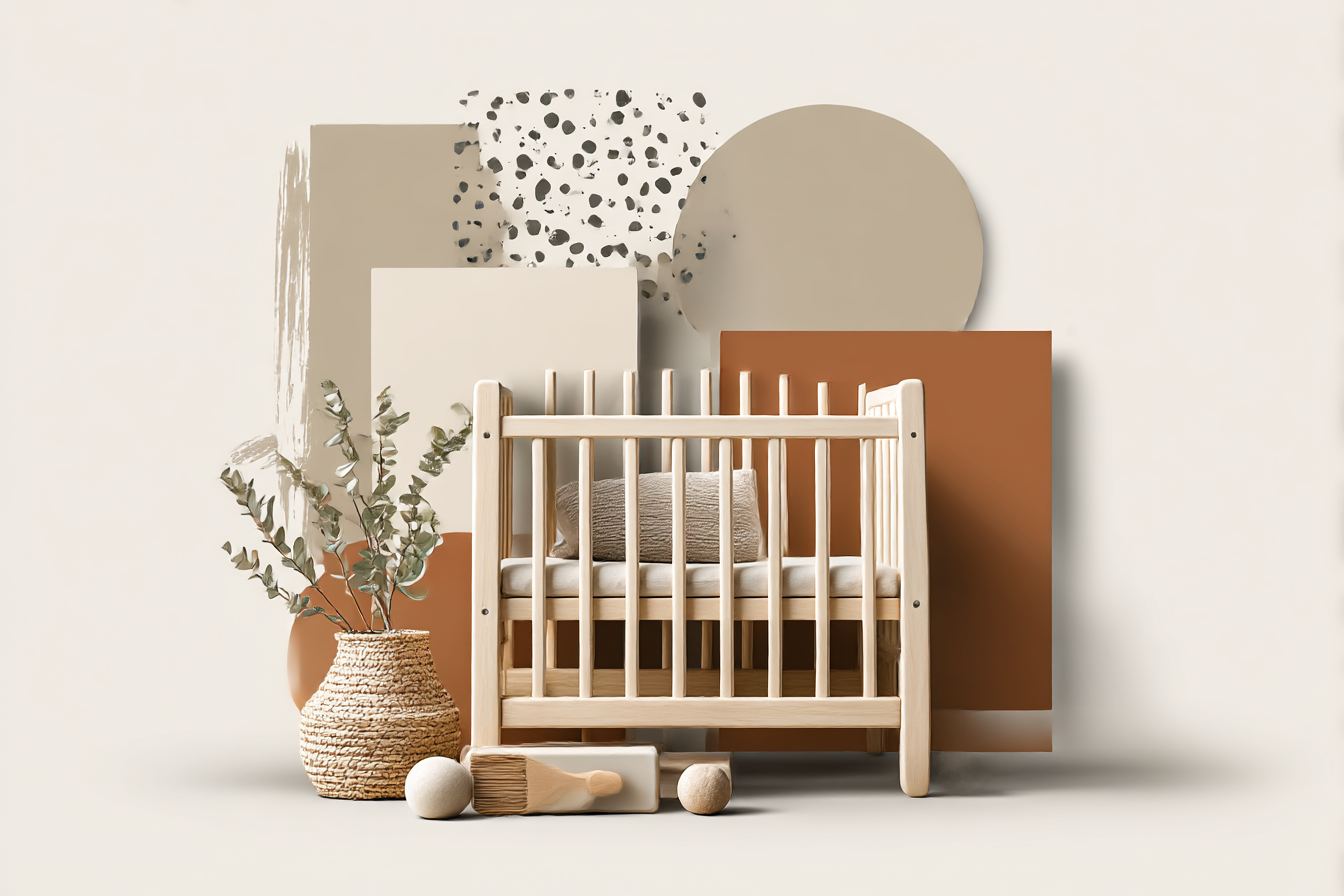
Start with the pieces your child has the most contact with – the bed, primary seating, frequently used storage. You can upgrade other items gradually as budget allows or as pieces wear out.
Vintage and antique furniture can be excellent options if you're careful about lead paint and structural integrity. My daughter's been using a 1950s solid maple dresser that belonged to my grandmother. Had it tested for lead (clean), refinished it with modern low-VOC products, and it's probably the safest piece in her room. Plus, it's built better than anything you can buy today for reasonable money.
The reality is that creating truly safe spaces for our kids requires being more thoughtful about our choices. It means looking past the marketing messages and understanding what materials actually go into the products we bring home. But once you start making better choices, it becomes routine. And your kids' health is worth the extra effort, don't you think?