Last month, I was called to assess a client's home office where she'd been struggling with chronic headaches and what she described as "brain fog" during work hours. The space checked all the conventional boxes – ergonomic furniture, adequate square footage, good internet connectivity. But stepping inside felt like entering a sensory deprivation chamber. Harsh LED overhead lighting, synthetic materials everywhere, zero connection to the outdoors despite large windows covered by heavy blackout curtains. "I thought I needed to eliminate distractions," she explained.
What she'd actually created was a healing disaster.
Three weeks later, after implementing what I call "restorative design principles," her headaches had decreased by roughly 80%. She was sleeping better, concentrating longer, and – this surprised both of us – her relationship with her teenage daughter had improved. Turns out, when you're not constantly fighting environmental stress, you have more emotional bandwidth for the people you love.
This isn't magic.
It's biology.
Our homes should be sanctuaries that actively support our physical and mental recovery, not just neutral containers for our stuff. But most residential spaces today actually work against our natural healing processes. We've created environments so disconnected from our evolutionary needs that our nervous systems remain in a low-grade state of stress even when we're supposedly "relaxing" at home.
I've been experimenting with restorative design principles in my own living space for about six years now, turning my apartment into what friends jokingly call my "wellness laboratory." (They're not wrong – I do measure everything from air quality to cortisol levels.) What I've learned through both personal experience and client work is that creating truly healing homes requires rethinking three fundamental elements: how we use natural light, what materials we surround ourselves with, and how we establish connections to living systems.
Take lighting first. Most people think good lighting means bright lighting. Wrong. Restorative lighting mimics the natural rhythms our bodies evolved with over millions of years. I use programmable LED systems that shift throughout the day – cooler, bluer light in the morning to support alertness, warmer tones as evening approaches to prepare for sleep. But here's what most articles won't tell you: the transition matters more than the specific colour temperatures. Abrupt changes stress your circadian system. Gradual shifts feel natural.
My own bedroom lighting starts dim and warm at sunrise (around 2700K if you're into the technical specs), gradually brightens and shifts cooler through midday (up to about 5500K), then slowly warms again toward evening. I spent months fine-tuning the timing and intensity curves. Worth every minute of tweaking – my sleep quality improved dramatically, and I stopped needing an afternoon caffeine hit.
But artificial lighting, however sophisticated, can't replace actual daylight exposure. I've worked with clients who spent thousands on circadian lighting systems while keeping their windows covered all day. Doesn't work. Your body needs that direct connection to natural light cycles. If privacy is a concern – and I get it, especially in dense urban areas – consider top-down window treatments that let light in while maintaining privacy below eye level.
Materials matter more than most people realise. I'm not talking about choosing between granite and quartz countertops. I'm talking about surrounding yourself with substances that support rather than stress your physiology.
Natural materials – real wood, stone, clay, cotton, wool – have measurable effects on stress hormones. There's fascinating research on this. When people touch natural wood surfaces, their cortisol levels drop within minutes. Same with exposure to natural scents from materials like cedar or pine. Your nervous system literally recognizes these as "safe" signals.
Synthetic materials often trigger the opposite response. Off-gassing from vinyl flooring, formaldehyde from particleboard furniture, VOCs from synthetic carpeting – these create a chemical soup that keeps your immune system on alert. I helped one family identify that their toddler's persistent respiratory issues improved significantly after we replaced their synthetic carpet with natural fibre rugs over hardwood. Not a coincidence.
You Might Also Like
I source reclaimed wood whenever possible, partly for environmental reasons but mostly because older wood has already released its volatile compounds and developed that subtle patina that feels warm under your fingers. My dining table came from a 1920s farmhouse demolition in upstate New York. The grain tells stories, and somehow that history feels nourishing.
Plants obviously play a crucial role, but not just as air purifiers – though they do help with that. Living systems in your home create what researchers call "micro-restoration opportunities" throughout your day. Brief moments of nature connection that reset your stress response.
I've got about thirty plants scattered through my apartment now, chosen not just for their air-purifying abilities but for their sensory qualities. The fiddle leaf fig by my desk has these broad leaves that cast interesting shadows on my wall throughout the day. My bedroom snake plants (yeah, I know, everyone has them) require almost no care but create this subtle sense of being surrounded by life. The herb garden on my kitchen windowsill provides daily aromatherapy when I'm cooking.
But here's something I learned the hard way – don't go overboard initially. Start with three or four plants you can actually keep alive. Dead plants create the opposite psychological effect from what you're going for. Build your confidence and your plant care routines gradually.
Water features deserve a mention here. The sound of moving water has measurable effects on brainwave patterns, shifting you toward more relaxed states. I built a small fountain for my living room using copper pipes and a submersible pump – total cost about $80, took a weekend to construct. The gentle trickling sound masks urban noise while creating what acousticians call "pink noise" that many people find deeply calming.
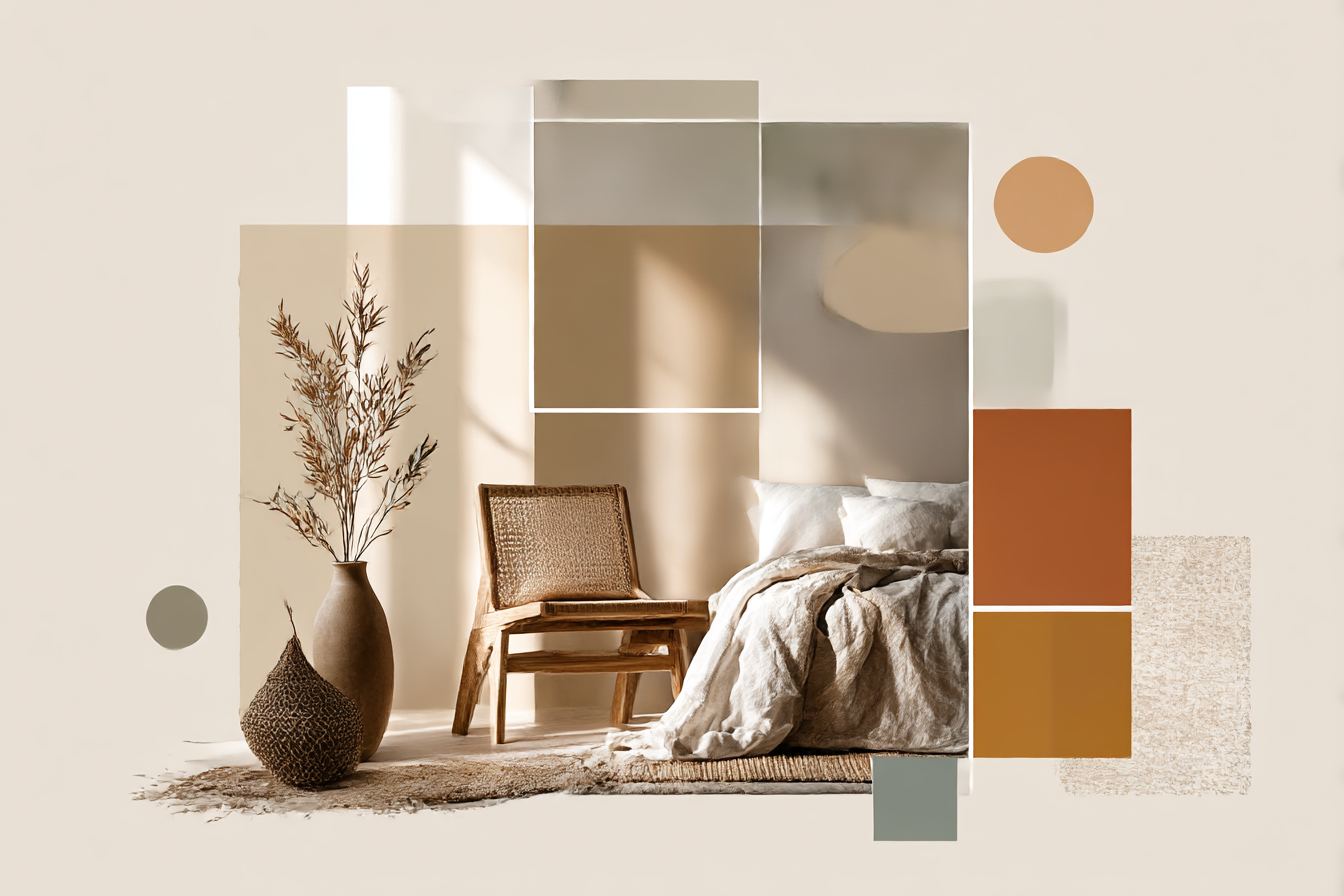
Colour choices matter, though not in the way most design magazines suggest. Instead of following trendy palettes, choose colours that actually support your nervous system. Soft greens, warm earth tones, muted blues – these mirror colours found in natural environments and tend to lower stress markers. I painted my bedroom a colour I call "morning sage" – this soft green-grey that feels both grounding and refreshing.
Avoid bright, saturated colours in spaces meant for rest and recovery. Save those for areas where you want energy and stimulation. My home office has warmer, more energizing tones than my bedroom because they serve different functions.
Scent might be the most underutilized element in restorative design. Your olfactory system connects directly to the limbic brain – the area that processes emotions and memories. Natural scents from plants, wood, or essential oils can shift your nervous system state almost instantly.
I keep lavender sachets in my linen closet, use cedar blocks in my dresser drawers, and diffuse different essential oil blends depending on what I need – rosemary and peppermint for focus during work, bergamot and ylang-ylang for evening relaxation. Nothing synthetic, nothing overwhelming. Subtle background scents that support different activities throughout the day.
Temperature and humidity control often get overlooked in discussions of healing environments, but they're crucial.
Your body expends energy regulating internal temperature when your environment is too hot, cold, or dry. That's energy you could be using for healing and restoration.
I invested in a whole-house humidifier after noticing how much better I felt during humid summer months compared to dry winter ones. Maintaining humidity between 40-60% supports respiratory health, improves sleep quality, and helps your skin maintain its protective barrier function.
The key to all of this isn't perfection – it's intentionality. Every choice you make about your living environment either supports your wellbeing or works against it. Start small, experiment, pay attention to how different changes affect how you feel. Your body will tell you what's working.
Creating a truly restorative home isn't about following design trends or spending enormous amounts of money. It's about recognising that your living space is part of your health strategy, as important as good nutrition or regular exercise. Small changes compound over time into significant improvements in how you feel and function every day.