
Standing in my client’s backyard last Tuesday, I watched their four-year-old daughter pick up a handful of soil from what used to be a sterile lawn and let it run through her fingers like she’d discovered treasure. Six months earlier, this same space had been nothing but Kentucky bluegrass – you know, that ubiquitous carpet that requires constant watering, chemical treatments, and weekly mowing to maintain its artificial perfection. Now? It’s become something entirely different.
This transformation represents what I’ve come to understand as the fundamental shift happening in how we think about outdoor spaces. We’re moving beyond just “sustainable” design – which, let’s be honest, often just means “less bad” – toward something that actually gives back more than it takes.
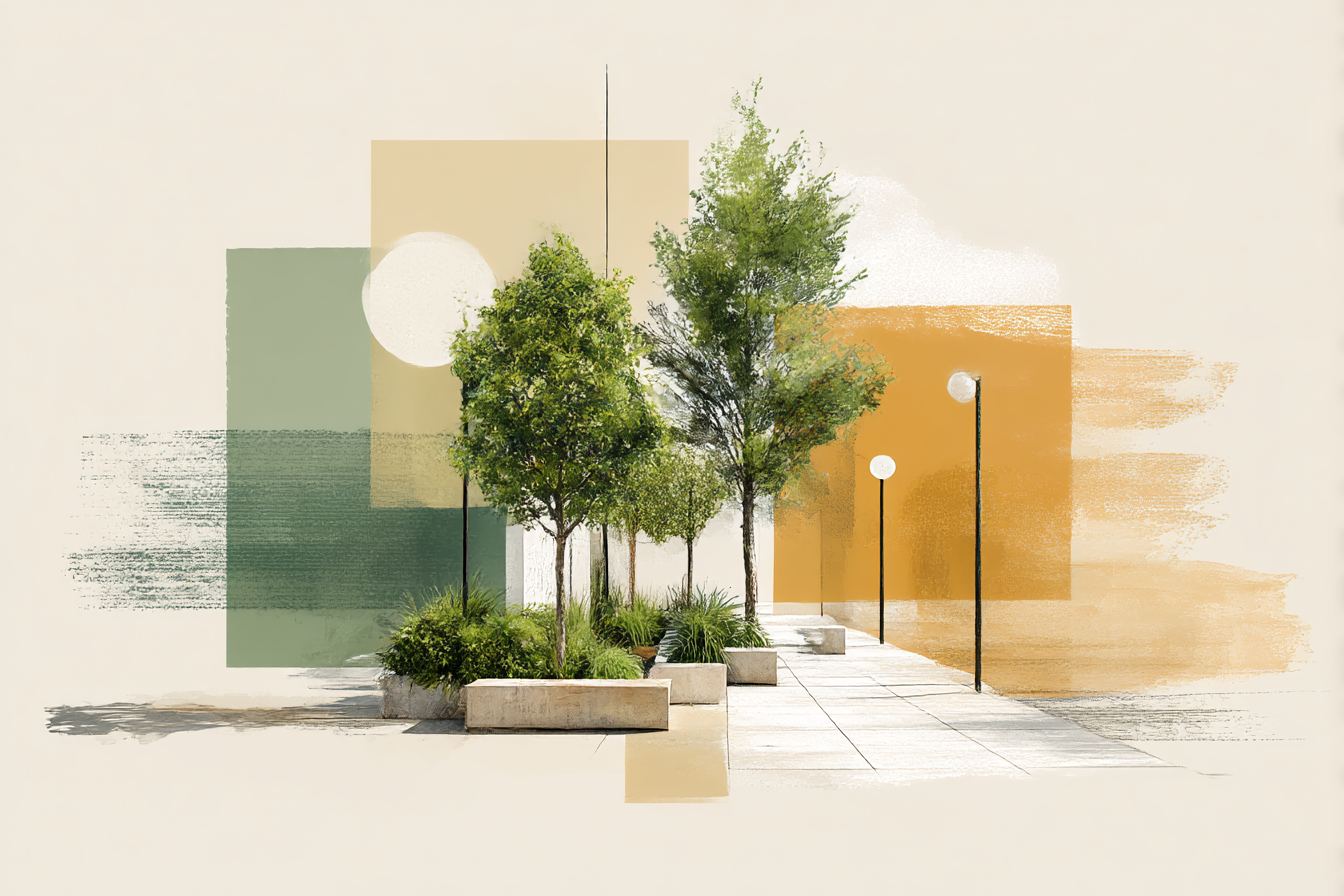
The kid playing in that regenerated soil was experiencing firsthand what happens when we stop fighting natural systems and start working with them instead.
<blockquote>I’ll admit, when I first heard the term “regenerative design” thrown around at conferences a few years back, I was skeptical. Sounded like another buzzword, you know? But after implementing these principles in dozens of projects, I can’t argue with the results. The soil in that backyard isn’t just supporting plants – it’s sequestering carbon, filtering stormwater, supporting beneficial insects, and creating habitat corridors that connect isolated green spaces throughout the neighborhood.</blockquote>
The project started when Sarah (the homeowner) called me after her basement flooded for the third time in five years. Standard suburban development had turned her property into a water-shedding machine. Rain would hit the roof, rush down gutters, cascade across impermeable surfaces, and overwhelm the municipal storm system. Classic problem. But instead of just addressing drainage, we approached it as an opportunity to completely reimagine how the site could function.
First thing we did was rip up that lawn. All of it. I know this horrifies some neighbours initially, but bear with me. Underneath that grass was compacted clay soil that couldn’t absorb water if you paid it to. We spent two weeks breaking up compaction, adding organic matter, and introducing beneficial microorganisms. Sounds nerdy, but soil biology is where the magic happens in regenerative systems.
<img class=”size-full” src=”http://wonkydogltd.co.uk/medium/wp-content/uploads/2026/01/im1979_regenerative_design_in_landscape_architecture._ultra-r_0def3315-8cec-4e0c-a1eb-c59c0c60a28c_0.jpg” alt=”im1979_regenerative_design_in_landscape_architecture._ultra-r_0def3315-8cec-4e0c-a1eb-c59c0c60a28c_0″ />
Instead of replanting grass, we established what I call a “productive ecosystem.” Native wildflowers that bloom in succession throughout the growing season. Edible plants integrated with ornamentals – serviceberries, elderberries, wild ginger, ramps. Deep-rooted prairie plants that can access groundwater and bring nutrients up to surface layers. Rain gardens positioned to capture and slowly infiltrate stormwater runoff.
The changes weren’t just functional – they were beautiful in ways that manicured landscapes can’t match. There’s something about the controlled chaos of natural systems that speaks to people on a visceral level. Sarah’s neighbours, initially concerned about property values, started asking for recommendations after seeing monarch butterflies return to the area for the first time in years.
But here’s what really sold me on regenerative approaches: the maintenance requirements actually decreased over time. Year one required regular watering and weeding as plants established. Year two needed occasional intervention. By year three, the system was largely self-sustaining. Compare that to lawn maintenance – mowing, fertilizing, watering, reseeding – that stays constant (or increases) indefinitely.
I’ve been applying similar principles to larger commercial projects with equally impressive results. A corporate campus I worked on in Portland replaced their irrigation-dependent landscaping with native plant communities that mirror regional forest succession patterns. Not only did they eliminate their $40,000 annual watering bill, but employee satisfaction surveys showed significant improvements in workplace well-being after the installation.
You Might Also Like
The key insight (and I hate that word, but it fits here) is that regenerative design isn’t about imposing human will on natural systems – it’s about understanding how those systems want to function and designing interventions that enhance rather than disrupt those processes. It’s like being a facilitator rather than a dictator.
Take stormwater management, for example. Traditional approaches involve pipes, retention ponds, and engineered solutions that fight against natural water movement patterns. Regenerative approaches work with topography and hydrology to slow, spread, and sink water where it falls. Bioswales, constructed wetlands, permeable paving systems that support plant growth while handling traffic loads.
I remember walking through downtown Copenhagen a few years ago during a massive rainstorm. Instead of watching water overwhelm storm drains and flood streets, I saw it being channeled through blue-green infrastructure – planted boulevards, pocket parks, green roofs – that turned precipitation into an asset rather than a liability. The city had systematically redesigned its relationship with water.
That’s what regenerative design offers: a fundamental reframing of how built environments can interact with natural systems. Instead of creating static compositions that require constant inputs to maintain, we’re designing living systems that improve over time. Gardens that build soil health. Landscapes that sequester carbon. Outdoor spaces that support biodiversity while serving human needs.
The economic case is becoming undeniable too. Initial installation costs for regenerative systems are often comparable to conventional approaches, but lifecycle costs are dramatically lower. Plus there are increasing incentive programs – stormwater credits, carbon offset payments, tax breaks for habitat creation – that make the financial argument even stronger.
I’ve started incorporating food production into most residential projects, not because clients are necessarily interested in becoming urban farmers, but because productive landscapes create deeper connections between people and place. There’s something profound that happens when you can walk outside and harvest dinner ingredients from your yard. Kids especially respond to edible landscapes in ways that purely ornamental plantings don’t inspire.
My own backyard has become an ongoing experiment in regenerative principles. Started five years ago as a typical suburban lot with foundation plantings and lawn. Today it produces about 40% of our household’s vegetables, supports three beehives, includes a small-scale aquaponics system, and requires virtually no external inputs. Rainwater harvesting supplies irrigation needs. Compost bins process organic waste. Chicken coop provides eggs and fertilizer.
<img class=”size-full” src=”http://wonkydogltd.co.uk/medium/wp-content/uploads/2026/01/im1979_regenerative_design_in_landscape_architecture._ultra-r_0def3315-8cec-4e0c-a1eb-c59c0c60a28c_1.jpg” alt=”im1979_regenerative_design_in_landscape_architecture._ultra-r_0def3315-8cec-4e0c-a1eb-c59c0c60a28c_1″ />
The transformation wasn’t instant or always smooth. First year’s tomato crop failed spectacularly due to soil imbalances I didn’t anticipate. Took three attempts to get the rain garden sizing right – first iteration overflowed during spring storms, second was too large and looked awkward. But that’s the beauty of working with living systems – they’re forgiving and adaptable in ways that hardscaped solutions aren’t.
<blockquote>What excites me most about regenerative design is its potential to address multiple environmental challenges simultaneously.
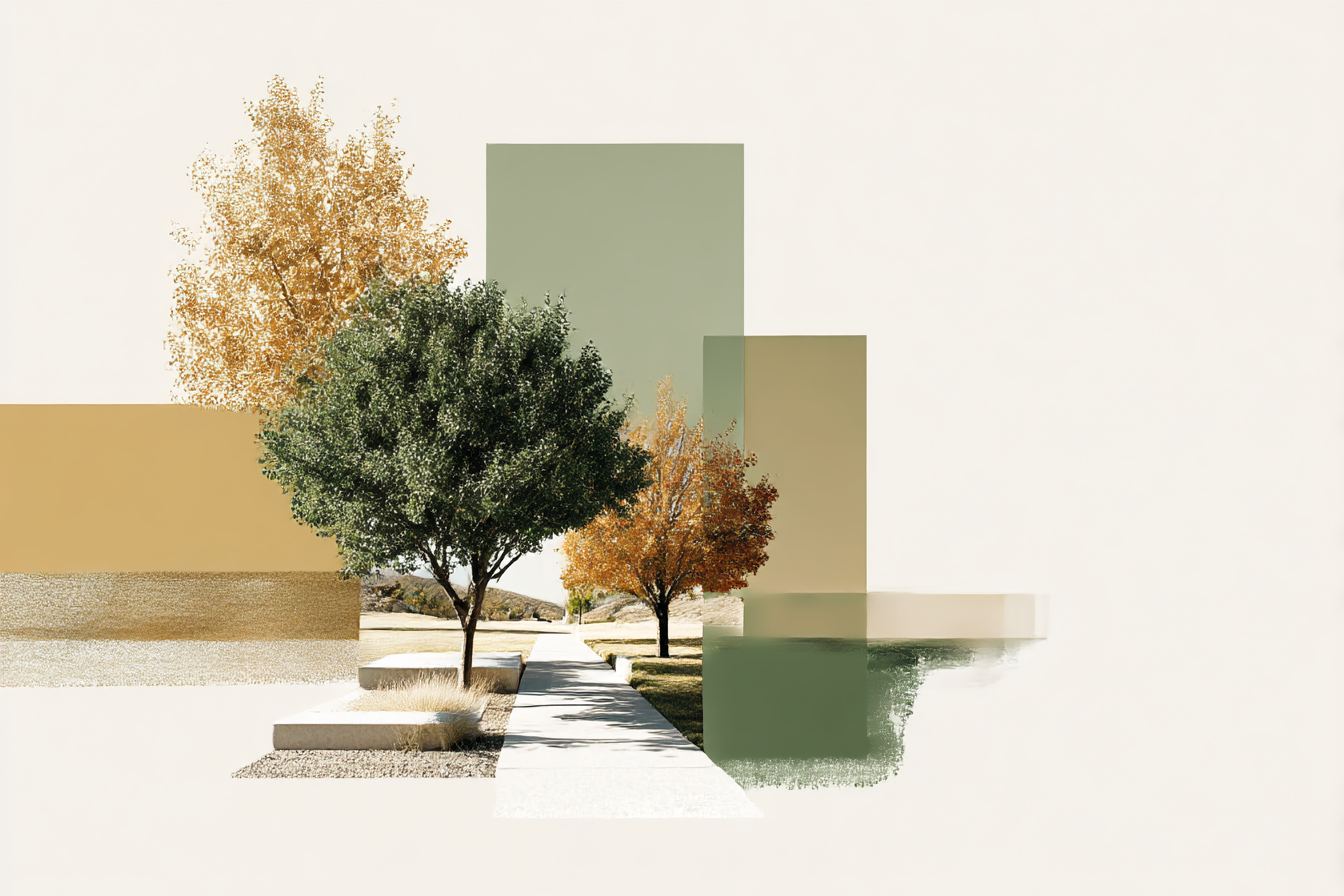
Climate change mitigation through carbon sequestration. Biodiversity support through habitat creation. Water quality improvement through natural filtration systems. Food security through productive landscaping. Social connection through community gardening initiatives.</blockquote>
We’re not just designing prettier outdoor spaces – we’re creating systems that actively repair damaged environments while serving human needs. That four-year-old playing in healthy soil isn’t just having fun; she’s experiencing what it feels like to be part of a functioning ecosystem. That’s the kind of relationship with the natural world we need to cultivate if we’re going to create genuinely sustainable communities.
The future of landscape design isn’t about perfecting our ability to control nature – it’s about learning to collaborate with natural processes in ways that benefit everyone involved.