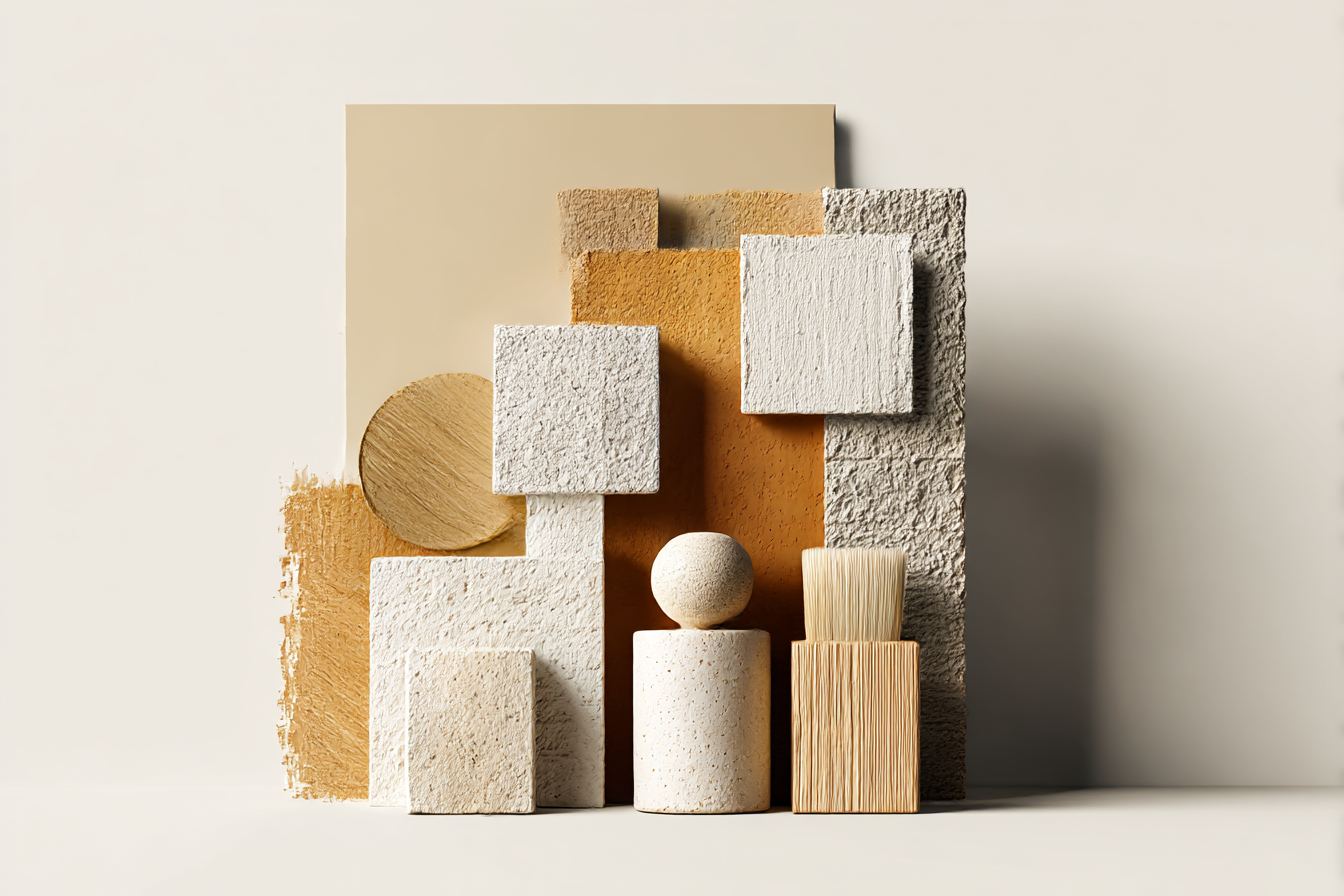
Last month I received a wooden stool in my mailbox. Well, not technically in my mailbox—the package was leaning against my front door when I got home from testing some new bamboo flooring samples. But the stool itself was remarkable: perfectly smooth curves, no visible joints or fasteners, and according to the accompanying card, made entirely from mycelium—basically mushroom roots grown into a specific form.
The designer was Eben Bayer, whose company Ecovative has been pushing the boundaries of what we consider "materials" for over a decade. I'd been corresponding with him about their latest furniture prototypes, and he'd insisted I needed to feel one of their pieces to understand the potential. He was right. The stool felt substantial yet surprisingly light, with a texture somewhere between cork and dense foam.
More importantly, at the end of its useful life, I could literally compost it in my backyard.
This kind of radical material innovation is reshaping furniture design in ways I never could have imagined when I was sorting through salvaged wood with my parents. We're seeing designers who don't just select sustainable materials—they're actually growing them, fermenting them, and in some cases programming them.
Take Amanda Levete's work with Studio AL_A. I visited their workshop in London two years ago while researching bio-based composites. They weren't just using reclaimed materials or certified sustainable woods. Instead, they were experimenting with bacterial cellulose grown in vats, creating furniture that's literally cultivated rather than manufactured. Their "Grown" series included chairs that started as nutrients in a lab and developed into finished pieces through controlled biological processes.
The economics fascinated me as much as the environmental benefits. Traditional furniture manufacturing requires massive infrastructure—sawmills, factories, shipping networks. Growing furniture potentially eliminates most of that. Levete showed me prototypes that could be "manufactured" in shipping containers using basic fermentation equipment. Imagine furniture production happening locally, on demand, with minimal energy input and zero waste streams.
But not all sustainable furniture innovation requires laboratory conditions. Some of the most impressive work I've encountered comes from designers working with agricultural waste that would otherwise be burned or buried. Rodrigo Alonso's studio in Mexico has been creating stunning pieces from agave fibres—the leftover pulp from tequila production. I tested one of his coffee tables for structural integrity and VOC emissions. It outperformed conventional particleboard furniture on both measures while using waste that typically creates air pollution when incinerated.
What struck me about Alonso's approach was the regional specificity. He wasn't trying to create a globally scalable solution—he was solving a local waste problem while creating employment in rural communities. The furniture couldn't be cheaper to produce or more environmentally appropriate if you lived within a hundred miles of agave farms. But shipping it to my location in Washington state would have negated most environmental benefits.
This tension between innovation and transportation continues to challenge sustainable furniture design. I've seen gorgeous pieces made from recycled ocean plastic, but when you factor in the energy required to collect, clean, and process that plastic into usable materials, plus shipping finished products globally, the environmental math gets complicated quickly.
That's why I'm particularly drawn to designers focusing on hyper-local materials. Brodie Neill's "Ocean Waste Plastic" series sounds more sustainable than it actually is once you account for collection logistics. But his work with fallen urban trees—partnering with city forestry departments to transform removed street trees into furniture—represents genuine circular economy thinking.
You Might Also Like

Neill's workshop in London keeps detailed provenance records. They can tell you which corner a dining table's wood came from, when that tree was planted, and why it needed removal. I love this approach because it honours the material's history while preventing waste. Street trees often have interesting grain patterns from growing around obstacles, creating character you can't replicate in plantation timber.
The health aspects of sustainable furniture design have become increasingly important in my work. Conventional furniture off-gassing can seriously impact indoor air quality, particularly in tight modern homes. I've tested pieces from Fernando Laposse, whose "Totomoxtle" collection uses corn husks and natural dyes to create veneer alternatives. Zero formaldehyde, zero VOCs, and the finished pieces actually seemed to help regulate humidity in test environments.
Laposse's process intrigued me because it revived traditional Mexican craft techniques while creating contemporary designs. He wasn't appropriating culture—he was collaborating directly with artisans in Jalisco, ensuring economic benefits reached the communities whose knowledge made the work possible. This ethical dimension adds another layer to sustainable design beyond just environmental impact.
The technical challenges remain substantial, though. I've seen too many bio-based materials that work beautifully in laboratory conditions but fail when exposed to real-world stresses. Humidity changes, temperature fluctuations, UV exposure—these factors often reveal weaknesses that don't appear in initial testing. Honest assessment of durability remains crucial.
Dirk Vander Kooij's work with recycled plastic offers a useful case study. His 3D-printed furniture uses waste plastic feedstock, eliminates traditional manufacturing waste, and creates pieces with impressive structural properties. I've been following several of his chairs through extended use testing. After eighteen months, they show minimal wear and maintain structural integrity. But the printing process requires significant energy input, and the plastic source materials need careful screening to avoid contamination.
The most exciting recent development I've encountered comes from Suzanne Lee's Biofabricate network. They're connecting designers with biotechnology researchers to develop entirely new categories of materials. I recently tested prototype furniture components made from lab-grown leather alternatives, wood-like materials cultured from bacteria, and textile composites created by feeding specific nutrients to algae.
These materials aren't ready for mainstream adoption—costs remain prohibitive and scaling presents huge challenges.

But the potential is extraordinary. Imagine furniture that repairs itself when damaged, materials that actually improve air quality over time, or pieces that transform into useful soil additives when disposed of properly.
The intersection of traditional craft skills with cutting-edge material science particularly excites me. Designers like Sebastian Cox are using traditional coopering and joinery techniques with innovative bio-materials, creating pieces that honour historical knowledge while embracing new possibilities. His work demonstrates that sustainability doesn't require abandoning craftsmanship—it can actually enhance it.
As I write this, that mycelium stool sits in my living room serving as both functional furniture and conversation starter. Visitors invariably ask about its unusual texture and are amazed to learn it was grown rather than built. It represents something larger than just clever material science—a fundamental shift in how we imagine our relationship with the objects surrounding us.
These designers aren't just making furniture. They're reimagining what materials can be, challenging our assumptions about manufacturing, and creating possibilities for truly circular design systems. Their work suggests a future where furniture production enhances rather than degrades environmental systems, where waste becomes impossible because everything cycles back into useful form.



