I was standing in the foyer of a new medical centre last Tuesday, watching patients shuffle past this enormous curved wall that seemed to ripple like water frozen in time. The architect had designed it to mimic the geological formations of the nearby canyon – these flowing sandstone layers that locals have been hiking through for generations. What struck me wasn't just how beautiful it looked, but how differently people moved through that space compared to the sterile corridors I've spent way too much time in over the years.
You know what's funny? I've been obsessed with buildings that borrow from nature for about fifteen years now, and I still get this little thrill when I encounter one that actually works. Not the superficial stuff – those awful corporate lobbies with fake waterfalls and plastic ferns – but spaces where the architecture genuinely channels natural processes and forms in ways that make you feel more… I don't know, more human, I guess.
The whole thing started for me during a particularly brutal winter in Minneapolis.
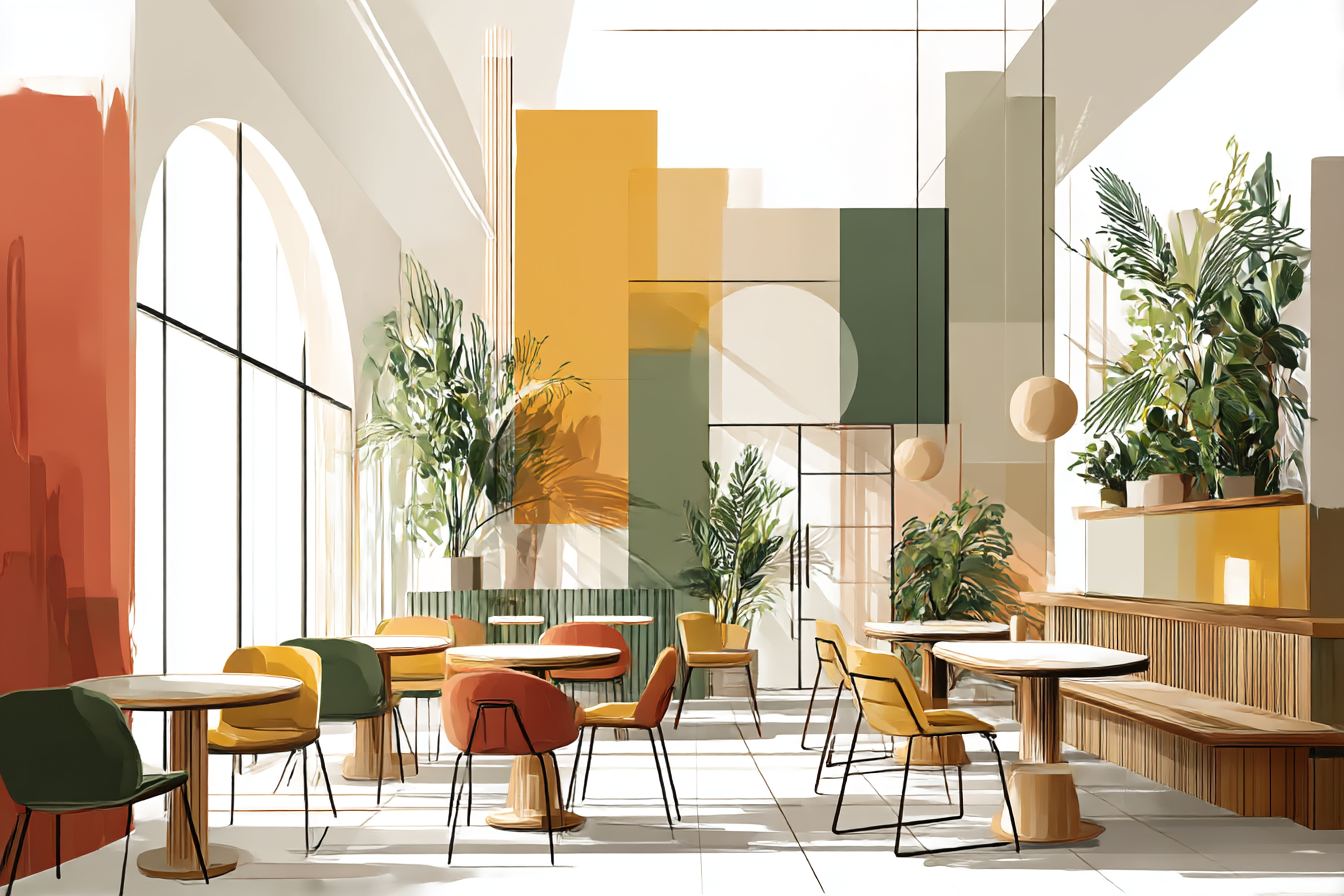
I was working late nights at this architecture firm, and our office was basically a concrete box with fluorescent lights that made everyone look slightly green. I'd drag myself home to my equally depressing apartment and just feel… depleted. Then I discovered this little café called The Birchwood that had been designed around the growth patterns of actual birch trees. The ceiling beams followed these organic curves, the lighting filtered down through wooden screens that cast moving shadows, and somehow – even though it was still January in Minnesota – being in there felt like sitting in a forest clearing.
I started bringing my laptop there every morning, and I swear my productivity doubled. Not because the wifi was better or the coffee was stronger (though both were decent), but because something about that space made my brain work differently. I was calmer, more focused, less likely to get irritated when clients called with their inevitable last-minute changes.
That experience sent me down this rabbit hole of research about biomimicry in architecture. Turns out there's actual science behind why I felt better in that café. Our nervous systems evolved in natural environments, and we're still hardwired to respond to certain patterns and forms. When buildings echo those patterns – the branching structure of trees, the spiral of a nautilus shell, the hexagonal efficiency of honeycombs – our bodies literally relax.
I remember visiting the Eastgate Centre in Zimbabwe about eight years ago. The architect had studied termite mounds to create this ventilation system that keeps the building cool without traditional air conditioning. Walking through those corridors, feeling the gentle air currents that perfectly mimicked how termites regulate temperature in their colonies… it was like the building was breathing. My sinuses, which had been completely clogged from the dry hotel air, cleared up within twenty minutes.
But here's where it gets really interesting – and where a lot of architects miss the point. It's not enough to just copy natural forms. I've seen too many buildings that look like they were inspired by nature but feel completely dead inside. There was this office complex in Phoenix that had these elaborate sculptural elements meant to evoke desert rock formations. Looked impressive in photographs, but spending actual time in those spaces felt oppressive. All visual, no function.
The best biophilic structures work because they borrow natural processes, not just appearances. Take the Qatar National Library – those curved shelves aren't just mimicking sand dunes for aesthetic reasons. The flowing geometry actually guides airflow and natural light in ways that reduce energy consumption while creating these constantly changing light patterns that mirror how shadows move across actual dunes.
You Might Also Like
I've been experimenting with this approach in my own projects lately. Last year, I worked on a senior living facility where we designed the central courtyard around the fibonacci sequence – that mathematical pattern you see in pinecones and sunflower heads. Instead of the typical rectangular garden beds that scream "institutional landscaping," we created these spiraling pathways that naturally encouraged residents to walk longer distances without feeling like they were exercising. The physical therapy staff told us that residents were hitting their daily movement goals without even realising it.
The water features were inspired by how rainwater naturally flows down mountainsides – not some artificial fountain spouting straight up, but these gentle cascading pools that created different sounds as the water moved from level to level. One resident with advanced dementia, who hadn't spoken coherently in months, started describing childhood memories of playing in creek beds every time she sat near those water features.
I mean, that's the kind of response that makes all the extra design time and budget negotiations worth it. We're not just creating pretty spaces – we're tapping into something fundamental about how humans relate to their environment.
The challenge is convincing clients and contractors that these approaches actually work. I was presenting to a hospital board last month, showing them research about how patients in rooms with fractal patterns in the wall designs experience less pain and require fewer medications. One board member kept interrupting: "But does it look medical enough? We don't want patients thinking they're at a spa."
That attitude drives me crazy. Why shouldn't healing spaces feel restorative instead of sterile?
Why are we so convinced that medical environments need to feel harsh and institutional to be taken seriously?
Some of my favorite recent discoveries have been in affordable housing projects where designers worked with natural ventilation patterns and local materials. There's this development in Ghana where the apartment buildings follow the branching pattern of baobab trees – each unit gets optimal airflow and sunlight while the overall structure provides community gathering spaces that form naturally at the "branch" intersections.
The residents didn't move in because they appreciated the biomimetic design philosophy. They moved in because the apartments stay cooler than conventional buildings without air conditioning, the utility costs are lower, and the communal areas actually encourage the kind of social interaction that builds stronger communities. The natural design solutions solve practical problems while creating spaces where people genuinely want to spend time.
That's what I keep coming back to – biophilic architecture works best when it serves human needs first and looks beautiful second. The stunning visual effects are often byproducts of functional design decisions rather than the primary goal. When you prioritize how spaces feel to inhabit over how they photograph for magazines, you end up with buildings that people love living and working in for decades, not just the first few months after the architectural photography is complete.
Right now I'm working on a school renovation where we're redesigning the library around the root system patterns of oak trees. The shelving and study areas follow these organic branching paths that create natural acoustic zones – quiet individual study spots nestled between collaborative areas, with sight lines that let teachers monitor activities without making students feel watched. It's functional biomimicry that happens to be gorgeous rather than gorgeous design that happens to work.