My contractor buddy Mike called me last Tuesday around 10 PM – which already told me something was wrong because Mike's usually in bed by 9:30. "I need your brain," he said, sounding frazzled. "Got a client who wants their office building to be 'more like nature' but they keep throwing around these terms I don't understand. What's the difference between bio-whatever design and bio-mimicry?"
I laughed because honestly, I get this question constantly. Even within design circles, people mix these up all the time. But here's the thing – they're actually approaching nature from completely opposite directions, and understanding that difference matters way more than most people realise.
Let me back up a bit. A few months ago, I was consulting on a tech startup's new headquarters in Portland. The CEO, Sarah, had read some article about companies using "nature-inspired design" to boost productivity.
During our initial meeting, she kept ping-ponging between wanting living walls (biophilic) and talking about designing their workspace "like a beehive" (biomimicry). I realised she wasn't being indecisive – she genuinely didn't know these were two entirely different approaches.
<blockquote>So here's how I explained it to her, and how I explained it to Mike.</blockquote>
Biophilic design is about bringing humans back into contact with nature. It's recognising that we evolved as natural beings and our brains and bodies still crave that connection, even when we're stuck inside concrete boxes all day. When I design biophilically, I'm thinking about things like: How can I get natural light deeper into this space? What plants will thrive here and also clean the air? Can people see trees or sky from their desks? How do I incorporate water sounds to mask traffic noise?
<img class="size-full" src="http://wonkydogltd.co.uk/medium/wp-content/uploads/2026/01/im1979_biophilic_design_vs_biomimicry._ultra-realistichyper-d_0b365a13-612c-44fe-9d79-d3d9b76e98b3_0.jpg" alt="im1979_biophilic_design_vs_biomimicry._ultra-realistichyper-d_0b365a13-612c-44fe-9d79-d3d9b76e98b3_0" />
It's fundamentally about human psychology and physiology. There's mountains of research showing that people in biophilic spaces have lower cortisol levels, better focus, faster healing times… you name it. When I installed that hydroponic wall in my apartment during the pandemic, that was pure biophilic design – I needed living plants around me to feel sane.
Biomimicry, on the other hand, couldn't care less about your emotional connection to nature. It's about stealing nature's engineering secrets. Instead of asking "how can humans connect with nature," biomimicry asks "how does nature solve this problem, and can we copy that solution?"
That beehive example Sarah mentioned? Perfect biomimicry thinking. Bees create these incredibly efficient hexagonal structures that use minimal material for maximum storage. Engineers have borrowed that pattern for everything from airplane wings to building facades. The Eastgate Centre in Zimbabwe copies termite mound ventilation systems to cool the building without traditional air conditioning. Velcro famously mimics how burr seeds stick to animal fur.
Here's where it gets interesting though – and where people often confuse the two approaches. Sometimes biomimicry solutions end up looking pretty natural, which makes people think they're biophilic. But they're not. That building in Zimbabwe with termite-inspired cooling? Functionally brilliant, but it doesn't necessarily make occupants feel more connected to nature. The focus is purely on performance.
I experienced this firsthand during a project last year in Denver. The architectural team had designed this gorgeous facade that mimicked the branching patterns of local cottonwood trees. Visually stunning, mathematically elegant, structurally efficient – textbook biomimicry. But when we tested user responses, people didn't feel particularly connected to nature while inside. The pattern was too abstract, too removed from actual living systems.
We ended up adding actual views of real cottonwoods through strategically placed windows, plus some interior plantings that complemented the facade pattern. Suddenly, you had both – the structural efficiency of biomimicry plus the psychological benefits of biophilic design.
You Might Also Like
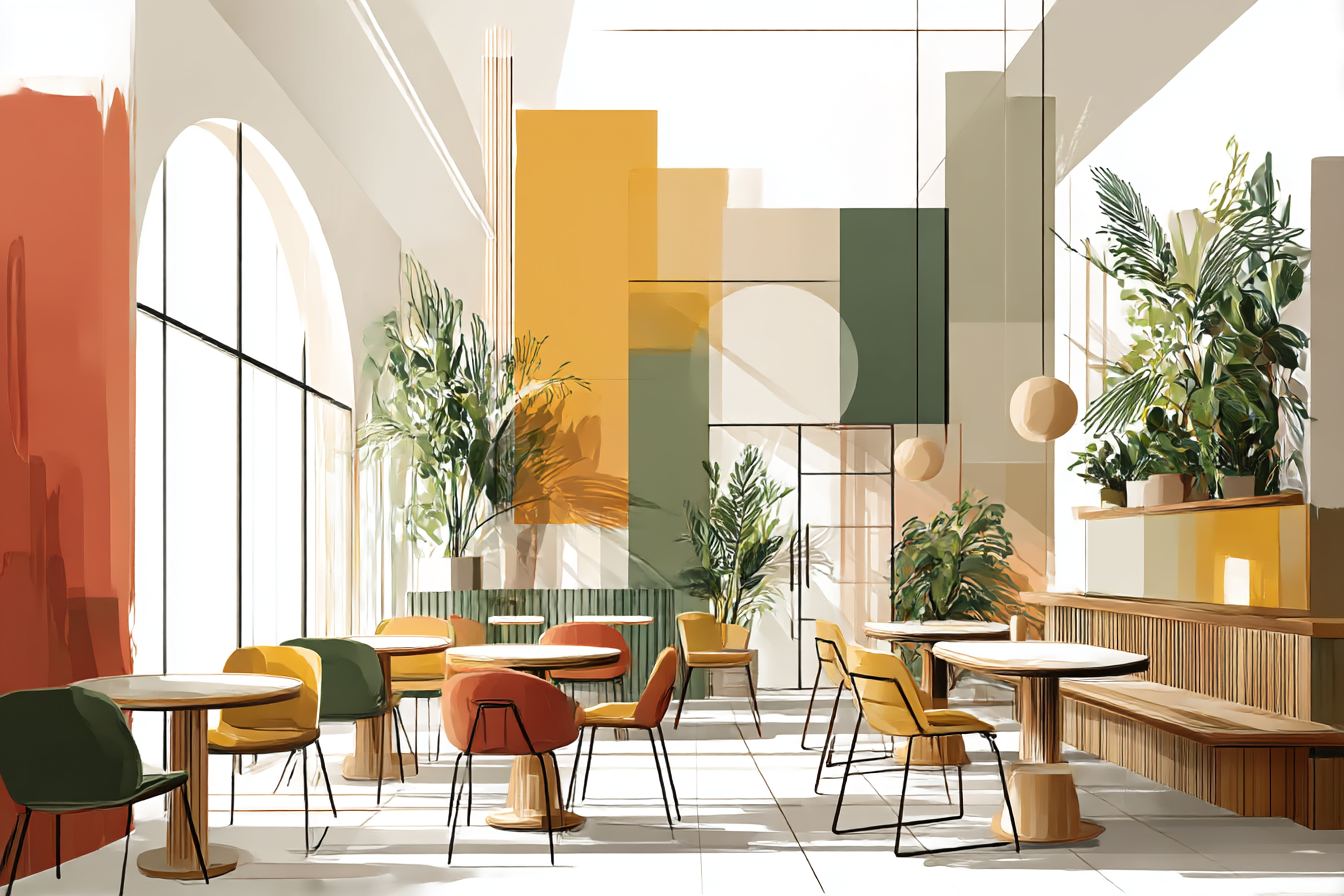
This is where things get really interesting. I've started seeing projects that successfully layer both approaches, and when it works, it's magical. There's this elementary school in Seattle where the architects used biomimicry to design a rainwater collection system based on how pine needles channel water. Super functional. But they also made the collection visible to students and planted native gardens where the collected water gets used. Kids can watch the whole cycle. That's biophilic design piggybacking on biomimetic engineering.
The key difference really comes down to purpose and audience. Biophilic design is about humans – our wellbeing, our psychology, our need for nature connection. Biomimicry is about problems – efficiency, performance, innovation. One focuses on experience, the other on function.
Sarah's project ended up being fascinating because we realised she actually needed both approaches for different reasons. Her employees were burning out in their windowless converted warehouse space (classic biophilic problem). But they were also a sustainability-focused company that wanted their space to reflect their values through innovative environmental solutions (perfect biomimicry opportunity).
We designed a workspace that used biomimetic ventilation inspired by prairie dog burrow systems – naturally temperature-controlled with minimal energy use. But we also incorporated extensive biophilic elements: a central atrium filled with native plants, natural materials throughout, circadian lighting systems, and multiple outdoor terraces for breaks and meetings.
The results were pretty dramatic. Energy use dropped 40% compared to conventional office spaces (biomimicry win), but employee satisfaction surveys also showed significant improvements in stress levels, creativity metrics, and overall job satisfaction (biophilic win).
Mike's client project ended up going in a different direction. They were renovating a medical office building, and after some discussion, we realised their main goal was patient comfort and healing – classic biophilic territory. We focused on natural light optimization, healing gardens visible from treatment rooms, and natural material palettes that felt warm and calming. No biomimicry needed, just good old-fashioned human-nature connection.
<img class="size-full" src="http://wonkydogltd.co.uk/medium/wp-content/uploads/2026/01/im1979_biophilic_design_vs_biomimicry._ultra-realistichyper-d_0b365a13-612c-44fe-9d79-d3d9b76e98b3_1.jpg" alt="im1979_biophilic_design_vs_biomimicry._ultra-realistichyper-d_0b365a13-612c-44fe-9d79-d3d9b76e98b3_1" />
The confusion between these approaches isn't just semantic – it can lead to expensive mistakes.
I've seen projects that invested heavily in biomimetic technologies thinking they were creating "natural" spaces, then wondered why occupants still felt disconnected and stressed. I've also seen biophilic designs that prioritized aesthetics over function and ended up with maintenance nightmares.
What's exciting is that we're getting better at recognising when and how to use each approach. Climate change is pushing more biomimicry innovation – we desperately need nature's efficiency solutions for energy, materials, and resource management. Meanwhile, our increasingly urban, screen-dominated lives make biophilic design more crucial than ever for human health.
The future probably lies in projects that thoughtfully combine both. Nature's been solving engineering problems for millions of years – we'd be crazy not to study those solutions. But we're also biological beings who suffer when cut off from natural systems. The best spaces recognise both truths.
Sometimes the simplest explanation is the most useful: biophilic design brings nature to people, biomimicry brings nature's solutions to problems. Different tools, different goals, both incredibly valuable.



