
Standing in a vertical forest tower in Milan last month, watching office workers take their lunch breaks on planted terraces forty stories above street level, I couldn't help but think we're witnessing something unprecedented. The building – Bosco Verticale – isn't just architecture with plants slapped on; it's a living ecosystem that produces oxygen, absorbs carbon dioxide, and moderates temperature while providing workspace for thousands.
But here's what really got me: I watched a woman on the fifteenth floor lean against her desk near the floor-to-ceiling windows, unconsciously synchronizing her breathing with the gentle sway of the birch trees growing right outside her office. She probably didn't realise she was doing it. That's the magic of next-generation biophilic design – it works on us whether we're conscious of it or not.
The field is moving beyond those token green walls and desktop succulents we got excited about a decade ago. Don't get me wrong, I still love a good living wall (my apartment has three), but what's emerging now is far more sophisticated. We're talking about buildings that literally breathe, spaces that adapt to our circadian rhythms, and materials that continue growing and changing long after construction is complete.
I've been tracking some fascinating developments through my work with various research institutions.

Just last year, I consulted on a project in Amsterdam where they're experimenting with mycelium-based building materials – essentially, structures grown from mushroom root systems. The prototype panels I tested weren't just carbon-neutral; they actually improved air quality over time and had this incredible ability to self-repair minor damage. Running my hands over the surface, it felt warm and almost alive, which… well, it technically was.
The psychological impact was immediate. Test subjects spending time in rooms with these living materials showed measurably lower cortisol levels compared to conventional spaces. One participant told me it felt like being inside a gentle, breathing organism rather than a static box. That visceral response is exactly what we're after.
Temperature regulation is another area where biology is teaching us remarkable lessons. I recently visited a research facility in Singapore where they're developing building skins based on polar bear fur structure. The prototype panels can adjust their insulation properties in real-time, responding to external temperature changes by opening or closing microscopic air pockets. It's not just energy-efficient; it creates these subtle environmental fluctuations that keep our nervous systems engaged rather than numbed by static conditions.
The lighting revolution happening right now absolutely fascinates me. We're moving way beyond those basic circadian rhythm bulbs (though those were a good start). I'm working with a team developing what they call "sky simulation" systems – LED arrays that don't just mimic the colour temperature of natural light but actually replicate the subtle intensity variations, cloud shadows, and even seasonal changes in sun angle. The prototype installation I tested last month made me completely lose track of whether I was indoors or out.
My neighbour, who suffers from severe seasonal affective disorder, agreed to beta-test one of these systems in her home office. After three weeks, she stopped taking her afternoon naps and started staying up past 8 PM naturally – improvements her doctor attributed directly to the lighting changes. Her sleep patterns normalized in ways that traditional SAD lamps never achieved.
Water features are getting incredibly sophisticated too. I'm fascinated by these new "atmospheric river" systems that create microscopic mist patterns throughout interior spaces, maintaining optimal humidity while producing negative ions that demonstrably improve mood and cognitive function. The installation I saw in a Portland office building was barely visible but created this subtle freshness that made the space feel like a forest after rain.
You Might Also Like
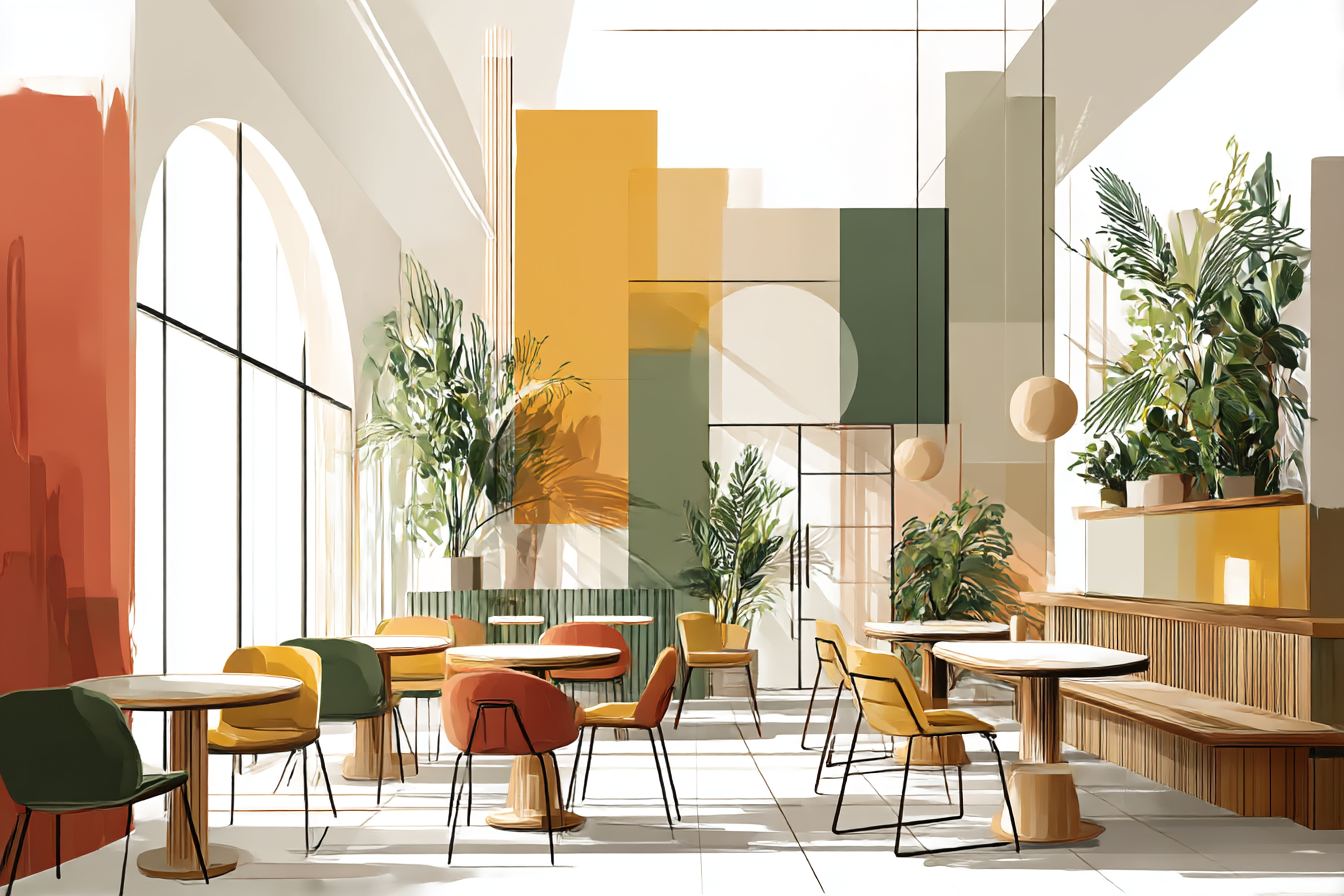
But honestly? Some of the most exciting developments aren't high-tech at all. I'm seeing a return to biomimetic materials that connect us to natural processes in surprisingly simple ways. There's this tile manufacturer in Italy creating surfaces that change colour throughout the day based on temperature and humidity – just like leaves. Nothing electronic about it; it's pure chemistry responding to environmental conditions.
The wellness applications are becoming incredibly precise. I recently toured a hospital in Denmark where they've installed what they call "healing alcoves" – patient rest areas designed around specific natural patterns that research shows reduce pain perception. The spaces incorporate golden ratio proportions, fractal patterns found in tree branches, and sound dampening that mimics the acoustic properties of dense forests. Patients using these spaces required 30% less pain medication on average.
Urban agriculture integration is exploding in ways that would've seemed like science fiction five years ago. I visited an office building in Detroit where every floor has productive growing systems built into the architecture – not decorative planters but actual food production that supplements the employee cafeteria. Workers can harvest herbs for their lunch, and the psychological benefits are profound. There's something deeply satisfying about eating food you've watched grow in your workplace.
The materials science breakthroughs keep surprising me. I recently tested prototype flooring made from compressed agricultural waste that actually becomes more comfortable underfoot over time as the organic fibres compress and conform to traffic patterns. It develops these subtle pathways and textural variations that make each installation unique – like how forest floors develop distinct character based on how they're used.
Acoustic biophilia is another emerging frontier. Beyond simple nature sounds, researchers are developing spatial audio systems that recreate the three-dimensional soundscapes of specific natural environments. The prototype I experienced last week transported me so completely to an old-growth redwood grove that I found myself unconsciously adjusting my voice to match the reverent quiet those spaces naturally inspire.
What excites me most is how these innovations are becoming accessible. The mushroom-based materials I mentioned? They'll be commercially available within two years at costs competitive with conventional options. The atmospheric water systems are already being scaled for residential use.
This isn't luxury anymore; it's becoming standard practice.
The resistance is fading too. Five years ago, facility managers worried about maintenance complexity and liability issues with living building systems. Now I'm fielding calls from corporate real estate directors asking how quickly they can implement these features to attract and retain employees. The business case has become undeniable.
Looking ahead, I see us moving toward what I call "ecosystem architecture" – buildings that function as genuine habitat while serving human needs. We're already seeing early examples: structures that provide nesting sites for urban birds, green corridors that support pollinator migration, and building-integrated systems that process neighborhood stormwater naturally.
The future isn't just about bringing nature into our buildings; it's about creating built environments that actively participate in natural processes. We're designing structures that grow, adapt, and contribute to ecological health rather than simply consuming resources.
That woman in Milan, breathing with the trees outside her office? She's experiencing the leading edge of a fundamental shift in how we think about the relationship between human habitation and natural systems. And honestly, it's about time.



