
Last Tuesday, I got a call from Marcus, a facilities manager at a tech startup downtown who was basically at his wit's end. "Our people look like zombies," he said, and honestly? I wasn't surprised. I'd seen photos of their workspace online – typical open floor plan with those harsh overhead fluorescents, grey carpet, white walls. Soul-crushing stuff.
But here's the thing – three months later, that same office became one of my favorite case studies. Not because they threw money at the problem (their budget was actually pretty tight), but because they made strategic choices that completely transformed how their employees experienced the space.
<blockquote>The first change was almost embarrassingly simple. We replaced those buzz-kill fluorescent fixtures with LED panels that mimicked natural light cycles.

You know those lights that gradually shift from cool blue-white in the morning to warm amber by evening? Cost them maybe $800 total for the main work area. Within two weeks, Marcus started getting comments about people sleeping better at home. Turns out when you're not fighting artificial lighting all day, your circadian rhythms actually function properly. Who would've thought?</blockquote>
Next, we tackled what I call the "prison window problem." Their office had these tiny rectangular windows that barely registered as openings to the outside world. We couldn't knock down walls (rental agreement), but we could maximize what light they had. I convinced them to rearrange the entire floor plan so workstations clustered around the windows instead of hiding in the centre. Radical concept, right?
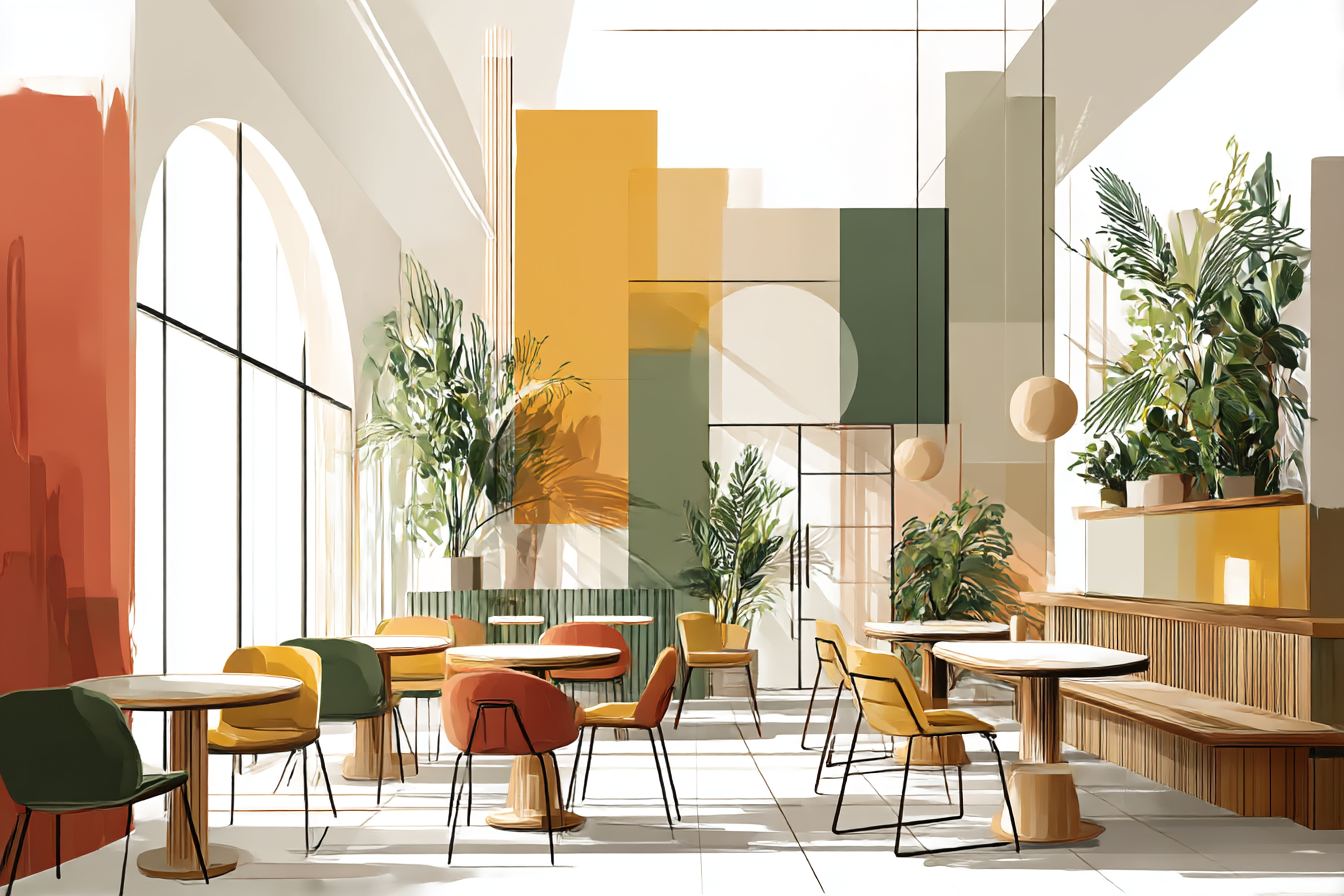
The real game-changer though was bringing in living elements. And I don't mean a sad little succulent on everyone's desk – though we did that too. We installed a living wall system along one major corridor using a hydroponic setup I'd tested in my apartment. Snake plants, pothos, some spider plants… nothing fancy, but suddenly people started taking the long way to the bathroom just to walk past it.
<img class="size-full" src="http://wonkydogltd.co.uk/medium/wp-content/uploads/2026/01/im1979_biophilic_design_office_space._ultra-realistichyper-de_50feec46-3f62-4618-a3a6-78b97422943f_0.jpg" alt="im1979_biophilic_design_office_space._ultra-realistichyper-de_50feec46-3f62-4618-a3a6-78b97422943f_0" />
The results? Their HR director sent me metrics six months later that honestly made me a little emotional. Sick days dropped by 31%. Employee satisfaction scores jumped from 6.2 to 8.1 out of 10. But the number that really got me was this: average time spent in collaborative spaces increased by 47%. People were actually choosing to hang out at work instead of hiding at their desks counting minutes until escape time.
I've seen this pattern repeat across dozens of projects now, and it never gets old. There's something almost magical about watching a workspace transform from a place people endure to a place they actually enjoy being.
Take the law firm I worked with in Baltimore last year. Classic stuffy corporate environment – dark wood paneling, burgundy leather chairs, the works. The partners were convinced that biophilic design meant turning their serious business into some kind of hippie commune. (Their words, not mine.) But employee retention was becoming a real problem, especially among younger associates.
We started small. Really small. Just adding some air-purifying plants to the reception area and common spaces. Then we introduced natural materials – a reclaimed wood feature wall in the break room, some stone elements in the lobby. Nothing that screamed "we're trying too hard to be cool."
The breakthrough came when one of the senior partners – this intimidating woman who I was honestly a little scared of – mentioned that she'd been having fewer tension headaches since we'd improved the air quality. Turns out those plants weren't just decorative; they were actually filtering out volatile organic compounds from all that new office furniture and carpet.
You Might Also Like
That's when they got serious about expanding the program. We redesigned their library with better natural lighting and views of a small courtyard garden we created in an unused outdoor space. We replaced synthetic materials with natural ones wherever possible – wool carpeting instead of nylon, solid wood furniture instead of laminate, linen window treatments instead of plastic blinds.
The transformation took about eight months total, and by the end, even the most skeptical partners were believers. Their turnover rate dropped to almost zero, and they started using the renovated spaces in their recruiting materials. But what I found most interesting was how the culture shifted. People started having more informal conversations, taking breaks together, even eating lunch in the office instead of escaping to nearby restaurants.
Now, I won't pretend every project goes smoothly. I worked with a manufacturing company in Ohio where the safety regulations made incorporating natural elements incredibly challenging. We couldn't have live plants near certain machinery, couldn't use wood materials in specific zones, couldn't even change the lighting in some areas. It was frustrating as hell.
But we found workarounds. We created nature views through strategic placement of high-resolution displays showing local landscapes that changed seasonally. We incorporated natural patterns into the flooring design – subtle geometric shapes inspired by tree branching and water flow. We even worked with their acoustics engineer to introduce nature sounds during break periods.
The results were more modest than some projects, but still meaningful. Workers reported feeling less fatigued during long shifts, and there was a noticeable decrease in workplace accidents. Sometimes biophilic design isn't about grand gestures – it's about making incremental improvements that acknowledge we're biological beings, not machines.
What really drives me nuts is when companies treat biophilic elements as afterthoughts or cost-cutting targets. I've seen so many projects where living walls get swapped for printed graphics of plants, or where natural light strategies get abandoned for "more efficient" artificial alternatives. The research is crystal clear – authentic connections to nature provide measurable benefits that fake versions simply can't match.
<img class="size-full" src="http://wonkydogltd.co.uk/medium/wp-content/uploads/2026/01/im1979_biophilic_design_office_space._ultra-realistichyper-de_50feec46-3f62-4618-a3a6-78b97422943f_1.jpg" alt="im1979_biophilic_design_office_space._ultra-realistichyper-de_50feec46-3f62-4618-a3a6-78b97422943f_1" />
But when organizations commit to doing it right? The transformation goes beyond individual wellbeing to affect entire company cultures. I'm working with a financial services firm right now where we've integrated biophilic principles throughout their new headquarters.

We're talking living systems, natural materials, circadian lighting, acoustic environments that include subtle nature sounds, workspaces that provide both forest-like enclosure and savanna-like openness depending on the type of work being done.
<blockquote>It's still under construction, but the early results from their pilot floor are incredible. Productivity metrics are up, collaboration has increased, and – this one surprised even me – customer satisfaction scores have improved. Apparently when employees feel better in their environment, it shows in how they interact with clients.</blockquote>
The most rewarding part of this work isn't the metrics, though. It's getting emails like the one I received last month from Sarah, an accountant whose chronic anxiety had been getting worse each year. After her company implemented biophilic design changes to their office, she wrote to tell me she'd been able to reduce her medication dosage for the first time in five years. Her doctor credited the reduced stress from her improved work environment.
That's what this is really about – not just making offices look nicer, but creating spaces that support human flourishing in fundamental ways. We spend most of our waking hours at work. Shouldn't those spaces nourish us instead of depleting us?