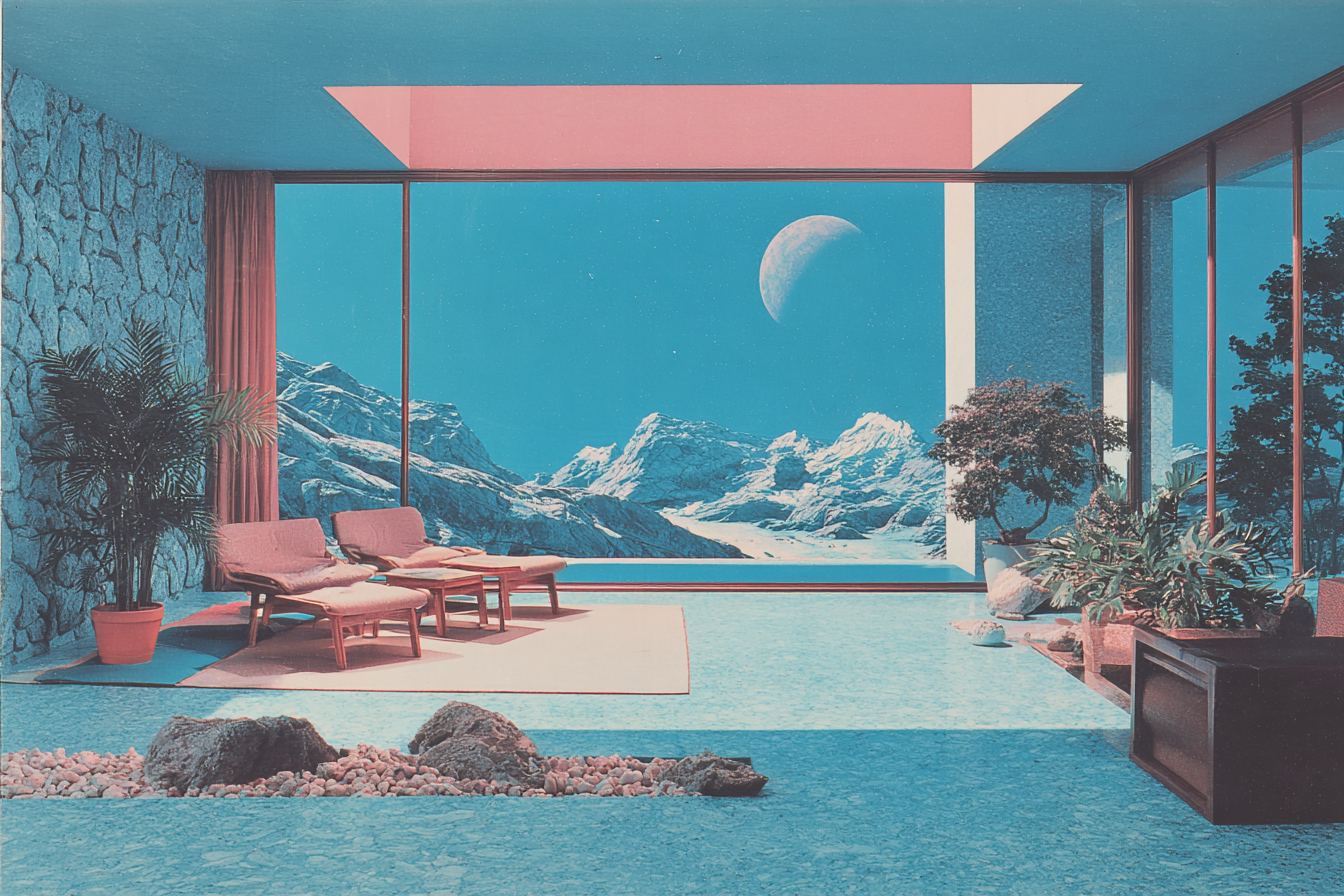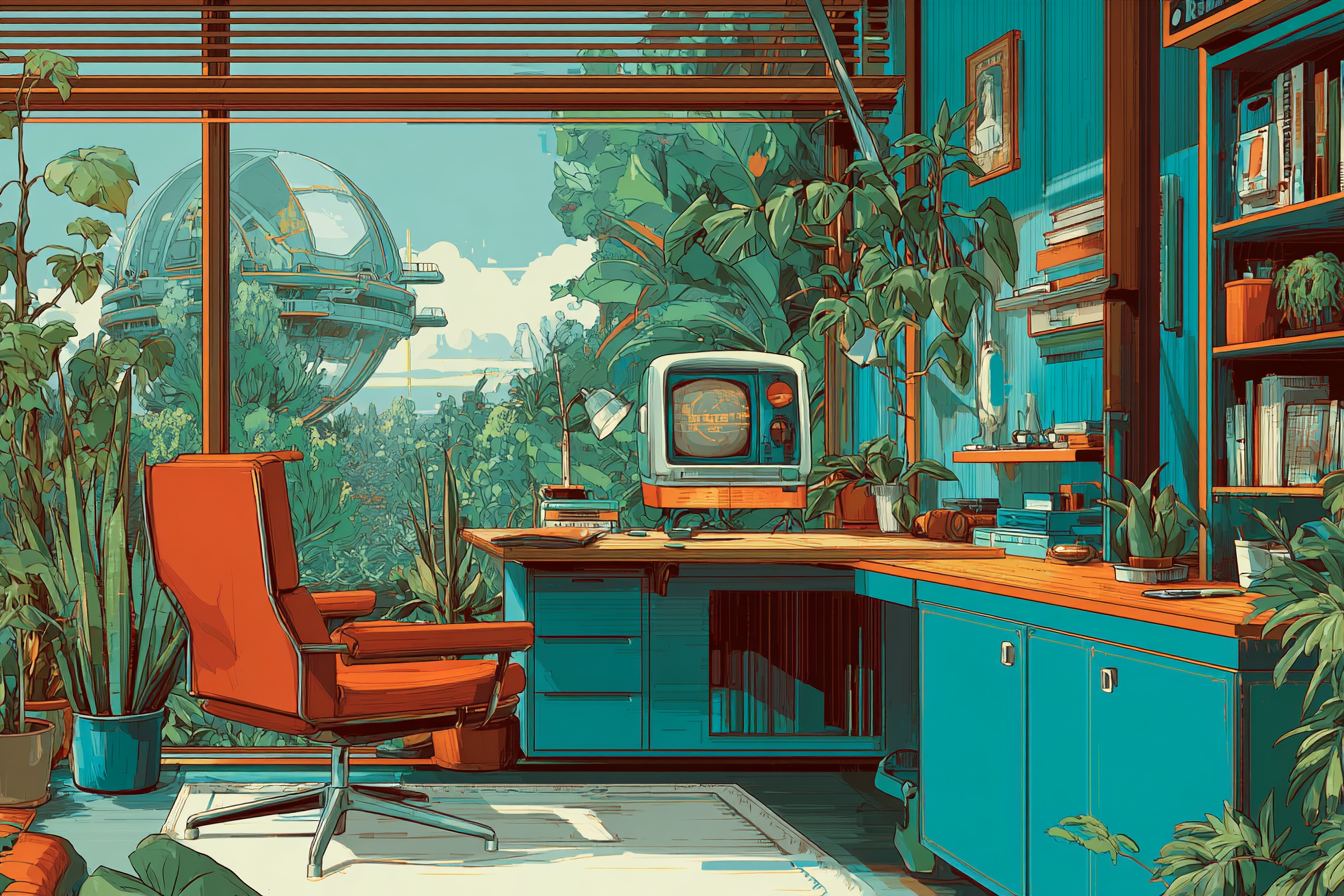
The home office is often a far cry from what remote workers envisioned. Many are operating from bedrooms, kitchens or cramped dining rooms. As a result, many people struggle with isolation (and more) while working remotely. Remote workers in biophilic environments show 15% increased productivity.
As someone who has spent a decade helping people to redesign small spaces, I have seen a common trend. Once a person incorporates some natural light and a few plants to their workspace, they generally want to return to that space.
This is not a sentimental response; it is based on tangible evidence. When employees are able to incorporate biophilic design elements into their workspace, such as plants and natural light, they tend to work for longer periods without becoming fatigued. They also tend to take fewer breaks. In short, they tend to enjoy being in the space.

Fortunately, biophilic home office design does not require a garden or a corner office with a view of a park. It simply requires knowledge of what really makes a difference in terms of return on investment and how to apply those concepts to a limited space.
Why Home Offices Need Biophilic Design
A considerable amount of literature indicates the impact of interior design on employee productivity. Specifically, 90% of time is spent indoors, yet 35% of workers receive less than 15 minutes of outdoor time per day. For employees working from home, this number is likely higher. Employees are not commuting to work. Employees are not walking to meetings around the city. Employees are merely transitioning from their beds to their desks, and vice versa.
47% of employees reported experiencing stress in the past three months. Research demonstrates that the link between workspace design and workplace stress is direct. What is more telling is that biophilic designs with green and blue tones increase happiness by 67% when entering a space. This is a significant mood boost, not a small one. This is the difference between dread and engagement.
While employees who work in an office setting have coworkers and a social aspect that contributes to their overall well-being, remote employees rely solely on their physical environment to mitigate potential negative impacts. Therefore, if that environment is unappealing and depleting, there is no other factor to offset this.
Identifying the Elements That Work Best in Small Spaces
Prior to investing in 40 houseplants and purchasing expensive furniture, recognise that 39% of respondents feel most productive at desks in private spaces enhanced by biophilia. Whilst remote employees may have private spaces, they lack biophilia.
Research clearly identifies the elements that contribute most to positive outcomes. The first element identified was natural light. Natural light at 44% preference yields 8% productivity increase. Plants followed at 20% preference and provide 13% wellbeing boost. Specifically, 40% wellbeing improvement resulted from using indoor plants to reduce stress hormones and blood pressure. The findings are not vague wellness claims; they are identifiable physiological improvements.
Consistent results across various studies demonstrate that adding elements of nature to an employee’s workspace are not optional if they wish to improve their experience of that space. Rather, adding elements of nature is now expected.
Optimising Natural Light in Your Home Office
If you can accomplish only one thing, accomplish this. Place your desk near a window. If a window is not available, place your desk perpendicular to the natural light so that it illuminates your face and workspace without producing screen glare. If you do not have a window in your home office area, relocate your home office to an area that has a window. Rethink your space in terms of lighting, not the other way around.
Natural light enhances your ability to regulate your circadian rhythm, enhance your mood, and reduce eye strain. Natural light is not decorative; it is structural. If your home office does not have a window, consider installing a skylight or light tube if you are in a rental property that allows installation of a permanent fixture. To reflect natural light further into a space, hang mirrors opposite windows. Hang translucent window treatments to allow natural light in whilst providing privacy.
When natural light is not an option, artificial lighting becomes more important. Use full-spectrum bulbs to simulate daylight, not standard warm or cool white lighting. To avoid creating harsh shadows and eye fatigue, position the artificial light source above and slightly in front of your workspace, rather than above your head.

Choosing and Positioning Plants Strategically
Not all plants are created equally in terms of use in a home office. You need plants that can thrive in whatever light conditions you have in your space, not plants that require a greenhouse environment. Spider plants, pothos and snake plants thrive in low light. Peace lilies and Boston ferns prefer moderate indirect light. Fiddle leaf figs and rubber plants require brighter light conditions but can adapt to home offices located near windows.
Place plants where you can see them from your desk, but do not place them in a location that will obstruct light. By placing a tall plant to the side of a window, you draw your eyes away from the confines of your small space, creating a sense of space even in a small space. Smaller plants on shelves or desks serve as focal points for visual respite during work. Home offices with indoor and outdoor greenery show the greatest increases in emotional stability, sleep quality and efficiency, indicating that having a variety of plants throughout the space – on desks, walls and corners – provides greater benefits than having a single large plant.
One of the primary constraints for most individuals in terms of incorporating plants into their home office is maintenance. If you are stressed about keeping plants alive, then the plants become a stressor, rather than a stress reducer. Begin with three strong, easy-to-maintain plants that match the light conditions in your space and your level of dedication. Spider plants and pothos are nearly impossible to kill. Once you have demonstrated your ability to maintain these plants, you can begin to add others.
Reducing Noise and Acoustic Stress
Approximately 28% of workers lack quiet workspaces, and for remote employees, this often includes external noise (e.g., street traffic), internal noise (e.g., family members), and the ambient hum of appliances. Notably, plants have been shown to aid in reducing noise pollution, as plants absorb sound waves that would otherwise reverberate off hard surfaces. Therefore, dense foliage is more beneficial than sparse plants, and grouping multiple plants together will yield more acoustical dampening than scattering them throughout the room.
If noise is a significant issue, you can also utilise water features. A small tabletop fountain or water wall can mask distracting noise by generating ambient noise that your brain does not perceive as intrusive. This white noise effect is real. Individuals report better concentration when working in an environment with water features, especially if the alternative is street traffic or household noise.
Soft furnishings will also enhance this effect. Adding a rug, curtains, and upholstered furniture to a space will significantly reduce the amount of noise reflected off of hard surfaces and bare walls. If you are working in a space with only hard surfaces, layering soft furnishings will provide acoustical improvements without requiring major renovations.
Affordable Biophilic Solutions for Your Home Office
You do not need to spend thousands to create a biophilic home office. First, prioritise what matters most: light and one or two plants. A quality desk lamp with full-spectrum bulbs costs approximately £30 to £60. A spider plant or pothos costs between £5 and £15. Strategically position both before considering any other elements.
Once the light and plants are performing optimally, add a second and third plant. Incorporate natural materials (e.g., a wooden desk purchased secondhand, a cork or natural rubber mat, linen curtains instead of synthetic ones) to create visual and tactile connections to the natural world, whilst minimising the need to care for living plants.
If you are renting and cannot make permanent changes to the space, focus on moveable elements. Consider potted plants, a small water feature, artwork featuring nature themes, and natural fibre rugs. All of these items can be easily relocated with you when you move.

The Productivity Problem: Why Does It Matter?
Absenteeism related to non-nature spaces accounts for 10% of total absenteeism. For remote workers, this equates to days in which they do not work productively or days in which they call in sick when they are not actually ill. Anecdotally, remote workers are simply depleted. Stress-related illness costs the United Kingdom 15.4 million workdays annually, and a substantial amount of that is potentially preventable through better workspace design.
The mathematics is simple. If a biophilic design can improve your productivity by even 5%, and you work 250 days per year, that represents 12.5 additional productive days. For freelancers and contract workers, 12.5 days of increased productivity can represent a significant amount of income. For salaried employees, the difference between meeting and exceeding performance expectations is a key component in future advancement opportunities and raises.
Studies by Human Spaces worldwide indicate that biophilic design can increase productivity 6 to 15% and creative thinking 15%. Even at the lower end of this range, that is significant. At the higher end of this range, that is transformative.
Designating Zones in Your Home Office
In addition to creating a space that energises you, creating separate zones within your home office will help you to stay organised and focused. Your home office likely serves multiple purposes (i.e., focused work, phone calls, administrative tasks). Create separate zones for each function. Your zone for focused work should include as many biophilic elements as possible, and should be free from distractions. This is where you can place plants, position the light to maximise its effectiveness, and perform your most challenging and critical tasks.
Your zone for phone calls should have a neutral background and good lighting for video conferencing. Whilst you do not need to have a high degree of biophilia in this zone, a small plant placed behind you will create a professional appearance and add visual interest to the person viewing you.
Your administrative zone can be the least biophilic of the three. This is where you store supplies, filing, etc. The items you need to access frequently, but do not want to view whilst focused on your work.
You may not be able to create physical separation between zones in a small space, but you can create psychological separation. Use a small plant to designate the boundaries between zones. Use lighting to create zones. Use colour to differentiate areas. Your brain responds to these cues even when the space is physically confined.
Patterns Post-COVID and What They Indicate
Post-COVID data shows correlation between home design searches and houseplant purchases for biophilia in a home office. This is not coincidental. Individuals working from home recognised that their workspaces were depleting them, and incorporated elements of nature into their spaces to counteract this. The data supports what is logically apparent: your home office environment influences your ability to work effectively.
19% of offices lack any natural elements, and if your home office is a bedroom or kitchen corner, your home office is part of that 19%. Creating a biophilic home office is not complex. It involves using plants, light, and natural materials that connect you to the natural world, rather than isolating you from it.
Determining If Your Biophilic Home Office Design Is Effective
Before investing in your biophilic home office redesign, determine a baseline measurement. How many focused work hours did you complete in your current setup? How did you feel at the conclusion of the day? Did you require multiple coffee breaks? Were you calling in sick more often than previously?
After making changes to your space, assess the same variables. You will likely notice differences in your ability to focus, decreased energy crashes, and reduced sick days within two to four weeks. The improvements are not due to a placebo effect. They are physiological responses to an environment that is improving.
Assess your actual productivity, if possible. Track billable hours, completed projects, and quality of work. Most people report improved performance and productivity within one to four weeks of implementing simple biophilic changes to their workspace.

The Reality of Biophilic Design in a Home Office
Your home office will never resemble a forest. It should not. However, your home office can be a space that energises you, rather than depletes you. Your home office can be a space where you actually desire to work, rather than a space where you are obligated to sit. The distinction between obligation and preference is the greatest difference regarding your productivity, stress levels, and sustainability as a remote worker.

Sarah is an interior designer who specializes in biophilic design (the connection of humans and nature) and small-space living for urban apartment dwellers. Since working as an interior designer for 12 years, she has redesigned hundreds of flats in London, Manchester and Bristol. As such, Sarah is experienced in creating biophilically connected spaces in areas of homes that appear to be nearly impossible to redesign.
Sarah offers practical interior design solutions for both renter and homeowner, both with very real constraints: limited budget, inability to make structural changes, and every square inch of the home counts. Sarah’s methodology takes the principles of biophilic design and applies them to the realities of living in an urban environment. She has helped numerous clients create biophilic elements in compact, climate-controlled environments – humidity control in loft conversions, increasing daylight in basement conversions, adding biophilic elements in studio apartments that have no wall space.
The basis of Sarah’s philosophy is that biophilic design should not cost a fortune nor require a renovation. Rather, through a series of intelligent decisions, small choices can add up to large results. Sarah writes for people looking to transform their space in a way that does not require landlord approval, nor does it need to be expensive. Her guidebooks are focused on what actually works within the confines of typical UK flat designs, what investments will pay off, and what can be skipped altogether.