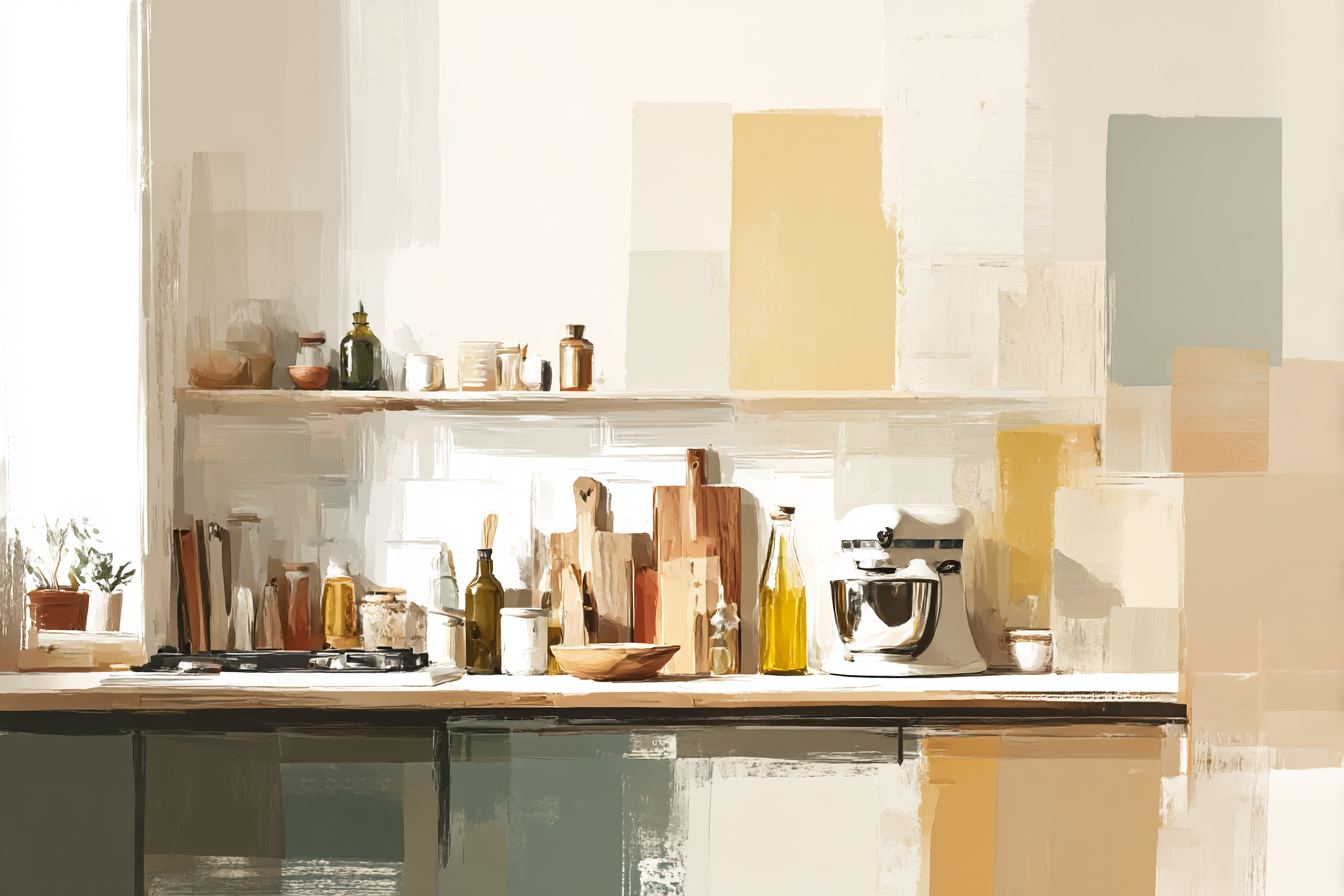
I’ve been redesigning kitchens in London, Manchester, and Bristol for twelve years now. I’ve worked with renters in studio flats with zero natural light, homeowners with conservation order restrictions, and everyone in between. And I can tell you with absolute certainty: the kitchens people love most are the ones that connect them to nature.
Search interest for biophilic kitchen design surged 200% in 2024, and that’s not marketing hype. 72% of industry respondents note homeowners prioritising kitchens with stronger outdoor ties via biophilic elements. But here’s what nobody tells you: most biophilic design kitchen guides assume you’re renovating from scratch with unlimited budget and perfect light. They don’t account for the real constraints I see every single week.
This guide is different.
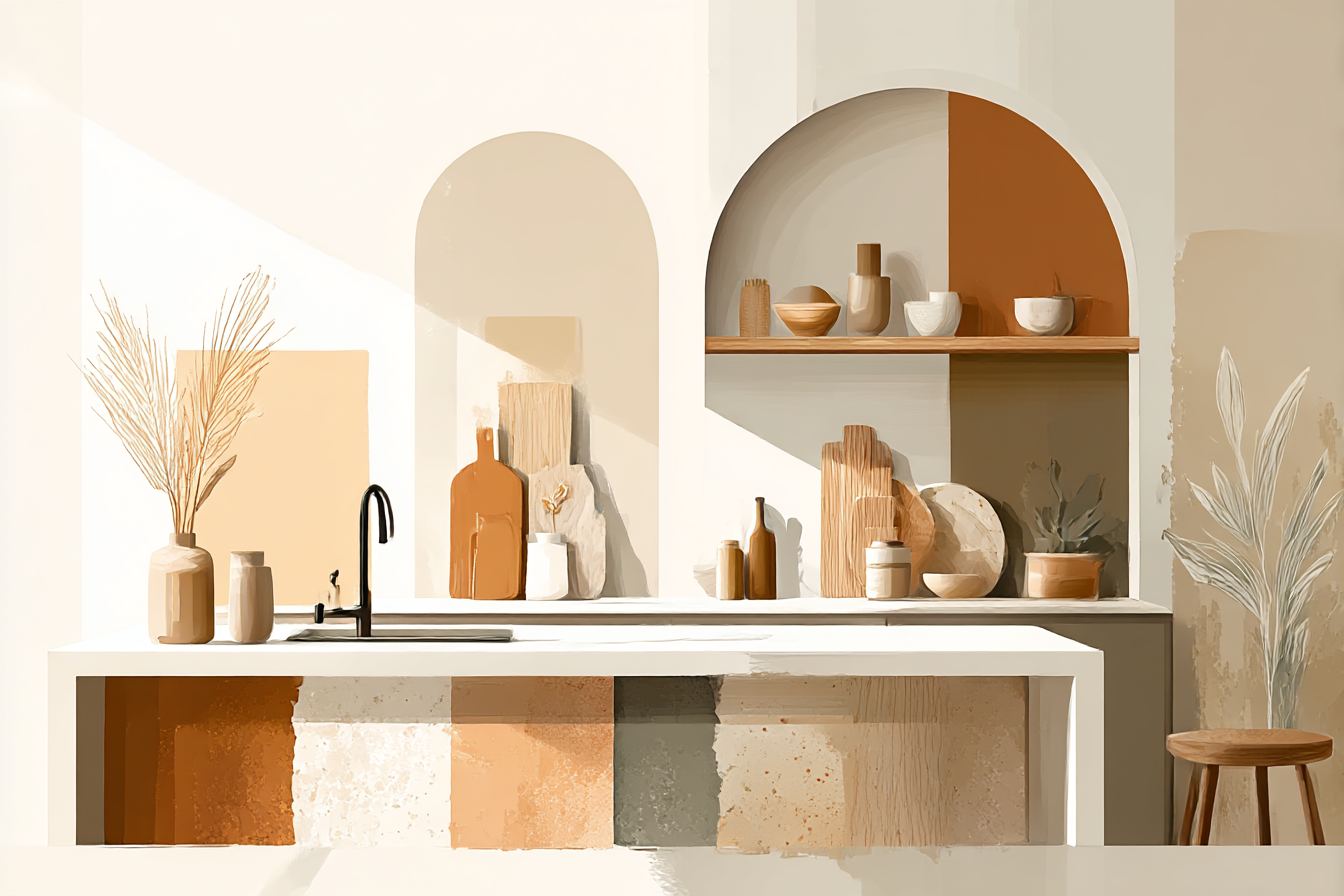
It’s built on twelve years of actual redesigns, failed experiments I’ve learned from, and specific techniques that work inside real British flats and homes. I’m going to walk you through exactly what creates a biophilic kitchen that actually functions—and why it matters more than you think.
Why Does Your Kitchen Matter More Than You Think?
When I began documenting the success of kitchens that I had designed, I was surprised by one fact above all others: the kitchen is often the least likely area that people think of when considering a connection to nature. While we tend to focus on our living rooms and bedrooms, the kitchen is where we spend a lot of our time and yet it is generally considered nothing more than a functional room. Grey cabinets, fluorescent ceiling fixtures and no visual tie to anything outside.
However, the kitchen is also the place where you start your day. It is the place where you are most likely to experience stress during your daily routine (time constraints, numerous tasks, morning fatigue). If you are spending your morning in a windowless box with harsh artificial lighting, you are essentially putting your nervous system into a state of heightened tension before you even eat your breakfast.
Research has shown that workplaces that include elements of nature demonstrate measurable increases in cortisol levels, focus and productivity. The same is true for residential spaces. Your kitchen is not simply a functional space — it is one of the most impactful areas for enhancing wellness in your home.
The Key Elements That Produce Results
1. Light — The Foundation Element That Other Elements Are Built Upon
Maximizing natural light through the use of large windows, skylights, or glass doors greatly enhances your mood while helping you to stay aligned with your circadian rhythms. However, if I had to choose one element to change in every kitchen I have ever worked on, it would be the lighting.
The problem is that very few people have massive south-facing windows or the ability to install skylights. Therefore, here is what really works in spaces with limited options:
For kitchens with existing windows, remove everything from underneath them and eliminate all clutter on the sills. Utilise light-coloured walls and reflective surfaces to bounce the natural light further into the space. A single window, when utilised properly, multiplies its effectiveness. Paint the walls in warm whites (not clinical white, which produces glare) or soft neutral colours. Add glossy finishes to certain surfaces (certain types of tile and cabinetry) to create additional reflected light.
For dark kitchens with little to no natural light, utilise full-spectrum lighting to replicate the wavelength of daylight. This is not about producing brightness (measured in lumens); it is about colour temperature and wavelength. Standard kitchen halogen strip lighting is usually either 2700K (warm white) or 4000K (cool white). Full-spectrum lighting is produced at 5000-6500K and replicates the wavelengths of daylight. Typically, this requires an investment of £100-200 for quality bulbs that actually make a difference to how you feel in the space.
Layer your lighting as a foundational implementation strategy. Install overhead full-spectrum lighting to assist with task lighting. Install warm-toned lighting beneath your cabinets to enhance the ambiance of your space. Place a small desk lamp with full-spectrum bulbs adjacent to your food preparation area. Circadian rhythm alignment genuinely impacts sleep quality, mood and energy levels, regardless of whether it is aesthetically pleasing or not.
2. Materials — The Tactile Layer That Most Guides Overlook
Utilising organic materials such as wood cabinetry, stone countertops, bamboo, and textured flooring creates tactile warmth and a sense of sustainability. Unfortunately, this is where most guides fall short. They assume that you are replacing everything. You are not. You are strategically introducing natural materials to the places within your kitchen where you will be touching them.
High-touch surfaces are the most critical areas to incorporate natural materials. The edge of your worktop where you prepare your food, the cabinet pulls, and the counter where you chop vegetables—these are the areas that you will be touching the most. Wood or stone beats laminate in these areas due to the material quality under your skin. Texture elicits a different response in your nervous system than smooth plastic. Texture engages different neural pathways than smooth plastic.
Use wood open shelving in one portion of your kitchen instead of white closed cabinets. The cost ranges from £150-400 depending on the wood selection and size. The impact is huge. You see it, you touch it, it transforms the entire atmosphere of your kitchen. Alternatively, if you’re replacing one section of natural stone or wood worktop, retain your current worktops and add a wooden chopping board, wooden trivets, a stone tile backsplash—these total £30-150 combined.
Select textured finishes over high-gloss. Matte wood, natural stone with a slight texture, exposed brick (if possible)—these do not merely look better, they reduce glare and create visual interest. Use natural textiles that you utilise regularly. Replace your synthetic tea towels with linen. Replace your synthetic kitchen mat with a natural fibre mat. Both of these items will add warmth and alter the way you feel in your kitchen for less than £50.
Natural materials develop character over time and last longer than alternatives, so you’re not constantly replacing things. Wood develops patina. Stone improves with age. You are not generating waste—you are creating something that improves over time. That is truly sustainable and not marketing fluff.
3. Plants — The Practical Approach
Including plants, herb gardens, or green walls cleans the air, adds greenery, and allows for the use of fresh ingredients in cooking. This is where people tend to go wild. They envision a lush green wall and quit three months later when it is dead.
What actually works is practical plants that you will maintain because you are utilising them. A windowsill herb garden is fantastic. Fresh basil, parsley, mint, coriander—you will use them in cooking and therefore they will receive regular water. They are both beautiful and practical. No degree in plant care is necessary. Simply ensure that they receive water and light, which they are literally sitting next to.
For low-maintenance plants in dark kitchens, consider pothos (Devil’s Ivy) in corners. These plants thrive in low-light environments and require infrequent maintenance. They genuinely improve indoor air quality. A few in strategic locations are superior to a dying green wall that depresses you. The error that everyone makes is assuming that biophilic design means transforming your kitchen into a jungle. It does not. Two to five plants maximum in most residential kitchens. Select plants that you will actually interact with—either through using them or watering them without stress.
| Plant | Light Requirements | Maintenance Needs | Best Uses | Cost |
|---|---|---|---|---|
| Basil, Parsley, Mint (Herbs) | Bright, 6+ hours direct sunlight | Water 2-3 times per week. Harvest frequently. | Cooking, Windowsills | £2-5 per plant |
| Pothos (Devil’s Ivy) | Low to Medium Indirect Light | Water when soil is dry. Survives neglect | Dark Corners, Shelving | £8-15 |
| Snake Plant (Sansevieria) | Low Light Tolerant | Water Monthly. Nearly Unbreakable | Counter Corners. Minimal Commitment | £10-20 |
| Chlorophytum (Spider Plant) | Medium Indirect Light | Water Weekly. Produces Offshoots | Shelving. Easy Propagation | £5-12 |
| Monstera Deliciosa | Bright Indirect Light | Water When Top Soil Is Dry. High Visual Appeal | Statement Plant Near Window | £15-40 |
Biophilic Design Methods That Actually Work In Real Spaces
Colour Psychology — How To Properly Apply Nature’s Colour Palette
Earthy colour palettes in greens, blues, browns, and neutrals can create a calming effect by emulating nature. However, “earthy” doesn’t necessarily equate to “boring,” and this is where most guides misfire.
Sage green works beautifully when you paint a single feature wall or lower cabinetry. Pair it with natural wood and stone for sophistication without trendy flair. Sage green matures well. Clients who completed a kitchen with this colour palette loved it just as much five years after completion. Dusty blue (similar to slate) is extremely calming and works extremely well on lower cabinetry paired with white upper cabinets. Blue has unique neuro-calming effects. Even though you are unaware of the colour, blue can reduce perceived stress.
Terracotta and warm clay tones provide accent through tiles (splashbacks), on open shelving backing, or painted lower units. These are grounding and add warmth without visual heaviness. Warm neutrals (not clinical white) such as off-whites, creams, and warm greys form your foundation. They reflect light without creating glare and create a feeling of spaciousness.
The application principle is straightforward: paint a single feature wall, or paint the colour on lower cabinetry with neutral upper cabinets. Use the colour in areas where it adds visual interest without overwhelming the space. Restraint is sophistication. Painting all four walls with dark green is a cave. Painting one wall in sage green with cream upper cabinets and natural wood is biophilic design.
Biomorphic Shapes — The Subtleties That Make a Difference
Shapes that resemble natural forms (such as curved edges, arched doorways, and flowing wood tables) create an impression of natural movement. Adding biomorphic shapes to your kitchen is one of the simplest ways to create a biophilic kitchen without breaking the bank, and it will genuinely affect how you feel in the space.
Instead of sharp 90-degree corners on your cabinetry, select curved edges. This will add a bit more expense, but it will greatly soften the visual appearance of your kitchen. Instead of a rectangular dining table, select a round or oval-shaped table. There are no corners to navigate. Your eyes will rest rather than dart around the space.
Instead of industrial-style pendant lighting above your island, select curved pendant lighting. Choose arched or rounded shapes instead of box-shaped lighting. Instead of installing geometric tile backsplashes, install a natural stone or wood backsplash with organic patterns. Shapes that resemble nature create a sense of calm. Linear shapes and sharp angles create subtle visual tension. Your brain processes curved shapes as “safe” quicker than linear shapes. In a kitchen where you are already juggling cognitive loads (cooking, timing, decision-making), this is critical.
Layout and Flow – How To Go From Closed Up to Open
Kitchen layout designs with natural textures bring together areas of cooking, dining, and socialising. However, sometimes the constraints of a galley kitchen in a one bedroom flat mean you have to work with what you have.
Visual openness is just as important as physical openness. Remove all upper cabinets so that there is a clear line of sight in your kitchen. This makes the space appear bigger and gives a sense of openness. Instead of traditional closed cabinetry, use open shelving. An extension to a breakfast bar from your kitchen into the next room provides a continuous flow of movement from room to room without having to make structural changes to the building.
For physical openness, consider removing walls if possible (and cheque with a surveyor before you start—it must be safe and permissible). Create separate areas of the kitchen with differing materials such as wood floors in the kitchen and a different colour floor in the dining area. Instead of creating distinct areas through walls, use a large island as a meeting point for family and friends while also providing a work surface and storage.
Practical Guide For Making Practical Changes – Based On Your Situation
Renting (Many Constraints)
You cannot repaint; you cannot remove walls; you may not be able to install new fixtures. So here’s what you can do:
You Might Also Like
Use removable wallpaper (peel-and-stick) in natural colours or earthy tones. The cost is approximately £15-40 per roll. Total cost for a kitchen: £50-150. Visual transformation achieved. Use stick-on tile for a splashback in a real stone or wood texture print. These are completely removable. Cost: £30-100. Use removable brackets for open shelving. They will not harm your walls. Visual openness created. Installation cost: £50-150.
Replace the lighting in your kitchen with full-spectrum lighting. Simply replace the bulbs. Great cost-effectiveness: £80-200. Great improvement in how you feel about being in the kitchen. Add some plants to your kitchen windowsill and in corners. Total cost: £20-50. All movable items. Use natural textiles. Linen tea towels, a natural fibre rug, wooden utensil holders. Total cost: £40-80. Portable.
Total cost for all items listed above: £215-640. Timeframe for installation: one weekend. Positive impact on how you feel about your kitchen.
Budget (£1,000-£2,500)
Focus on the elements that you will touch and view every day. Here is the plan:
Week 1: Replace the lighting in your kitchen with full-spectrum lighting (£100-150). This is the foundation. Week 2: Add one natural material element such as wood open shelving, stone trivets, or high-quality wooden chopping board (£150-300).
Week 3: Add plants and textiles—herbs and watering plants (£50-100). Week 4: Introduce one colour element. Paint a feature wall, lower cabinet paint, or removable wallpaper (£100-150 for materials and labour if DIY).
Weeks 5-8: Add texture on walls and splashback with removable wallpaper or paint (£100-300). Do not try to accomplish everything at once. Each element compounds. A kitchen that slowly develops its natural elements over eight weeks will feel better than one that has biophilically decorated itself and then gave up.
Biggest Changes (£2,500-£10,000+)
Open shelving with natural wood throughout the kitchen, new windows or improved glass, natural stone or wood countertops, and connecting the kitchen to adjacent rooms. Install full-spectrum lighting throughout the kitchen and create a dedicated herb garden area. At this price point, hire an interior designer that understands biophilic principles. The ROI comes from both the final product quality and the increased resale value.
Wellness Benefits – Why This Is More Than Aesthetics
Biophilic design reduces stress, improves indoor air quality, and increases productivity by promoting the connection to nature. This is not a preference, it is physiological.
Your cortisol (stress hormone) levels decrease when you stand at your kitchen counter in the morning surrounded by natural light, natural materials and plants. Your breathing slows down. Your mood is better. Your body registers that you are in a safe, natural environment.
Indoor air quality is another benefit to biophilic design, particularly in kitchens where you are cooking. Natural materials do not emit volatile organic compounds such as cheap particle board. Your respiratory health improves. Cognitive function improves.
Measurable results from clients include more time spent in the kitchen (not rushing through meal preparation), improved sleep (natural light exposure impacts your circadian rhythms), less perceived stress during meal preparation, more meals cooked at home versus take-out, and increased focus for remote work from kitchen islands.
Sustainability As Natural Outcome
Biophilic design supports sustainability with low-maintenance, eco-friendly materials and functions such as composting stations. When you prioritise natural materials and functioning plants, these occur naturally.
Wooden utensils do not require replacement annually. Stone countertops can last decades, not 5-10 years. Real plants you maintain provide a positive impact on your space; they are not decorative waste. A composting station plus herb garden creates a closed-loop ecosystem. High initial cost results in low lifetime cost.
Common Mistakes I See And How to Avoid Them
Mistake 1: Too many plants and not enough maintenance
I see this frequently. Clients get excited, purchase 15 plants, and six months later 3 plants are dead and the kitchen looks chaotic. Plant no more than 3-5 plants. Only plant species you will utilise (herbs) or interact with (watering).
Mistake 2: Colour commitment without testing
Painting an entire wall of your kitchen a sage green without testing it first is a common error. Paint a large piece of cardboard, attach it to the wall, and live with it for a week in varying light conditions. Colours change depending on the time of day and your perceptions change too. Test first.
Mistake 3: Using fake natural materials
Using plastic wood-grain cabinets or laminate stone countertops is counterproductive. Your nervous system recognises the difference. Using real wood, real stone, real materials produces the biophilic effect. Artificial materials will not elicit the same response. Spend money on authentic materials whenever possible.
Mistake 4: Ignoring the foundation (light)
Adding plants and colour to a poorly lit kitchen is merely decorating; it is not biophilic design. Light is the foundation. Get that correct first. Everything else follows.
Mistake 5: One time only investment instead of developing the design
Believing you need to complete every aspect of your kitchen design at once is unrealistic. You do not. Developing your biophilic kitchen design over several months is more authentic and sustainable (both financially and mentally). Develop incrementally.
Action Plan – Begin This Week
Days 1-2: Assess your current lighting. Where does it come from? Is it obstructed? Document your issues. If natural lighting is poor, consider researching full-spectrum lighting options for your current lighting fixtures.
Days 3-4: Add a single natural material element to your kitchen such as wooden cutting boards, stone trivets, or linen tea towels. Something you will contact everyday. Less than £50. Observe how it affects how you feel in your kitchen.
Days 5-7: Add plants. Herbs if you have a windowsill. Low-maintenance Pothos if you do not. Both less than £30. Position the plants in a location that you observe them often.
Week 2: Properly address the light. Install full-spectrum lighting if required. Cost: £100-200. Will make a significant impact. Week 3: Select a single colour element—a feature wall, lower cabinet painting, or removable wallpaper. Live with the sample of colour for a week prior to committing.
Weeks 4+: Add texture and detail. Smaller products and incremental development.
Measuring Success – What Actually Changes
After 2 weeks: You find yourself with greater concentration whilst preparing meals. The kitchen feels more peaceful. You spend slightly longer in the kitchen without feeling rushed.
After 4 weeks: Your sleep quality has improved due to the natural light improving your circadian rhythms. You feel less stressed whilst in the kitchen. You notice the light immediately upon entering the kitchen.
After 8 weeks: You prepare more meals at home. The kitchen feels like a space that you desire to occupy, not simply transit through. The cumulative effects of small changes are evident.
Conclusion – Why This Matters
In twelve years, I can tell you which kitchens clients truly enjoy are the ones that feel a connection to something real. Be it through observing their garden from the window, chopping herbs they planted themselves, or standing under the good light of a space comprised of living, breathing materials under their hands.
Biophilic design in kitchens is not a luxury fad.
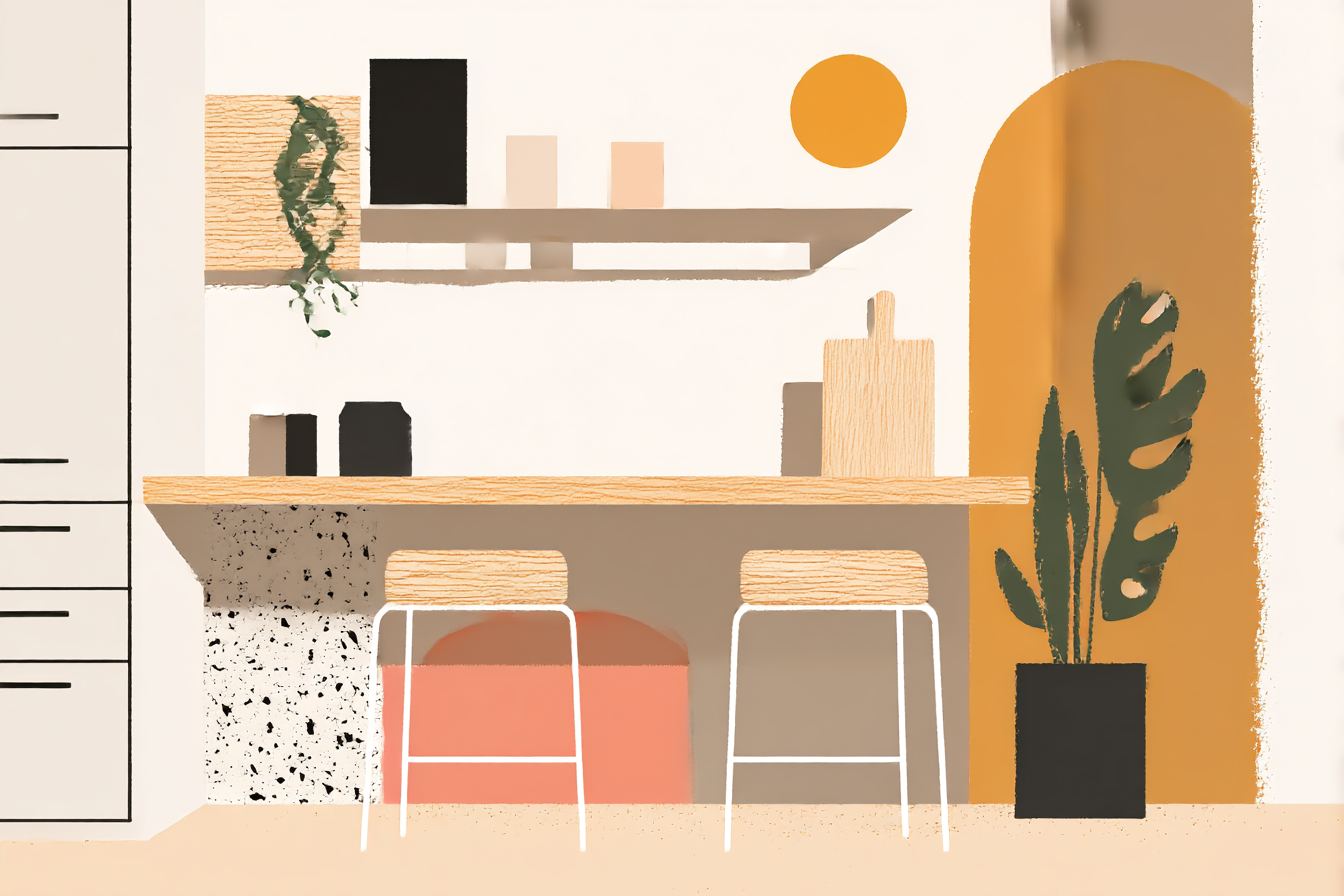
It is about creating a space that you truly want to spend time in. This is essential to your well-being. This is necessary for how you navigate your day.
Begin somewhere. Even a slight shift will create a different experience. Your nervous system will react. You will notice. This is exactly the reason why.

Sarah is an interior designer who specializes in biophilic design (the connection of humans and nature) and small-space living for urban apartment dwellers. Since working as an interior designer for 12 years, she has redesigned hundreds of flats in London, Manchester and Bristol. As such, Sarah is experienced in creating biophilically connected spaces in areas of homes that appear to be nearly impossible to redesign.
Sarah offers practical interior design solutions for both renter and homeowner, both with very real constraints: limited budget, inability to make structural changes, and every square inch of the home counts. Sarah’s methodology takes the principles of biophilic design and applies them to the realities of living in an urban environment. She has helped numerous clients create biophilic elements in compact, climate-controlled environments – humidity control in loft conversions, increasing daylight in basement conversions, adding biophilic elements in studio apartments that have no wall space.
The basis of Sarah’s philosophy is that biophilic design should not cost a fortune nor require a renovation. Rather, through a series of intelligent decisions, small choices can add up to large results. Sarah writes for people looking to transform their space in a way that does not require landlord approval, nor does it need to be expensive. Her guidebooks are focused on what actually works within the confines of typical UK flat designs, what investments will pay off, and what can be skipped altogether.


