
Yesterday morning, a contractor called me in a panic. She'd been working on a LEED-certified office building for eight months when the client suddenly demanded a complete materials list with environmental impact data for every single component. "I need everything," she said, "from the foundation concrete to the ceiling tiles, and I need it by Friday." I laughed, not because it was funny, but because I've been exactly where she was standing.
See, building sustainably isn't just about picking a few "green" products and calling it done. It's about understanding every material that goes into a structure, and honestly? That's overwhelming as hell when you're starting out. After fifteen years of testing materials in my own home and advising on projects from tiny houses to commercial developments, I've learned that the best approach is methodical. You can't tackle everything at once, but you can start somewhere smart.
I always tell people to begin with structure and envelope because these materials represent the biggest environmental impact and longest lifespan.
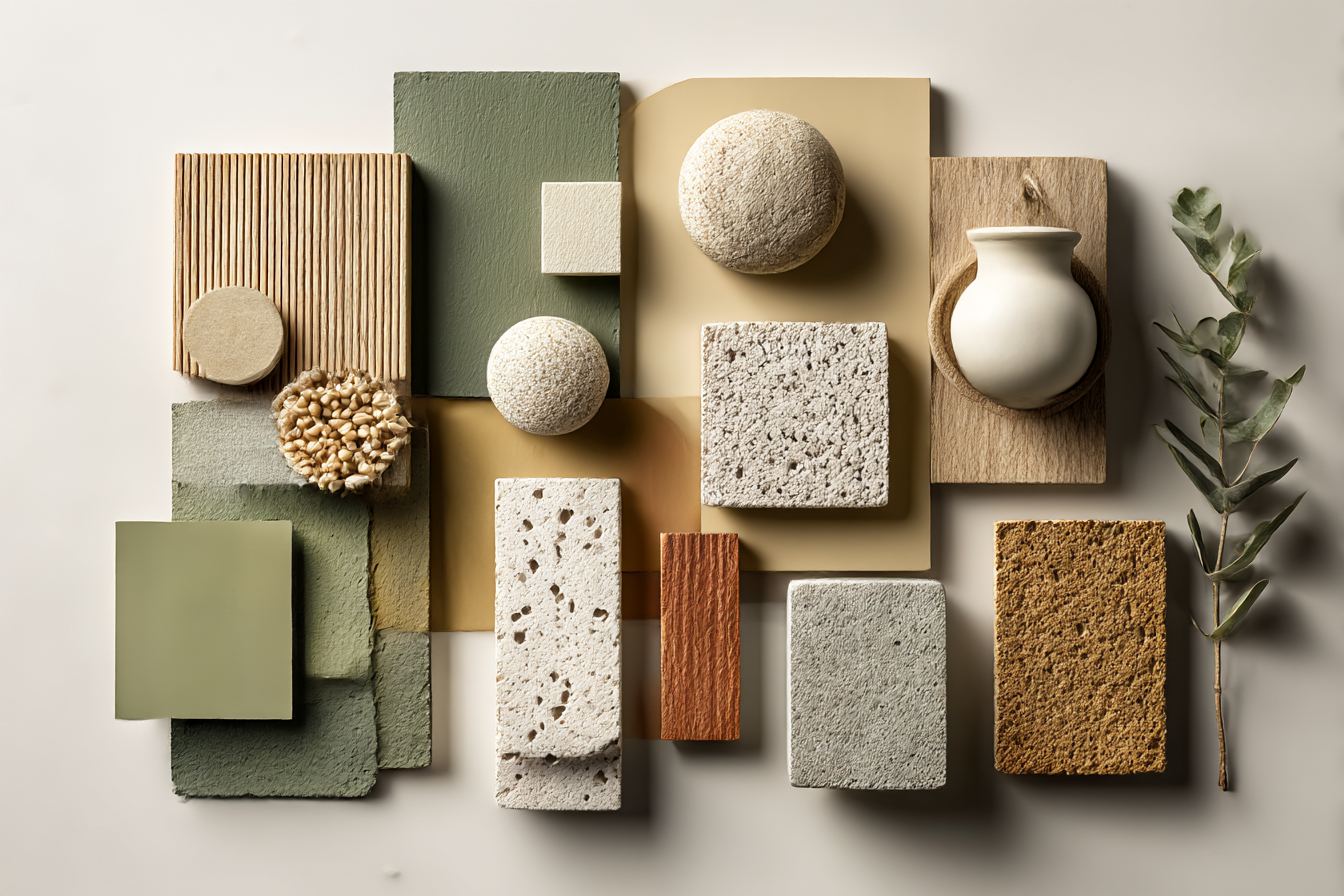
For foundations, you're looking at alternatives to conventional Portland cement concrete. I've been fascinated by bio-based concrete made with mycelium recently – it actually grows stronger over time, which sounds like science fiction but works beautifully in practice. Last year, I installed a small section in my basement workshop using Ecovative's technology, and the performance has been remarkable.
For above-grade structural work, reclaimed timber remains my go-to recommendation when appropriate. The embodied energy is essentially zero since the trees were harvested decades ago, and the structural properties often exceed new lumber. I sourced 200-year-old chestnut beams for a client's renovation last spring – material that's literally impossible to replace with anything new since American chestnut is functionally extinct. But you've got to know what you're looking at. Those beams required careful assessment for previous modifications, pest damage, and load capacity.
Engineered lumber from certified sources works well when reclaimed isn't available. Cross-laminated timber (CLT) has gained serious traction, though I'm cautious about the adhesives used in manufacturing. Some brands still rely on formaldehyde-based binders that off-gas for years. I always specify brands like Structurlam that use safer polyurethane adhesives, even though they cost slightly more.
Wall assemblies get complicated quickly because you're balancing multiple performance requirements. I've tested probably twenty different insulation materials in various sections of my house over the past decade. Sheep's wool insulation remains my favorite for most applications – it regulates humidity naturally, provides excellent thermal performance, and processes agricultural waste that would otherwise create methane emissions. The smell takes getting used to, though. My neighbour jokes that my walls smell like a farm, which isn't entirely wrong.
For air sealing, skip the conventional caulks loaded with volatile organic compounds. I use AFM Safecoat products religiously now after spending three miserable weeks dealing with headaches from standard polyurethane sealants during a bathroom renovation. The learning curve was brutal, but my indoor air quality is noticeably better.
Sheathing and subflooring present interesting choices. Oriented strand board (OSB) gets a bad reputation, but newer versions using soy-based adhesives actually outperform many alternatives environmentally. I compared lifecycle assessments last year between standard OSB, formaldehyde-free versions, and plywood alternatives. The results surprised me – the improved OSB had lower embodied energy and fewer health impacts than several materials marketed as premium green options.
Roofing materials vary dramatically by climate and building type, but metal roofing wins in most situations. The longevity alone justifies the choice – quality metal roofing lasts 50+ years versus 15-20 for conventional asphalt shingles. I've been tracking performance on a standing seam roof I installed six years ago, and it still looks perfect despite some brutal Pacific Northwest winters.
You Might Also Like

Windows deserve serious attention because they affect energy performance for decades. I learned this lesson expensively when I initially chose windows based primarily on recycled content rather than thermal performance. My heating bills reminded me monthly that good intentions don't overcome physics. Now I prioritize performance first, sustainable manufacturing second. Serious Windows up in Washington makes excellent triple-glazed units with responsibly sourced frames that actually reduce energy consumption measurably.
Interior finishes impact daily life more than any other category because you're literally surrounded by them constantly. I've become obsessive about flooring choices after watching a friend's child develop respiratory issues that cleared up completely after removing carpet installed with toxic adhesives. Solid hardwood remains ideal when sourced responsibly – it improves with age, can be refinished repeatedly, and eventually becomes beautiful reclaimed material for future projects.
For areas where hardwood isn't practical, I recommend natural linoleum (not vinyl, which is petroleum-based). Real linoleum is made from linseed oil, cork flour, and other natural materials. It's antimicrobial, extremely durable, and actually gets harder over time. I installed Forbo Marmoleum in my kitchen five years ago, and it still looks new despite serious abuse.
Paint selection matters more than people realise. I tested dozens of low-VOC and zero-VOC formulations before finding ones that actually perform well. AFM Safecoat again wins for durability and coverage, though the colour selection is limited. For broader colour choices, Benjamin Moore Advance and Sherwin-Williams ProClassic both offer genuinely low-toxicity options that don't sacrifice performance.
Cabinet and millwork specifications can make or break indoor air quality. Conventional particleboard and medium-density fiberboard off-gas formaldehyde for years. I specify solid wood or formaldehyde-free engineered materials exclusively now. Columbia Forest Products makes excellent plywood with soy-based adhesives that performs identically to conventional versions without the chemical emissions.
Mechanical systems integration affects material choices throughout the building. High-efficiency HVAC reduces heating and cooling loads, which allows for more natural materials that might not work in energy-intensive buildings. I designed a passive house addition where the minimal heating requirements allowed us to use untreated wood siding that would normally require climate control to prevent moisture issues.
The key insight I've gained through years of testing and specification writing is that sustainable building materials work best as integrated systems rather than individual substitutions. Replacing standard insulation with a green alternative without addressing air sealing and thermal bridging wastes the opportunity and often the investment.
Cost considerations can't be ignored in real projects. Some sustainable materials genuinely cost more upfront, others save money immediately.

Reclaimed materials often cost less than new equivalents while providing superior character and environmental performance. I've saved clients thousands of dollars sourcing beautiful reclaimed flooring, brick, and millwork while reducing project environmental impact.
Documentation becomes crucial when working with innovative materials. I maintain detailed performance records for everything I've tested, including failures. This database helps me make better recommendations and provides evidence for skeptical contractors and clients. Real data beats marketing claims every time, and the building industry responds to proven performance more than environmental arguments alone.
The materials landscape changes constantly as new technologies emerge and manufacturing improves. I spend considerable time evaluating new products, reading research, and testing innovations. But the fundamentals remain consistent: prioritize health and performance first, understand full lifecycle impacts, and choose materials appropriate for your specific climate and application. That foundation will serve you well regardless of which specific products you ultimately select.