
I was standing in what used to be a magnificent Victorian row house in Baltimore last Tuesday, watching demolition crews tear out decades of well-intentioned but misguided renovations. The owners – a young couple who'd inherited the property from an elderly aunt – were heartbroken. "Every contractor we talked to said we should just tear it down and start fresh," Maria told me, running her fingers along the original crown molding that somehow survived three major renovations. "But this house… it has such good bones."
She was right, of course. Beneath layers of dropped ceilings, vinyl flooring, and partition walls that carved up generous Victorian proportions into cramped boxes, the original architecture was practically begging for liberation. More importantly, this house represented something our throw-away culture increasingly dismisses – the idea that healing damaged spaces can be more powerful than replacing them entirely.
<blockquote>I've spent the last fifteen years working on projects where restoration wasn't just about preserving historical details (though that matters too). It's about understanding that buildings, like people, carry trauma and memory in their very structure. When we approach restoration with genuine care for both the physical space and its emotional resonance, something remarkable happens – the building begins to breathe again.</blockquote>
The Baltimore house had been carved up in the 1970s when the neighborhood was struggling.

Someone had the bright idea to convert it into three rental units, which meant installing cheap partition walls, covering up original hardwood with linoleum, and blocking most of the natural light sources. By the time Maria and her partner inherited it, the place felt claustrophobic despite its generous square footage.
But here's what I find fascinating about restoration work – every building tells you what it wants to be if you're willing to listen. In this case, removing just two partition walls transformed the entire ground floor from a maze of dark, disconnected rooms into a flowing space that suddenly made sense. The original windows, which had been painted shut for decades, opened to reveal mature oak trees that had been growing unnoticed just outside.
<img class="size-full" src="http://wonkydogltd.co.uk/medium/wp-content/uploads/2026/01/im1979_restoration_design_solutions._ultra-realistichyper-det_08ebbcdf-8809-4499-9673-7f0ecc1a732f_0.jpg" alt="im1979_restoration_design_solutions._ultra-realistichyper-det_08ebbcdf-8809-4499-9673-7f0ecc1a732f_0" />
I always bring a moisture metre, infrared thermometer, and about six different flashlights to initial site visits. Sounds excessive, I know, but buildings hide their problems in the most unexpected places. In Baltimore, I discovered that water had been infiltrating through a tiny gap in the back wall for probably twenty years. The damage wasn't immediately visible – just a slight buckle in one floorboard and a barely perceptible musty smell – but left untreated, it would've eventually compromised the entire rear section of the house.
This is where restoration gets interesting from a biophilic perspective. Traditional renovation often treats moisture as the enemy, sealing buildings tight as drums and relying on mechanical systems for air quality. But I've learned that controlled moisture exchange – the way a building naturally breathes through its materials – is actually essential for long-term health, both for the structure and its occupants.
Working with a master craftsman named Eduardo (who's forgotten more about lime plaster than most contractors ever learn), we developed a restoration approach that allowed the Baltimore house to regulate its own humidity naturally. Instead of synthetic vapor barriers, we used traditional horsehair plaster and natural lime mortars that actually improve with age. The walls can now absorb and release moisture as conditions change, creating a more stable interior climate without constant mechanical intervention.
The transformation took eight months, partly because we had to source historically appropriate materials and partly because some techniques simply can't be rushed. Eduardo insisted on aging the lime mortar for six weeks before application – something that would horrify most general contractors but produces a finish that'll outlast anything modern by decades.
You Might Also Like
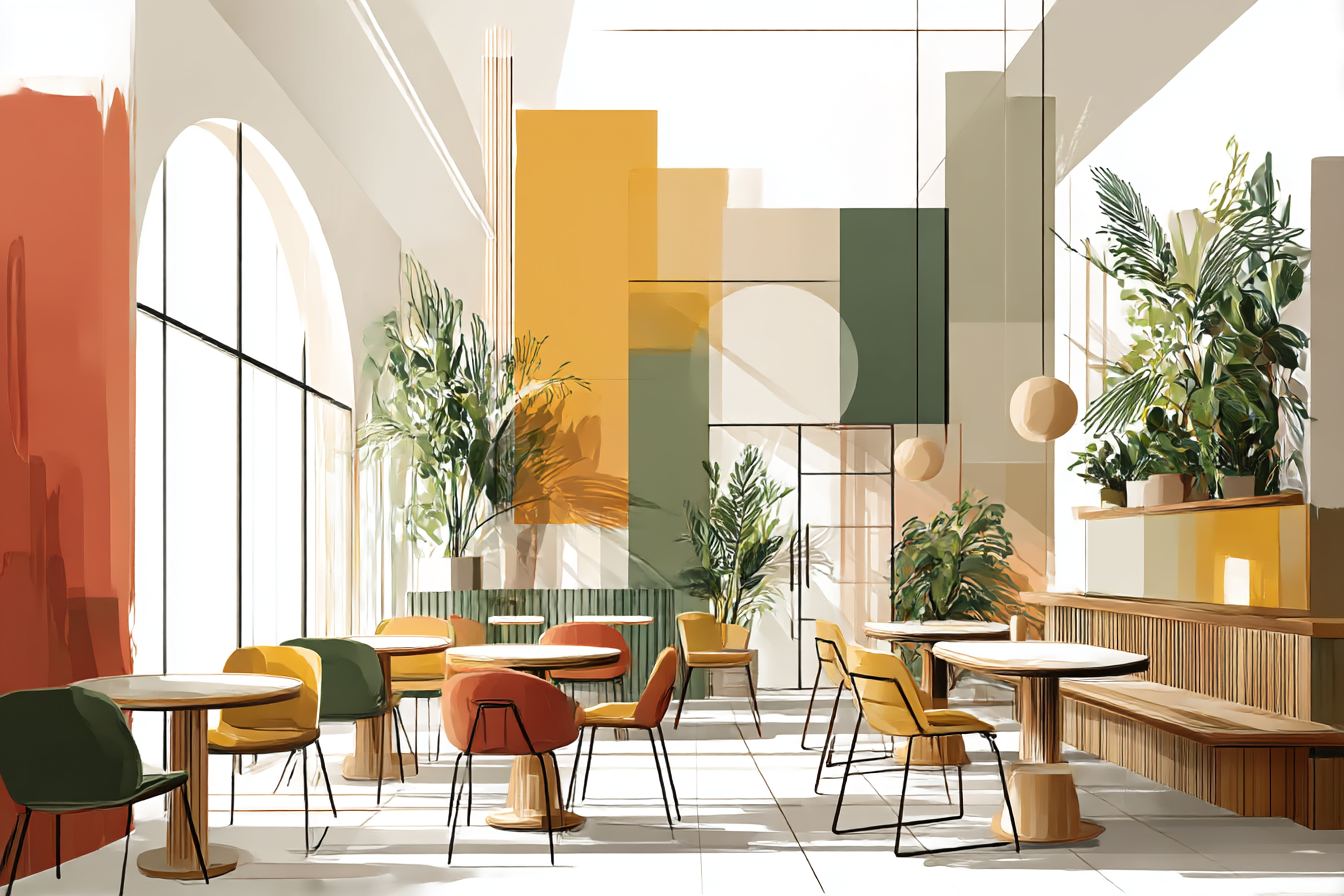
What struck me most wasn't the technical success but how the space began affecting people differently. Maria's mother, who'd been skeptical about the whole project, started visiting regularly once the restoration reached a certain point. "I can actually breathe in here now," she said during one of my site visits, standing in what had become a sun-filled reading nook where a dark hallway once existed.
She wasn't being metaphorical. Indoor air quality monitoring throughout the project showed dramatic improvements as we removed synthetic materials and restored natural air circulation patterns. But more than that, the space was starting to remember how to be a home rather than just shelter.
This isn't always straightforward work, I'll admit. Last fall, I consulted on a 1920s schoolhouse conversion where the owners were determined to preserve every original detail, even elements that made the space fundamentally unusable. Sometimes healing damaged architecture means accepting that certain changes are necessary for contemporary life. The art is distinguishing between changes that honour a building's essential character and those that violate it.
In the schoolhouse project, keeping the original small windows would've left the main living areas perpetually dark. But installing larger windows in the exact same proportions and materials as the originals allowed natural light to flood the space while maintaining the building's visual integrity. It's about understanding the difference between preservation and preservation for its own sake.
I've also worked on projects where the healing needed to be more radical. A 1960s office building in Cleveland had been so poorly maintained that structural elements were failing.

The owners initially wanted to preserve the original facade, but engineering reports showed the underlying frame was compromised beyond economical repair. Instead of demolition, we developed a restoration approach that maintained the building's proportions and street presence while completely rebuilding its structural core with materials that would age gracefully over the next century.
<img class="size-full" src="http://wonkydogltd.co.uk/medium/wp-content/uploads/2026/01/im1979_restoration_design_solutions._ultra-realistichyper-det_08ebbcdf-8809-4499-9673-7f0ecc1a732f_1.jpg" alt="im1979_restoration_design_solutions._ultra-realistichyper-det_08ebbcdf-8809-4499-9673-7f0ecc1a732f_1" />
What I find consistently rewarding about restoration work is how it challenges our cultural assumption that newer is automatically better. The Baltimore house, once restored, will likely outlast most new construction by decades. Its solid wood construction, natural ventilation systems, and time-tested proportions create a more comfortable living environment than most contemporary housing, while using a fraction of the energy for climate control.
<blockquote>There's also something profound about giving damaged spaces a second chance at life rather than discarding them for convenience. I think about all the embodied energy in those original materials – the trees that grew for decades to become floor joists, the stone quarried and shaped by hand for foundation work, the craftsmanship that went into details we're only now learning to appreciate again.</blockquote>
Maria and her partner moved into the Baltimore house last month. She sent me a photo of her kitchen table positioned to catch morning light streaming through the restored windows, with her coffee cup casting shadows on wood floors that've been walked on for over a century. "It feels like the house is happy again," she wrote.
I know that sounds sentimental, but I've seen it enough times to believe there's truth in it. Buildings that have been restored with genuine care for their essential character seem to radiate a different energy than spaces that have simply been renovated or newly constructed. They carry forward their history while embracing their future potential.