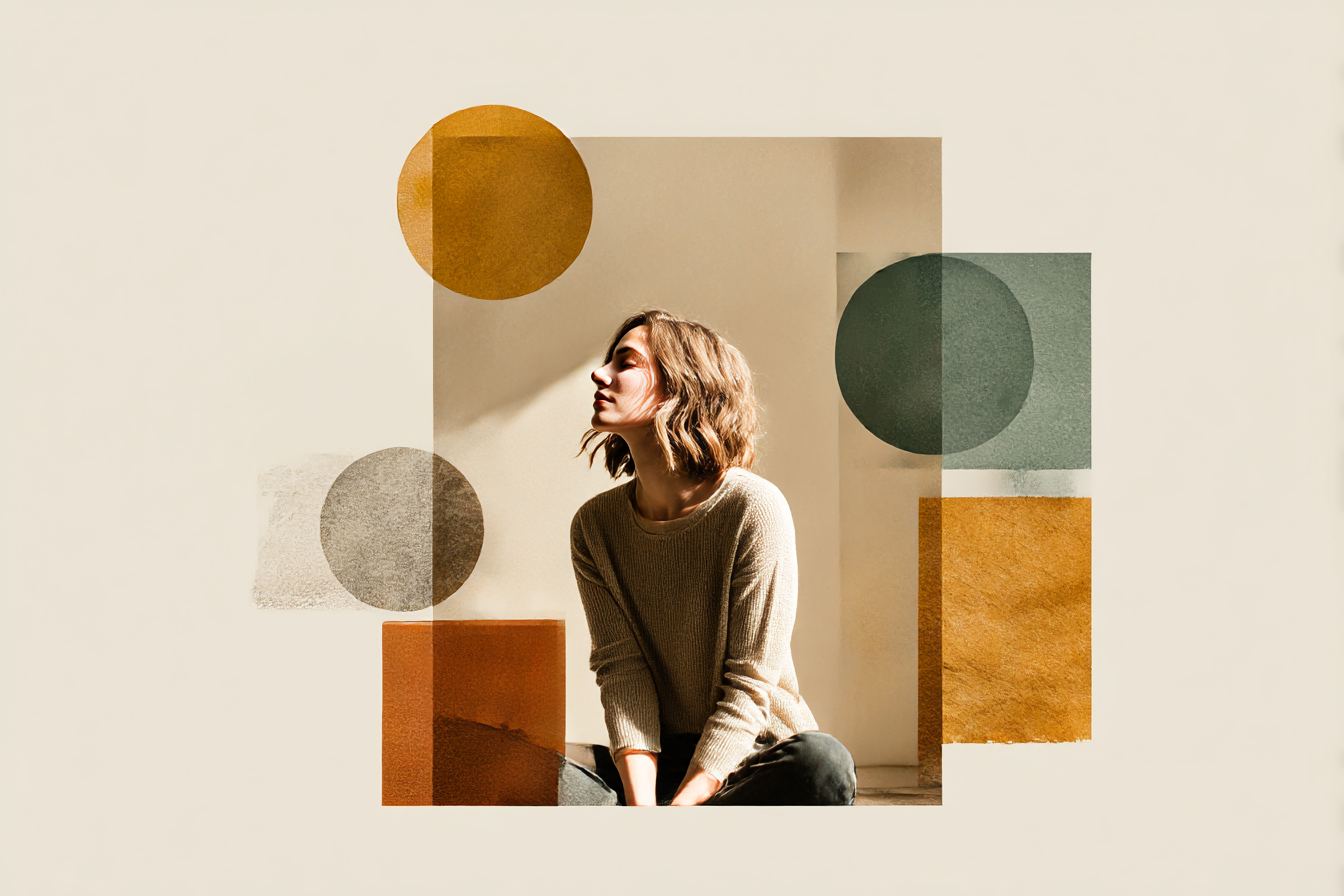
Standing in my friend Maria's kitchen last Tuesday, I couldn't help but notice how dramatically different I felt compared to my usual morning coffee routine at home. Her space wasn't particularly fancy – standard builder-grade cabinets, basic appliances – but something about it made me want to linger. The morning light streamed through her east-facing window onto a collection of herbs growing in mismatched ceramic pots, and the soft sound of water trickling from a small fountain she'd tucked into the corner created this… I don't know, cocoon-like feeling of calm.
"You always seem so relaxed when you're here," I mentioned, and she laughed. "Funny you say that. I used to hate mornings until I started growing these herbs and added that little water feature. Now I actually look forward to making coffee."
This conversation stuck with me because it perfectly captures what I've been seeing more and more in my work – people instinctively creating what researchers call restorative environments without necessarily knowing that's what they're doing.

Maria wasn't following some design manual; she was responding to biological needs that we all share but rarely acknowledge in our built environments.
The science behind why her kitchen felt so restorative is actually pretty fascinating. Our nervous systems evolved in natural settings, and they still crave those conditions even when we're surrounded by drywall and artificial lighting. When we encounter natural elements – even simple ones like plants or the sound of water – our bodies literally shift into a different state. Heart rate variability improves, cortisol levels drop, and something called "soft fascination" kicks in, which basically means our attention gets refreshed rather than depleted.
I've been experimenting with this in my own space for years now, and honestly, some of my attempts have been spectacular failures. Remember that self-irrigating wall system I mentioned? Well, before I perfected it, I flooded my downstairs neighbour's bathroom twice. Mrs. Chen was… not pleased. But even the failures taught me something important: people's tolerance for "experimental" design varies wildly, and what feels restorative to one person might feel chaotic to another.
Take my client Sarah, for instance. She's a surgeon who works brutal hours, and when she hired me to redesign her home office, she was very clear: "I need this space to help me decompress, but I can't deal with anything that requires maintenance." Challenge accepted. Instead of living plants, we focused on natural materials and patterns. We installed a desktop made from reclaimed barn wood (you can actually feel the grain through the finish), added a small collection of smooth river stones she could hold while thinking, and positioned her desk to face a mature oak tree outside her window.
Six months later, she told me she'd started working from home more often because the space felt so much better than her hospital office. "I never realised how much the texture of that wood mattered," she said. "Sometimes I catch myself just running my fingers across it while I'm on calls."
That tactile element is huge – way more important than most people realise. In our sterile, plastic-dominated environments, we're starved for authentic textures. I keep a small piece of driftwood on my desk specifically because touching it grounds me when I'm feeling scattered. Sounds weird, maybe, but the research backs this up. Physical contact with natural materials activates pressure receptors under our skin that send calming signals to our brain.
Water features deserve special mention here because they're one of the most reliable tools for creating restorative spaces. Not talking about elaborate fountains – even something as simple as a small tabletop water bowl can transform a room's acoustic environment. The key is getting the sound right. Too loud and it becomes distracting; too quiet and you don't get the masking effect that helps your brain relax.
You Might Also Like

I learned this the hard way when I installed what I thought would be a soothing water wall in my living room. The pump was too powerful, and instead of gentle trickling, I got what sounded like a constant toilet flush. My sister visited and asked if I had plumbing problems. Back to the drawing board on that one.
Lighting plays an enormous role too, though it's often the most overlooked aspect. We've become so accustomed to harsh, uniform illumination that we forget how much better we feel in spaces with varied, natural light patterns. In my current apartment, I've replaced most overhead fixtures with lamps that can be dimmed and positioned to create pools of light rather than washing everything uniformly.
The circadian rhythm benefits alone are worth it. I used to have terrible sleep issues, but once I started using warmer, dimmer lighting in the evenings and maximizing natural light exposure during the day, my sleep quality improved dramatically. It took about three weeks to notice the difference, but now I can't imagine going back to standard fluorescent lighting.
Plants, obviously, are the most common way people try to bring nature indoors, but I've seen so many well-intentioned efforts fail because people choose species that don't match their lighting conditions or lifestyle. My rule of thumb: start with one very hardy plant that can thrive in your actual conditions (not the conditions you wish you had) and see how that goes before expanding.
I've got a snake plant that's been with me through three moves and somehow thrives despite my irregular watering schedule. It's not the most exciting plant, but it's reliable, and there's something to be said for having living things in your space that actually stay alive.
Colour choices matter too, though not in the way most people think.
Instead of trying to replicate nature with green walls or blue accents, I focus on using colours that occur naturally in weathered materials. Think the greys and browns of aged wood, the soft whites of limestone, the muted greens of lichen on bark. These colours feel familiar to our visual system in a way that bright, artificial colours don't.
The goal isn't to turn every interior into a forest – it's to create spaces that support our biological need for connection with natural processes and patterns. Sometimes that means incorporating living elements; sometimes it means using materials and forms that echo natural systems.
What I find most rewarding is watching how people change when they spend time in thoughtfully designed restorative spaces. They move differently, speak more softly, seem more present. It's not dramatic – we're not talking about life-altering transformations here – but the subtle improvements in mood and focus add up over time.
Maria still doesn't know why her kitchen feels so good, and honestly, that's fine. The point isn't to intellectualize the experience but to create conditions where our bodies and minds can function the way they're designed to. Sometimes the best design is invisible – you just know you feel better, and that's enough.



