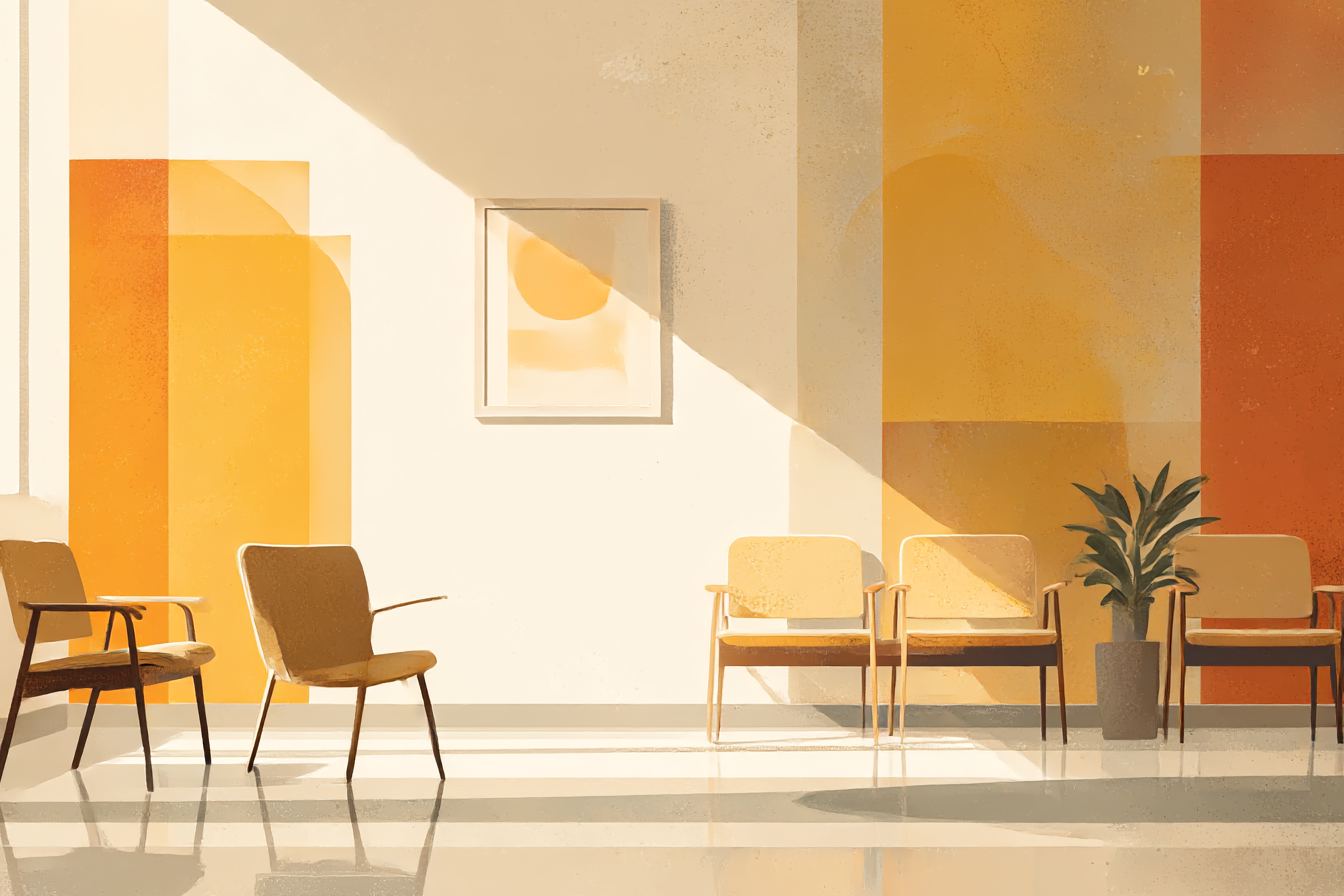
I've been thinking a lot lately about my client Sarah, who called me three months ago practically in tears. She'd just moved her elderly mother into her home after a hip fracture, and the poor woman was spending most days staring at blank beige walls, growing more withdrawn by the week. "She used to be this vibrant gardener," Sarah told me, "but now she barely speaks."
Walking into that house, I immediately understood the problem. Everything was perfectly functional – grab bars, non-slip surfaces, accessible shower – but it felt like a medical facility, not a place where someone could actually heal. The living room where her mother spent most of her time had exactly one small window, and it faced the neighbour's vinyl siding. No wonder she was depressed.
This situation happens more often than you'd think, and it drives me crazy because the solutions aren't complicated or expensive. We just don't think about how our spaces affect our mental state until something goes wrong.
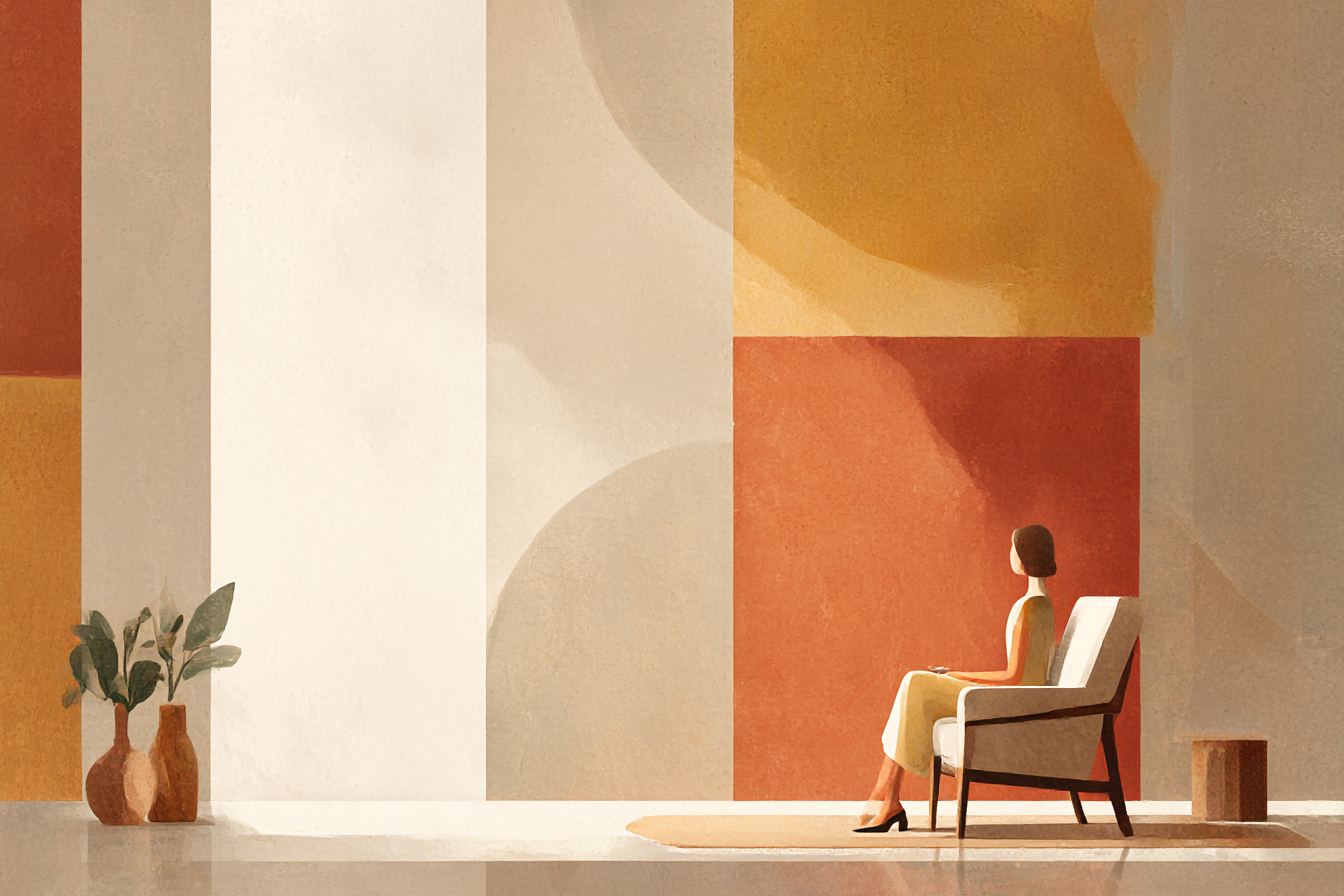
Sarah's mother needed what I call a "restorative room" – a space specifically designed to support emotional healing and psychological well-being through carefully chosen natural elements.
<blockquote>The transformation we did for Sarah's family really illustrates what I mean. First, we tackled the light situation. That single window was doing almost nothing, so we installed a large mirror opposite it to bounce whatever natural light existed deeper into the room. Then – and this was the game-changer – we added full-spectrum LED panels that gradually shift colour temperature throughout the day, mimicking natural sunlight patterns.</blockquote>
I know what you're thinking: "That sounds expensive." But here's the thing – the lighting system cost about $300 total, and Sarah installed it herself over a weekend. Her mother noticed the difference within days. She started waking up more naturally, sitting up straighter during the day, and actually engaging in conversation during dinner.
<img class="size-full" src="http://wonkydogltd.co.uk/medium/wp-content/uploads/2026/01/im1979_restorative_room_interior_design._ultra-realistichyper_024de798-d435-47e5-9020-020ba6e05970_0.jpg" alt="im1979_restorative_room_interior_design._ultra-realistichyper_024de798-d435-47e5-9020-020ba6e05970_0" />
But light was just the beginning. We needed to bring in living elements that wouldn't require much maintenance (Sarah was already overwhelmed with caregiving duties). I suggested starting with a small collection of snake plants and ZZ plants – both nearly indestructible and excellent for indoor air quality. We placed them at varying heights throughout the room using plant stands I made from reclaimed wood Sarah's father had stored in the garage.
The texture component was crucial too. Sarah's mother had spent decades working in her garden, and her hands craved that tactile connection to natural materials. We swapped out the synthetic throw pillows for covers made from organic linen and added a small wooden bowl filled with smooth river stones that she could run her fingers through while watching television.
Water became our next focus. I'm not talking about some elaborate fountain setup – just a simple tabletop water feature that created gentle background sounds. The psychological impact was immediate. That soft trickling sound helped mask the street noise and created what researchers call "acoustic comfort" – basically, our brains interpret gentle water sounds as safe and calming.
Within six weeks, Sarah's mother was asking to help water the plants. Small thing, but huge victory. She started referring to "her corner" of the living room and would get upset if anyone moved "her stones." She was reclaiming agency in a space that had initially felt foreign and institutional.
The science behind why this works is actually pretty straightforward. Our nervous systems evolved in natural environments, and we're hardwired to respond positively to certain natural patterns and elements. When we're stressed, injured, or recovering from illness, these connections become even more important for healing.
You Might Also Like

I've seen this play out in dozens of projects now. Last year, I worked with a family whose teenage son was struggling with severe anxiety after a car accident. His bedroom had become his refuge, but it was this dark cave with blackout curtains and gaming posters – not exactly conducive to recovery. We didn't completely overhaul the space (teenagers need their autonomy), but we made strategic changes.
We replaced his desk lamp with a light therapy box that he could use during homework. Added a small herb garden on his windowsill that he could tend – mint, basil, nothing fancy. Brought in a white noise machine with nature sounds. The breakthrough moment came when he started leaving his curtains open during the day because he wanted to cheque on his plants.
Here's what I've learned about creating truly restorative spaces: it's not about following some rigid checklist of biophilic elements. It's about understanding what natural connections matter most to the person using the space. Sarah's mother needed the tactile experience of caring for living things. The teenager needed control over his environment and something to nurture. Each situation requires different solutions.
That said, there are some universal principles I always consider. Natural light – or quality artificial light that mimics natural patterns – is non-negotiable. Even if you're working with a basement room or space with no windows, you can create lighting that supports circadian rhythms and improves mood. The technology has gotten so much better and more affordable in recent years.
Living plants almost always help, but the key is choosing species that will thrive in your specific conditions. I'd rather see someone succeed with three healthy pothos plants than struggle with a dozen finicky specimens. Success breeds confidence, and confident plant parents tend to expand their collections naturally.
Natural materials matter enormously for tactile comfort. This doesn't mean expensive hardwood floors – it could be bamboo placemats, a wool throw, or even a small collection of interesting stones or shells.
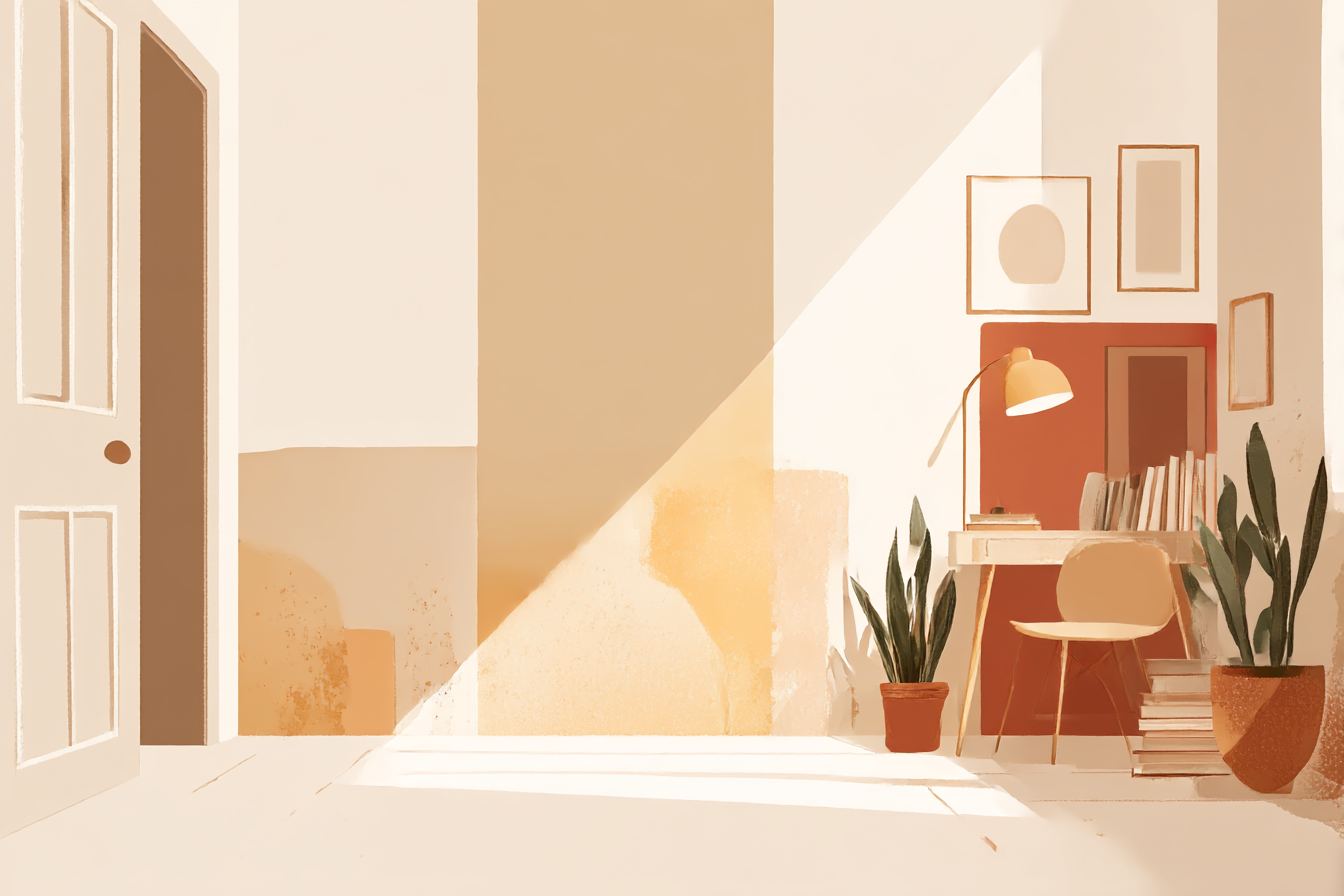
Our hands need varied textures throughout the day, especially when we're spending lots of time indoors.
<img class="size-full" src="http://wonkydogltd.co.uk/medium/wp-content/uploads/2026/01/im1979_restorative_room_interior_design._ultra-realistichyper_024de798-d435-47e5-9020-020ba6e05970_1.jpg" alt="im1979_restorative_room_interior_design._ultra-realistichyper_024de798-d435-47e5-9020-020ba6e05970_1" />
Sound often gets overlooked, but it's huge for creating restorative environments. Sometimes it's about introducing calming natural sounds, but often it's about managing existing noise pollution. A small water feature can mask traffic noise. Strategic placement of soft materials can reduce echo and harsh acoustics.
<blockquote>The projects that work best are the ones where we start small and build gradually. Sarah and I could have transformed her mother's space all at once, but we deliberately took it slow, adding elements over several weeks. This let us see what worked, what didn't, and what her mother responded to most positively.</blockquote>
Three months later, Sarah's mother is still living with them, but the dynamic has completely changed. She's participating in family activities again, sleeping better, and even talking about starting a small outdoor garden next spring. The room that was initially just a place to put her is now genuinely her space – somewhere she feels comfortable, capable, and connected to the natural world she'd always loved.
That's what restorative design really means to me: creating spaces that don't just shelter us from the outside world, but help us maintain our essential connections to it, especially when we need healing most.



