The other day I was sitting in a doctor's waiting room – you know, one of those sterile places with fluorescent lights buzzing overhead and those awful plastic chairs that seem designed to make you feel worse. I'd been there maybe twenty minutes when this older gentleman next to me started chatting about how the place made him feel "all jittery inside." He wasn't wrong. But here's the thing that got me thinking: across the street was a small park with mature oak trees, and I could see people walking through it looking genuinely relaxed, even peaceful.
That stark contrast hit me hard because it perfectly illustrates what I've been studying and experiencing for years now – how our brains are literally wired to respond to nature in ways that most of us don't even realise.
I mean, we've all felt it, right? That immediate sense of calm when you step into a forest, or how your breathing seems to slow down near water. But there's actual science behind these feelings, and it goes way deeper than just "nature is pretty." We're talking about measurable changes in brain chemistry, hormone levels, and nervous system activity.
Last month I installed a small water feature in my client Sarah's office – just a simple copper fountain with river stones. Within two weeks, she reported sleeping better and feeling less anxious during her workday.
She thought it was just the pleasant sound, but I knew something more was happening. Research shows that the negative ions generated by moving water actually increase serotonin levels. It's not just relaxing; it's biochemically restorative.
The Japanese have this concept called "forest bathing" – shinrin-yoku – which basically means immersing yourself mindfully in a forest environment. Sounds a bit woo-woo, I know, but Japanese researchers have documented some pretty remarkable effects. People who spend time forest bathing show increased natural killer cells (the ones that fight cancer), reduced cortisol levels, and improved immune function. One study found that a single forest visit could boost immune activity for up to a month afterward.
I experienced this firsthand during a particularly stressful period last year when I was juggling three major projects simultaneously. I was basically living on coffee and anxiety. My sister suggested I take a weekend trip to the Adirondacks – not for hiking or camping, just to be around trees. I'll be honest, I was skeptical. How could trees fix what felt like a complete nervous breakdown?
But something shifted during those two days. I wasn't doing anything special, just walking slowly through the woods, touching bark, listening to wind in the leaves. By Sunday evening, my shoulders had literally dropped about two inches from where they'd been permanently hunched near my ears. More importantly, problems that had seemed insurmountable on Friday suddenly had obvious solutions. My brain had essentially reset itself.
The neuroscience behind this is fascinating. When we're in natural environments, our brains shift from what researchers call "directed attention" to "soft fascination." Directed attention is what we use for focused work, problem-solving, resisting distractions – basically all the mental heavy lifting of modern life. But it's exhausting and has limited capacity. Soft fascination, triggered by things like cloud movements, leaf patterns, or flowing water, allows that directed attention system to rest and recover.
It's like the difference between sprint running and gentle stretching. Both have their place, but you can't sprint indefinitely without breaking down. Natural environments provide that essential stretching for our overworked minds.
You Might Also Like
Here's where it gets really interesting though – and this is something I've been experimenting with in my own living space. You don't need to live in a cabin in the woods to access these benefits. Even indoor plants can trigger measurable psychological improvements. I've got about thirty plants scattered through my apartment now (my friends joke that it looks like a greenhouse exploded), and I track my mood, sleep quality, and stress levels pretty obsessively.
The data is clear: on weeks when I'm traveling and away from my plant-filled space, my sleep quality drops about 15% and my morning stress levels spike noticeably. It's not just psychological – there are actual physiological changes happening. Plants improve air quality, sure, but they also provide what researchers call "micro-restoration moments" throughout the day. Just glancing at green, growing things gives your brain tiny breaks that add up to significant stress reduction.
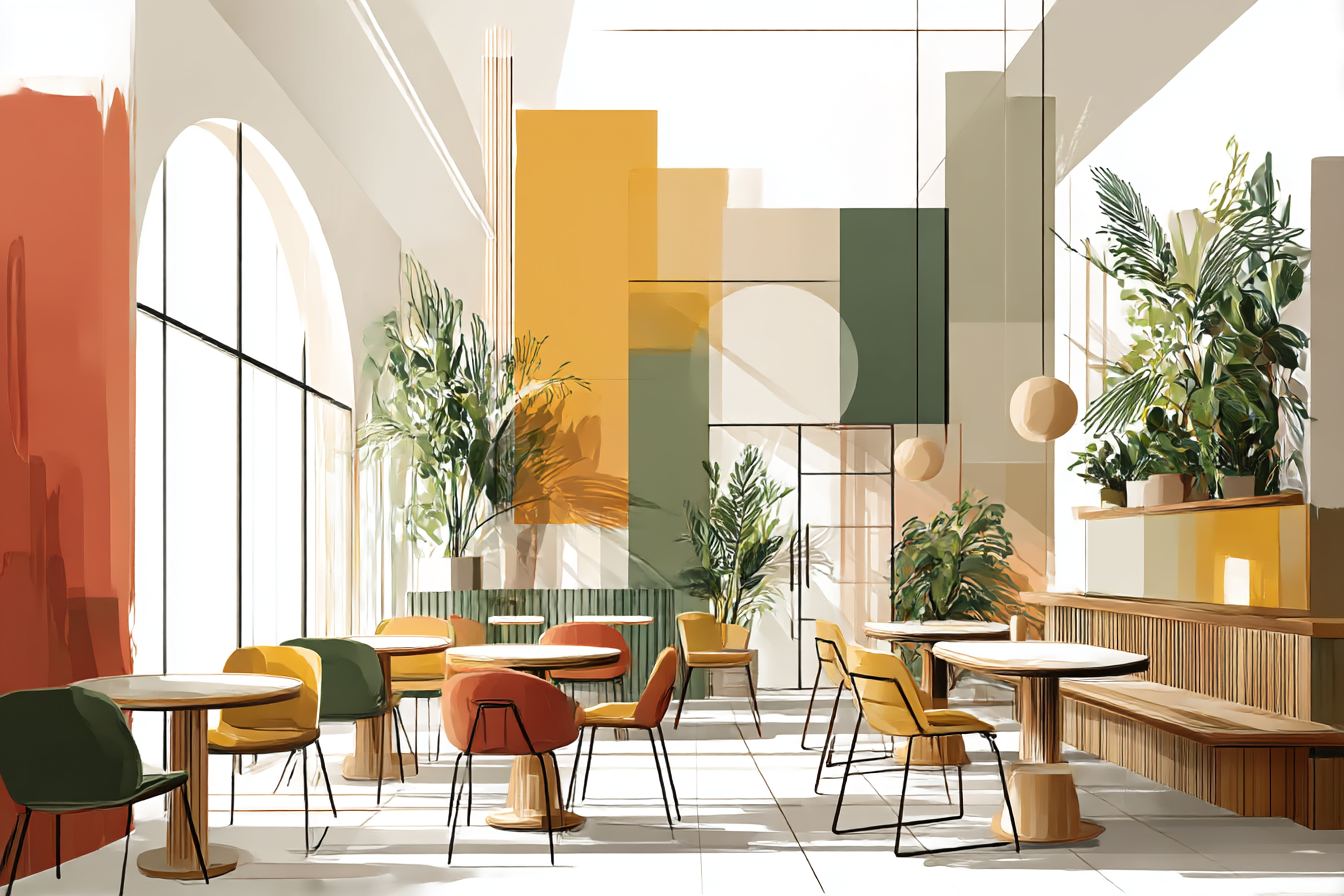
I started incorporating this into my design work about five years ago, and the results have been dramatic. A pediatric clinic I worked with saw a 40% reduction in patient anxiety scores after we added living walls and maximized natural light. Kids who had been crying and clinging to parents started exploring the space curiously instead. Parents reported feeling less stressed too, which created this positive feedback loop.
But here's what's really wild – the effects work even with representations of nature. Patients in hospital rooms with landscape paintings recover faster than those with blank walls or abstract art. Office workers with nature photos on their computers show improved attention spans and fewer sick days. There's something fundamental in our neural wiring that responds to natural patterns and forms, whether they're real or simulated.
This isn't just about individual well-being either. When I consulted on a corporate headquarters redesign in Chicago, we created what I call "nature nodes" throughout the building – areas with plants, natural light, water features, and views of the small courtyard garden we installed. Six months later, their HR department reported a 28% decrease in stress-related absences and significantly improved team collaboration scores. People were literally healthier and working better together.
The evolutionary explanation makes perfect sense when you think about it. For the vast majority of human history, we lived intimately connected with natural environments. Our survival depended on reading natural cues, finding resources in natural settings, and feeling safe in nature-rich environments. Modern urban life has existed for maybe 200 years – a tiny blip in evolutionary terms. Our brains and bodies are still calibrated for the natural world.
That's why sitting in that fluorescent-lit waiting room felt so awful to both me and that older gentleman. Our nervous systems were essentially screaming "something's wrong here!" because we were in an environment completely devoid of the natural cues our brains expect for safety and well-being.
The good news is that we can hack this system pretty easily.
Even small changes – a desk plant, a nature screensaver, a water fountain app playing in the background – can provide measurable benefits. I always tell clients to start small and pay attention to how they feel. The effects are usually noticeable within days, sometimes hours.
What excites me most about this field right now is how it bridges ancient wisdom and cutting-edge science. Indigenous cultures have always understood the healing power of natural connection, and now we have the research tools to measure and validate what they've known for millennia. We're not just creating prettier spaces – we're designing environments that support human flourishing at the most fundamental biological level.
That's why I can't go back to conventional design approaches that ignore these connections. Once you understand how profoundly our environments shape our mental and physical health, creating spaces without natural elements feels almost irresponsible. We have the knowledge and tools to design for human well-being. Why wouldn't we use them?