You know what's funny? I used to scroll through Pinterest boards of stunning biophilic interiors and think they were completely unattainable. All those million-dollar homes with floor-to-ceiling living walls and infinity pools that seemed to flow directly into surrounding forests. Beautiful, sure, but about as relevant to my daily practice as luxury yacht design.
Then I started paying attention to something else entirely – the images that made me pause mid-scroll. Not the over-the-top installations, but the quieter moments. A shaft of morning light filtering through bamboo blinds onto a simple wooden desk.
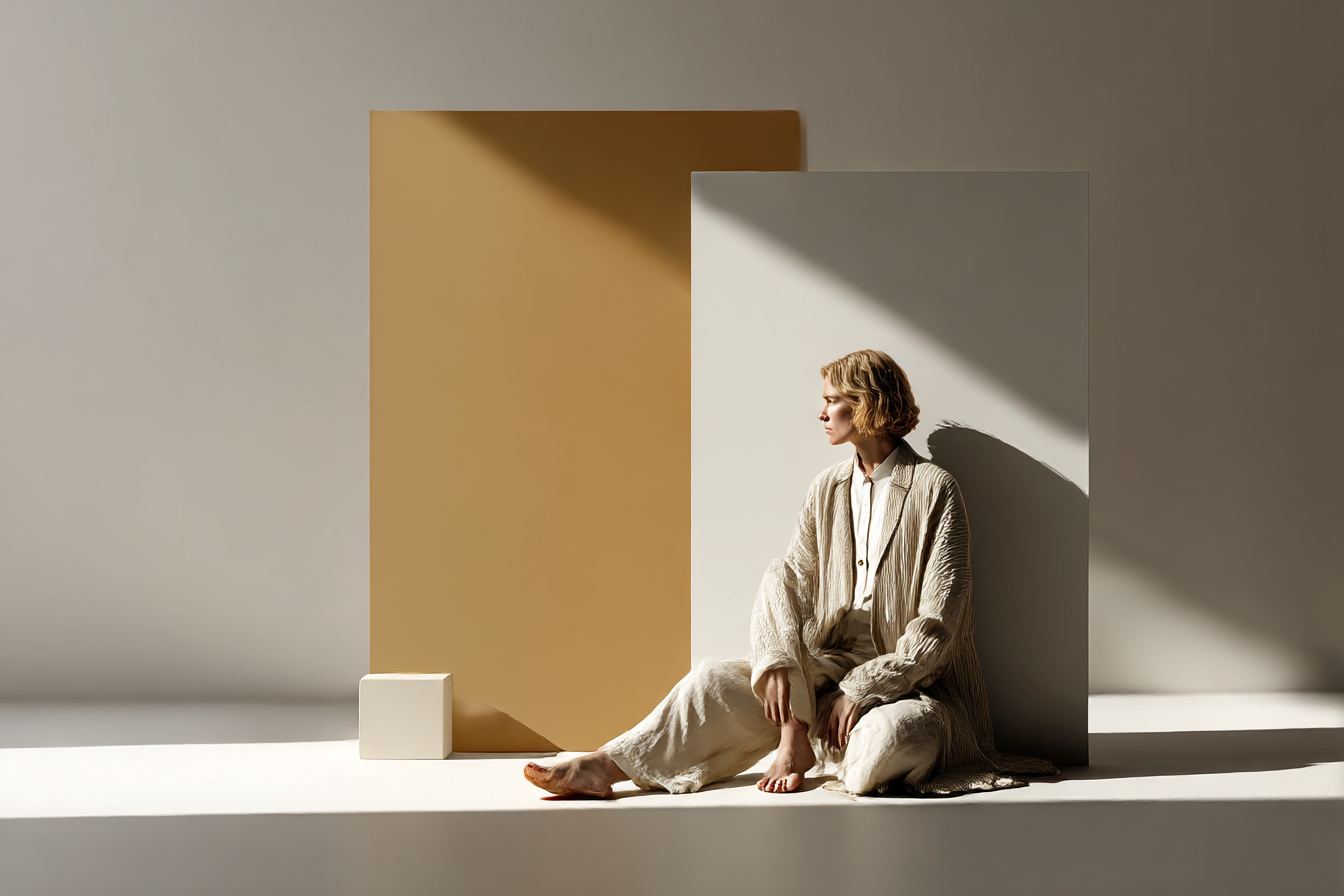
Shadows from a single fiddle-leaf fig dancing across white walls. The way afternoon sun illuminated the grain patterns in reclaimed barn wood flooring.
These weren't magazine spreads or architectural portfolio pieces. They were real spaces where people actually lived and worked, captured by photographers who understood that biophilic design isn't about budget – it's about intention.
Last fall, I started collecting these images more systematically. What began as personal inspiration became something I wanted to share because, honestly, the design world needed better visual references. Too often when clients ask about biophilic elements, they're shown the same handful of high-end examples that don't translate to their reality. A CEO with a $50,000 office renovation budget doesn't need to see another photo of Amazon's Spheres. They need to understand how natural light, texture, and strategic plant placement can transform their existing space.
I remember the exact moment this clicked for me. I was consulting on a pediatric clinic renovation – tight budget, strict health regulations, skeptical administrators. During our first meeting, I pulled up what I thought were relevant inspiration images: gorgeous healthcare facilities in Scandinavia with extensive green roofs and floor-to-ceiling windows overlooking meadows. The facilities manager literally laughed. "That's nice," she said, "but we're in a strip mall in Phoenix. Got anything more… realistic?"
She was right. I went back to my collection and found something better – a photo of a small medical office in Portland that had transformed their waiting area with nothing more than strategic mirror placement to reflect their single window view, some carefully chosen houseplants, and warm wood tones on one accent wall. The total cost? Under $3,000. The visual impact? Completely transformed space that felt calm rather than clinical.
That's when I realised how crucial visual inspiration really is – not just for designers, but for anyone trying to understand what biophilic design can actually look like in real-world applications. We need images that show the full spectrum, from subtle interventions to bold statements, from tiny apartments to corporate headquarters.
I started categorizing my collection differently. Instead of organising by space type or budget level, I sorted by biophilic principles. Natural light optimization. Material textures. Fractal patterns. Water features. Views of nature. Living elements. Each category needed examples across different scales and price points.
The natural light section became particularly extensive because it's often the biggest game-changer and the most overlooked opportunity. I have dozens of photos showing how simple changes – different window treatments, mirror placement, light-colored surfaces – can completely alter how connected a space feels to the outdoor environment. One of my favorites shows a basement office that used a combination of full-spectrum LED lighting and carefully positioned mirrors to create the illusion of natural daylight. Sounds gimmicky, but the psychological effect was remarkable.
Material texture images tell their own story. I'm obsessed with close-up shots that really capture how natural materials feel, not just how they look. The way morning light hits the rough surface of a reclaimed brick wall. How your fingers want to trace the growth rings in a live-edge dining table. The warmth that radiates from a cork floor underfoot. These tactile qualities are essential to biophilic design but almost impossible to convey without the right photography.
Water features present interesting challenges in visual documentation. The movement and sound are such crucial elements, but static images can only capture so much. I've started collecting short video clips alongside still photos – the gentle bubble of a small fountain in a dentist's office, the way light refracts through a simple water wall in an apartment entryway. These dynamic elements often provide the biggest emotional impact but require different documentation approaches.
You Might Also Like
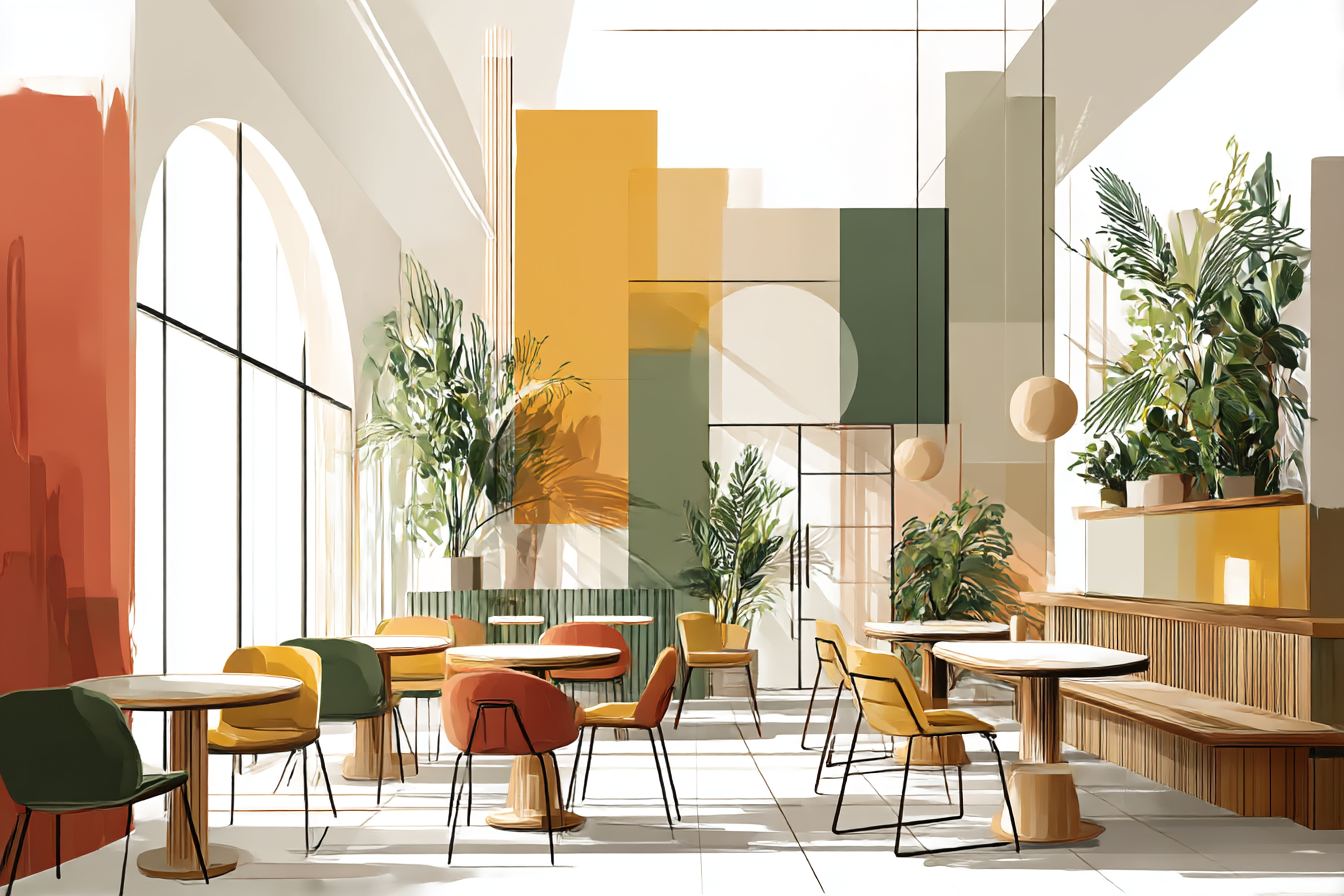
Living plant installations range from elaborate to incredibly simple, and I've learned that the most successful ones often fall somewhere in between. The single dramatic fiddle-leaf fig that anchors a modern living room. The collection of air plants suspended at varying heights in a bathroom with no floor space for traditional planters. The herb garden growing in repurposed mason jars on a kitchen windowsill. Each tells a story about how nature can be integrated based on available resources, maintenance capacity, and personal style.
Views of nature – whether real or implied – create some of the most powerful biophilic moments. I have images of windows framed to perfectly capture a single tree in an urban courtyard, making it feel like deliberate artwork. Others show how nature photography, when properly scaled and positioned, can create psychological connections to outdoor environments even in windowless spaces. The key is authenticity – obviously artificial nature imagery tends to backfire.
Fractal patterns appear everywhere once you start looking for them. The shadow patterns cast by laser-cut metal screens. The branching structure of a handcrafted light fixture. The organic curves of a staircase railing inspired by vine growth. These mathematical patterns found throughout nature seem to create subconscious comfort when incorporated into built environments.
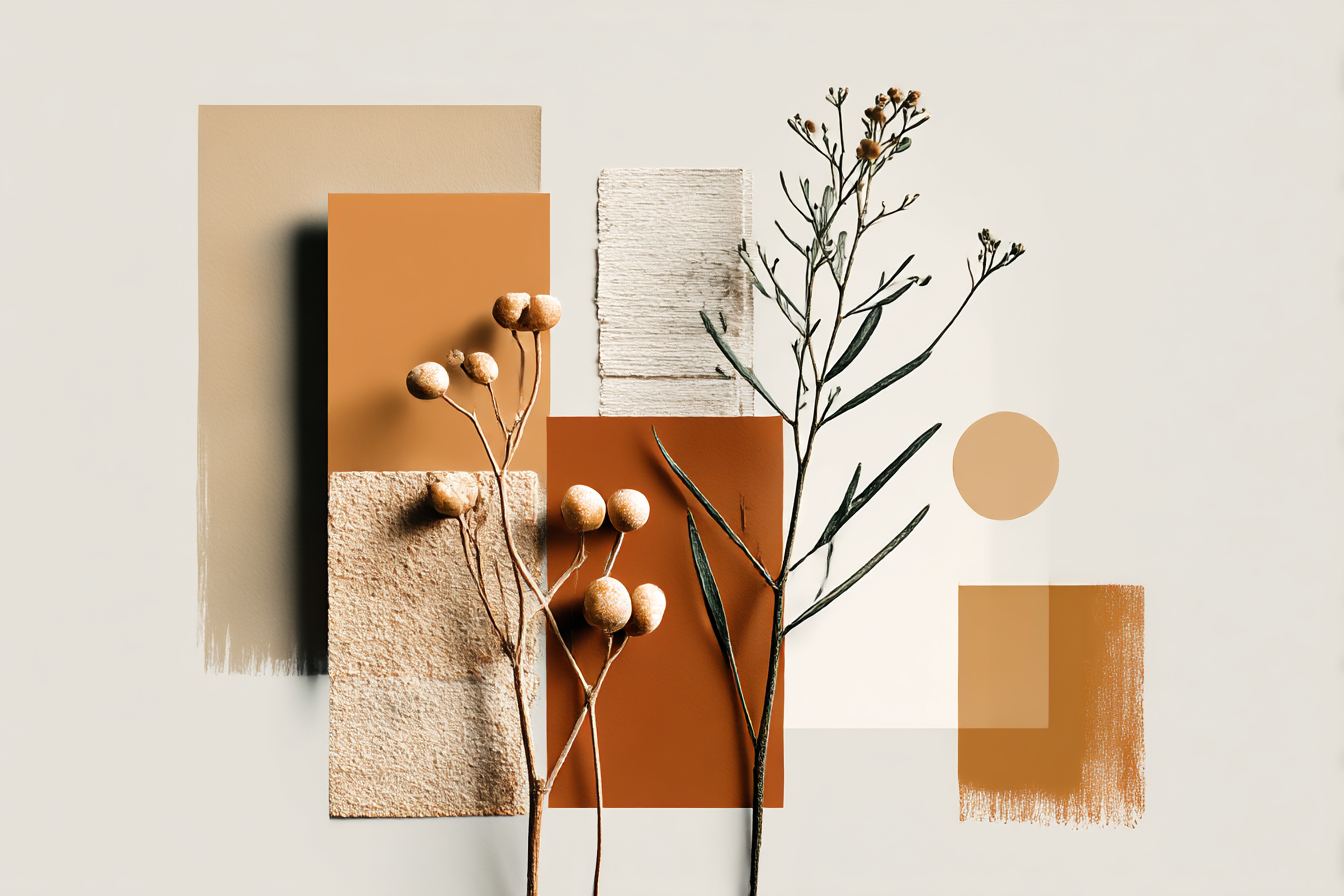
Colour palettes deserve their own category because they're so fundamental yet often overlooked. I collect images that demonstrate how earth tones, plant greens, sky blues, and mineral greys can be combined in ways that feel natural rather than themed. The difference between a space that uses "nature colours" successfully and one that ends up looking like a children's camping tent often comes down to subtlety and proportion.
Scale matters enormously in visual documentation. A green wall that looks stunning in a hotel lobby might feel overwhelming in a residential dining room, but a smaller version using the same design principles could be perfect. I try to include dimension references – a hand touching a textured wall, furniture for scale, people interacting with spaces – so viewers can accurately assess whether an approach might work in their situation.
Lighting conditions dramatically affect how biophilic elements appear and feel. The same living wall photographed in harsh fluorescent light versus warm, indirect natural light tells completely different stories about the space. I've become particular about collecting images that show how different lighting choices support or undermine biophilic design goals.
Maintenance reality rarely appears in inspiration photography, but it's crucial for implementation success. I've started documenting the behind-the-scenes aspects – the irrigation systems that keep green walls healthy, the cleaning protocols for water features, the pruning and replacement schedules for living installations. These practical considerations often determine whether a beautiful design concept becomes a long-term success or a short-term disaster.
What surprises people most in my image collection isn't the elaborate installations – it's how many powerful biophilic moments happen through incredibly simple interventions. A single pendant light that casts branch-like shadows. A textured wall covering made from agricultural waste. A strategically placed mirror that doubles the apparent size of a small garden view.
These subtle approaches often create the most lasting positive impact because they integrate seamlessly with existing spaces rather than demanding wholesale renovations.
The human element makes all the difference in visual documentation. Spaces feel more inspiring and attainable when you can see how people actually interact with biophilic elements – kids doing homework at a kitchen table positioned to catch morning light through strategically placed plants, office workers taking informal meetings in a corridor brightened by skylights and living walls, elderly residents socializing in a courtyard garden designed for accessibility and comfort.
Building this visual library has changed how I approach every project. Instead of starting with theoretical principles or research citations, I can show clients exactly what I mean through carefully chosen examples. The conversation shifts from abstract concepts to concrete possibilities. That pediatric clinic? They ended up implementing a scaled version of the Portland medical office approach, and their patient satisfaction scores improved measurably within six months.
Sometimes the most powerful images aren't the most polished ones. A smartphone photo of afternoon light streaming across a wooden floor can be more inspiring than a professionally shot architectural spread if it captures that essential quality of connection between indoor and outdoor environments. The goal isn't perfection – it's authenticity and emotional resonance.