I never thought I'd find myself defending concrete. Growing up, I associated it with ugly parking garages and those soul-crushing urban housing projects from the 1960s. You know the type – massive grey slabs that seemed designed to make humans feel as small as possible. But last month, wandering through the University of California San Diego campus, I had what can only be described as an architectural epiphany.
The Geisel Library stopped me dead in my tracks. Here was this imposing concrete structure – pure brutalist architecture in all its raw, uncompromising glory – but somehow it didn't feel oppressive. Massive concrete fins jutted out at impossible angles, creating these incredible shadow patterns that shifted throughout the day.
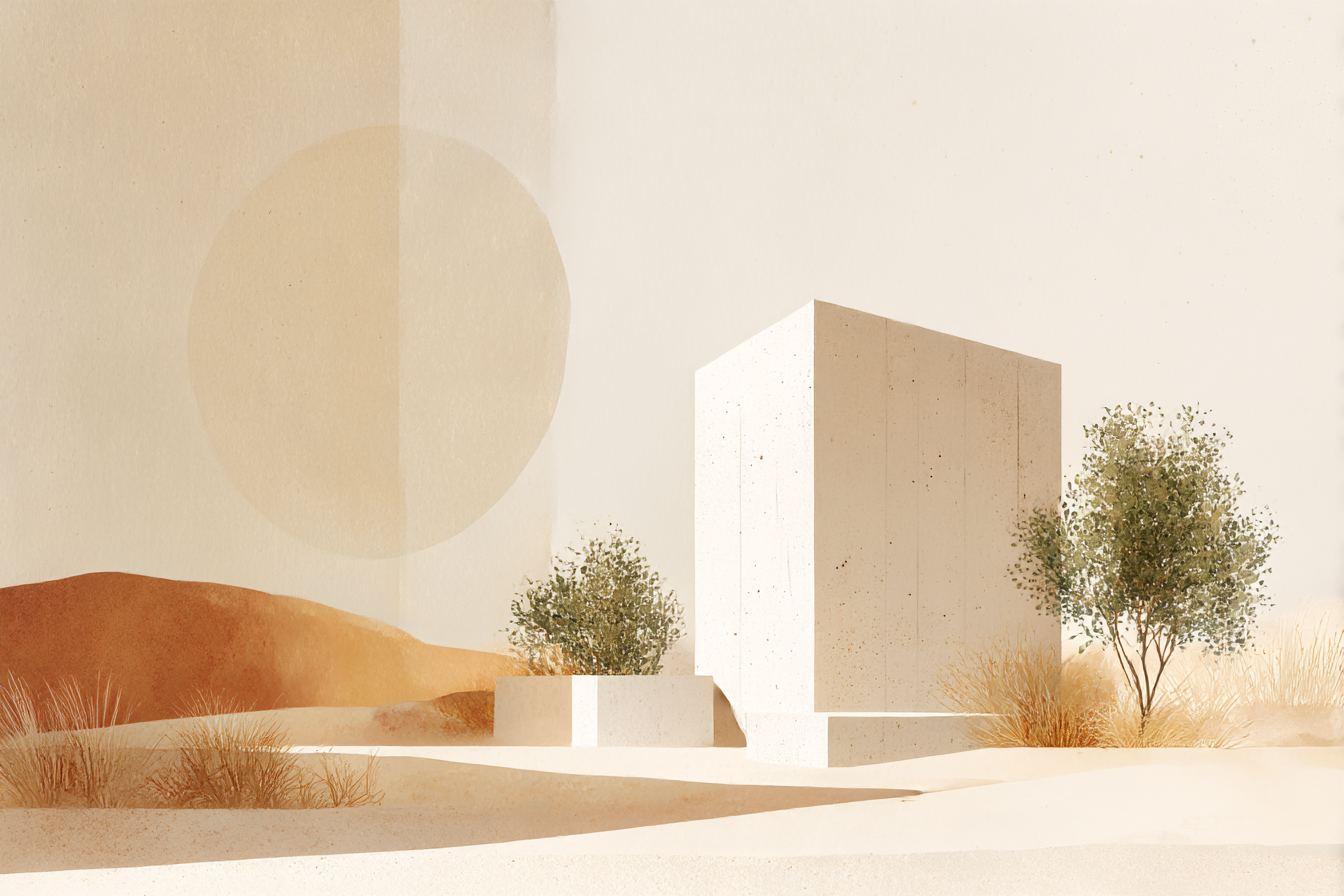
Students lounged on concrete ledges that had been softened with integrated planters, their laptops balanced precariously while they studied under the natural canopies formed by the building's own geometric overhangs.
I spent three hours there, sketching and taking notes. What struck me wasn't just the visual impact, but how people actually used the space. Groups gathered in the shadowed alcoves formed by the concrete projections. The harsh surfaces seemed to amplify conversations rather than deaden them. And everywhere – tucked into crevices, spilling from elevated planters, climbing up textured walls – plants had found their way into the design.
This wasn't your typical "let's add some potted plants to soften the concrete" approach. The greenery felt integral, like it had been planned from the beginning. Which, I later learned, it basically was. The architects had designed the concrete forms to create microclimates where specific plant species could thrive, using the building's own geometry to channel water, create wind barriers, and modulate light levels.
That experience got me thinking about something I'd been wrestling with for years: why do we automatically assume that raw, industrial materials can't coexist with our biological need for nature connection? I mean, concrete is basically just processed stone and sand – natural materials that have been transformed, sure, but not fundamentally different from the limestone cliffs or granite outcroppings we find so appealing in wilderness settings.
The problem isn't concrete itself; it's how we typically use it. Most brutalist architecture from the mid-20th century treated concrete as an end in itself – a material that represented strength, permanence, and (unfortunately) a kind of authoritarian disregard for human comfort. Buildings became monuments to the material rather than spaces designed for the people who'd actually inhabit them.
But what if we flipped that approach? What if we used concrete's inherent properties – its thermal mass, its ability to be molded into organic shapes, its durability in harsh weather – as tools for creating better connections between humans and natural systems?
I've been experimenting with this concept in my own work, and honestly, some of the results have surprised even me. Last year, I worked on a small office renovation where the client wanted to keep the exposed concrete walls but somehow make the space feel less "cold and industrial." Instead of covering the concrete, we worked with it.
We added a hydroponic system that used the concrete wall as its primary support structure, with copper pipes running through drilled holes to create an integrated irrigation network. The concrete's thermal mass helped regulate temperature fluctuations that could stress the plants, while the raw texture provided perfect attachment points for climbing species. Within six months, you could barely see the concrete beneath the green growth, but its presence was still felt in the space's overall stability and coolness during hot summer days.
You Might Also Like

The employees' response was immediate and measurable. Productivity increased, sick days decreased, and – this was the part that really got my attention – people started staying later not because they had to, but because they actually enjoyed being in the space. The brutalist bones of the building hadn't disappeared; they'd just been integrated into a living system.
This approach requires rethinking some fundamental assumptions about material compatibility. We tend to separate "hard" and "soft" design elements, but natural systems don't recognise those boundaries. Look at how moss colonizes stone walls, or how tree roots can crack concrete foundations. Nature is constantly working to integrate with built structures; we just usually spend enormous amounts of energy fighting against that integration rather than working with it.
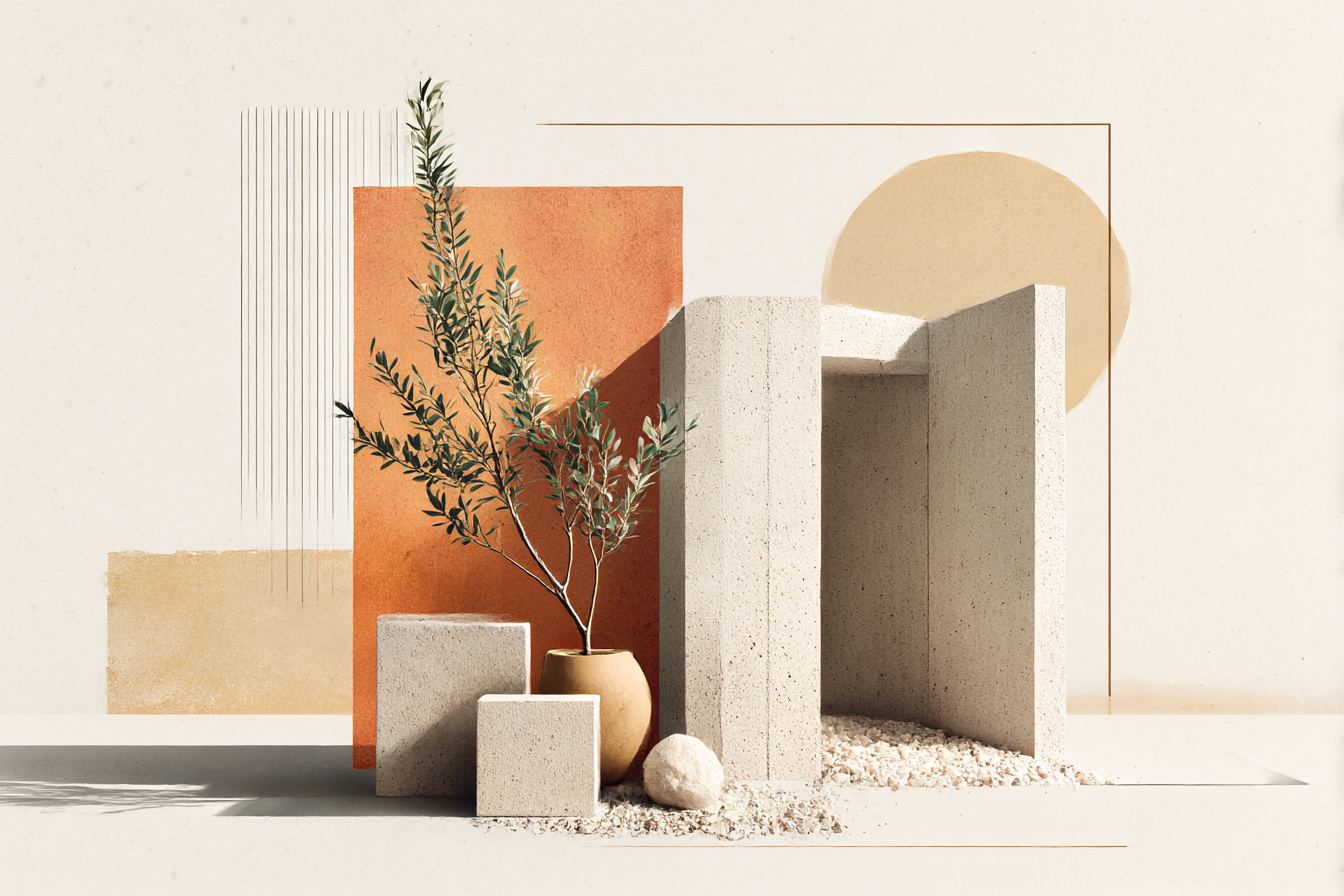
The key is understanding each material's properties and finding ways to make them complementary rather than competitive. Concrete's alkaline pH, for instance, can actually benefit certain plant species. Its thermal mass can create the kind of stable root zone temperatures that many plants prefer. And its ability to be cast into virtually any form means we can create integrated planters, water channels, and growing surfaces that look inevitable rather than added-on.
I've been documenting these experiments on Biophilic Flair, and the response has been… mixed. Some readers love the idea of bringing brutalist architecture into the biophilic design conversation. Others think I've lost my mind entirely. "Concrete is the enemy of nature," one comment read. "You're just putting lipstick on a pig."
Fair enough. But I think that misses the point. The concrete is already there – in our cities, our infrastructure, our existing buildings. We can spend decades tearing it all down and starting over (which isn't environmentally realistic), or we can figure out how to work with what we have while creating better outcomes for human wellbeing.
The most successful projects I've seen don't try to hide the concrete or pretend it's something else. They celebrate its properties while using those properties to support natural systems. The result isn't fake nature or greenwashed brutalism – it's something genuinely new. A hybrid approach that acknowledges both our technological capabilities and our biological needs.
Take the Barbican Centre in London, for example. Pure brutalist architecture, no question about it.
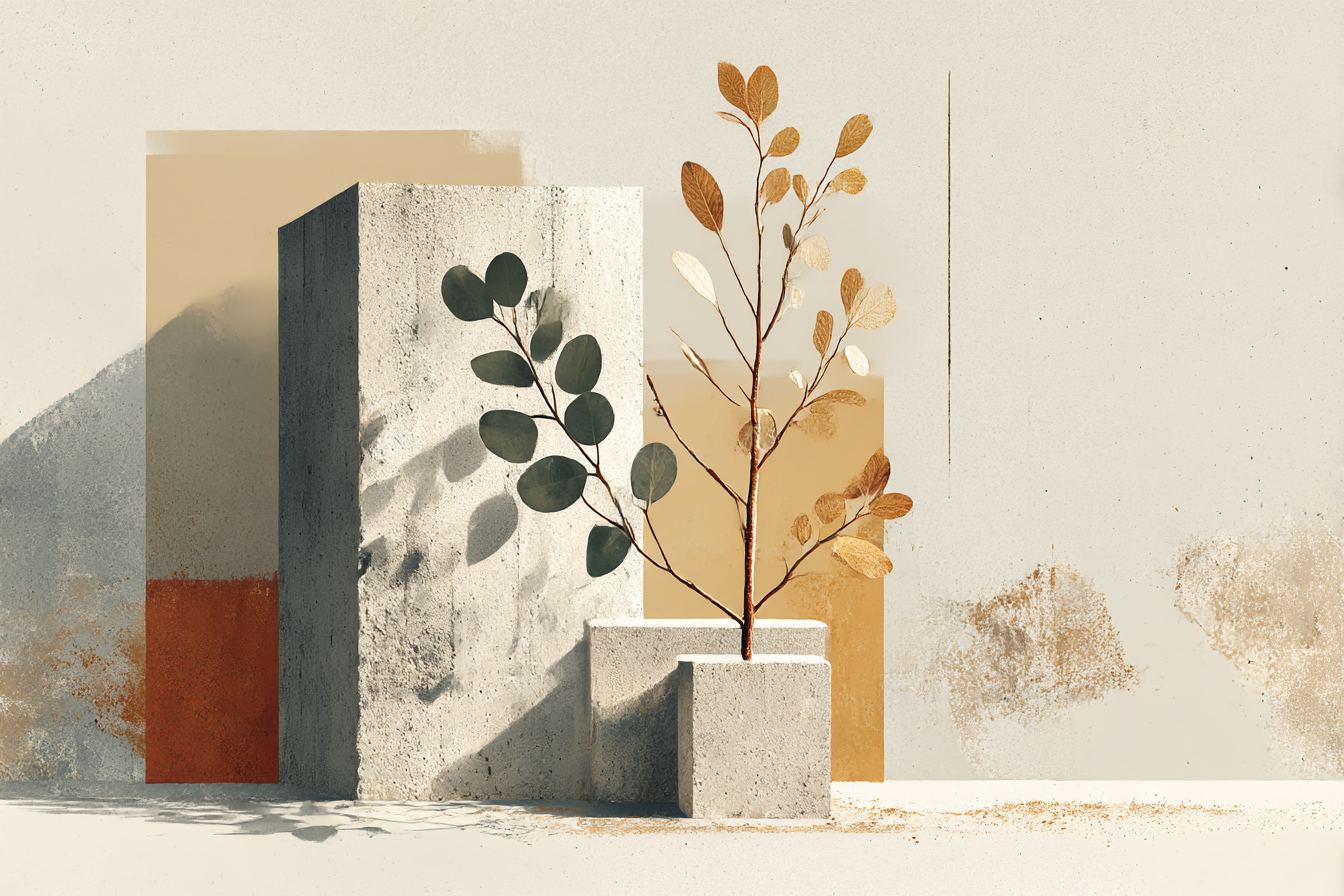
But those massive concrete planters weren't an afterthought – they were designed to create elevated gardens that could thrive in the urban environment while providing visual relief from the surrounding concrete surfaces. The interplay between raw concrete and carefully selected plantings creates spatial experiences that neither element could achieve alone.
This isn't about making concrete "prettier" with some strategically placed greenery. It's about recognising that humans need both – the psychological security that solid, permanent structures provide, and the physiological benefits that come from connection with living systems. When those needs are met simultaneously through integrated design, the result is often more satisfying than either approach alone could deliver.
The challenge, as always, is implementation. Working with living systems means accepting variability and maintenance requirements that many clients find uncomfortable. Concrete contractors aren't typically versed in horticulture, and landscape designers don't always understand structural requirements. But I'm seeing more professionals willing to cross these traditional disciplinary boundaries, and the results are getting better each year.
Maybe brutalism was never the problem. Maybe the problem was thinking that strength and nurture couldn't coexist in the same space.