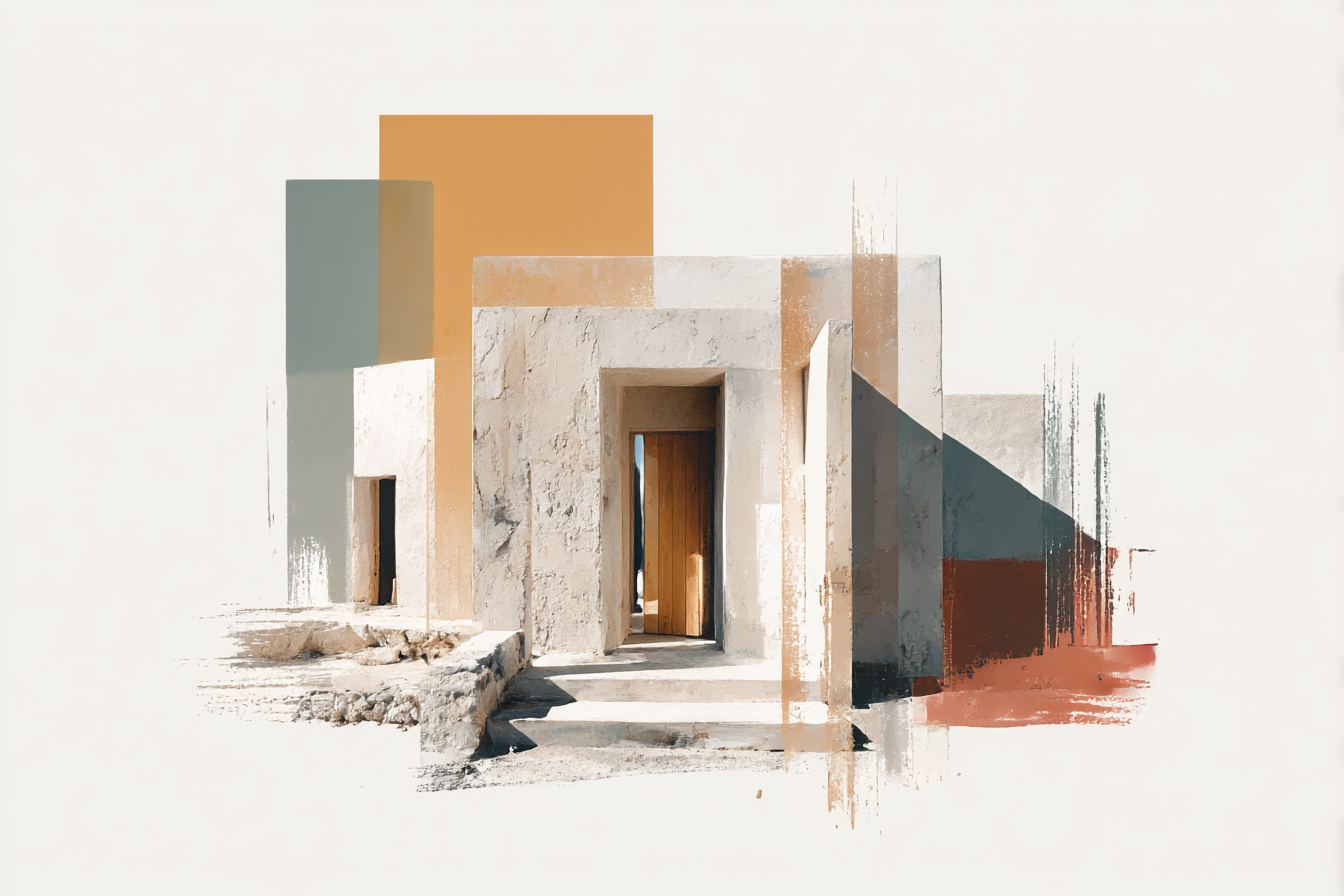
Last year I found myself staring at photos of a hotel that made me question everything I thought I knew about sustainable architecture. Not because it was terrible, but because it was so elegantly done that I couldn't immediately figure out how they'd achieved such remarkable environmental performance while maintaining genuine luxury. The images showed curved white structures that seemed to grow from rocky Greek clifftops, but what caught my attention wasn't the Instagram-worthy aesthetics. It was the subtle details that revealed serious building science thinking.
Eolia sits on Folegandros, one of the smaller Cycladic islands where summer temperatures can hit 95°F while winter storms pound the coast with salt spray and driving rain. Building anything here that lasts more than a few years requires understanding materials, wind patterns, thermal performance, and moisture management at a level most architects never bother with. Yet this place wasn't just surviving the climate—it was working with it so seamlessly that guests probably never realised they were experiencing some of the smartest passive design I've seen anywhere.
I'd been following the project since construction began three years ago, partly because the architect, Alexandros Kallegias, had reached out after reading my analysis of traditional Greek island building techniques.

We'd exchanged emails about thermal mass, natural ventilation, and how traditional Cycladic architecture had solved climate challenges centuries before mechanical systems existed. When he invited me to visit and document the completed project, I jumped at the chance. This wasn't just professional curiosity—I needed to understand how they'd managed to create a contemporary luxury hotel that operated with 60% less energy than comparable properties while maintaining comfort levels that kept guests raving online.
The flight to Santorini, then the ferry to Folegandros, gave me time to review what I knew about the challenges they'd faced. Greek islands present brutal conditions for buildings. Intense summer sun that can heat roof surfaces to 160°F or more. Salt-laden winds that corrode metal and degrade materials. Limited fresh water supplies that make cooling towers and irrigation systems problematic. Building codes that restrict height and require adherence to traditional architectural forms. Most island hotels solve these problems by brute force—massive air conditioning systems, imported materials, and operational costs that make $500-per-night rates seem reasonable.
Eolia's approach was fundamentally different, though I didn't fully appreciate how different until I spent three days crawling around the property with thermal cameras, humidity sensors, and way too much curiosity about building performance details. The genius wasn't in any single innovation but in how every element worked together as an integrated climate response system.
Start with site planning. Instead of clearing flat terraces and fighting the topography, they'd nestled buildings into natural wind shadows while maintaining exposure to cooling summer breezes. Each structure was positioned to minimize morning sun exposure on bedroom spaces while maximizing late afternoon shading from neighboring buildings and landscape features. Walking the site, I realised guests were unconsciously experiencing perfectly calibrated microclimates—spaces that felt naturally comfortable without mechanical intervention.
The building forms themselves were pure climate engineering disguised as contemporary architecture. Those curved white walls weren't aesthetic choices but thermal performance strategies. Curved surfaces shed wind more effectively than rectangular forms, reducing heat loss in winter while promoting air movement in summer. The specific white they'd chosen wasn't standard paint but a high-solar-reflectance coating that rejected 85% of solar radiation while maintaining the traditional Cycladic appearance that local planning officials required.
But the real sophistication was invisible. Wall assemblies used local stone as thermal mass combined with modern insulation systems that eliminated thermal bridging—heat transfer paths that compromise performance in most construction. They'd positioned this thermal mass on the interior side of the insulation, allowing it to absorb heat during the day and release it at night, moderating temperature swings naturally. Interior temperatures stayed within a comfortable range even when exterior temperatures varied by 30°F between day and night.
You Might Also Like
Water management was equally thoughtful. Instead of importing fresh water for irrigation and cooling, they'd designed comprehensive rainwater harvesting that captured runoff from all building surfaces and hardscaping. This water fed cooling systems that used evaporation to condition outdoor spaces and pre-cool ventilation air. Grey water from sinks and showers went through constructed wetland treatment systems that doubled as landscape features before being used for irrigation. The entire water cycle was closed-loop, reducing municipal water demand by 80% compared to conventional hotels.
The cooling strategies impressed me most. Rather than fighting the climate with energy-intensive mechanical systems, they'd created architectural solutions that worked with natural forces. Strategic window placement created cross-ventilation that pulled cool night air through buildings while exhausting hot air through high clerestory openings. During my visit, I measured interior air movement of 3-4 feet per second in occupied spaces—enough to make 80°F feel comfortable without any fans running.
Outdoor spaces used traditional techniques updated with contemporary materials. Deep overhangs and pergolas created shaded microclimates where guests gathered during hot afternoons. These weren't just sun shades but carefully calculated thermal comfort zones where evaporative cooling from water features and plantings created temperature reductions of 8-10°F compared to exposed areas. Spending time in these spaces felt like experiencing ancient Greek architecture through the lens of modern building science.
Energy systems were appropriately scaled for actual loads rather than oversized for worst-case scenarios. Solar panels covered discrete roof areas, generating more electricity than the property consumed during most of the year. Battery storage handled evening loads and provided backup power during grid outages. But because the buildings required so little energy for heating and cooling, the renewable systems could be reasonably sized rather than massive installations that dominated the architecture.
What struck me throughout my visit was how invisible the sustainability was to guests. Nothing felt compromised or uncomfortable in service of environmental goals. Rooms stayed naturally cool without noticeable air conditioning noise. Outdoor spaces remained pleasant even during afternoon heat. Water pressure was excellent despite the closed-loop systems. The swimming pools stayed clean and inviting without chemical smells. Lighting was warm and adequate without obvious energy-saving measures.
This invisibility was intentional. The design team understood that sustainable hospitality only works if guests don't experience it as sacrifice. Every environmental strategy had to enhance comfort and experience rather than limiting it.

The result was architecture that performed exceptionally while feeling effortless.
Talking with the hotel's operations manager revealed the economic benefits that made the environmental strategies possible. Energy costs were 70% below comparable properties. Water expenses were minimal despite the island location. Maintenance requirements were reduced because materials were selected for durability in marine environments. The higher initial investment in building performance was paying back through reduced operating costs while providing marketing advantages with environmentally conscious travelers.
Returning home, I couldn't stop thinking about how Eolia challenged conventional assumptions about sustainable design. It wasn't about visible technologies or obvious environmental features but about fundamental building performance optimization. Every decision served multiple purposes—aesthetic, functional, and environmental. The result was hospitality architecture that worked beautifully in its specific climate while demonstrating that sustainability and luxury weren't opposing forces but complementary approaches to thoughtful design.
This is what sustainable hospitality should look like: buildings that work so well with their environment that exceptional performance becomes invisible, allowing guests to enjoy comfort that's environmentally responsible without even thinking about it.